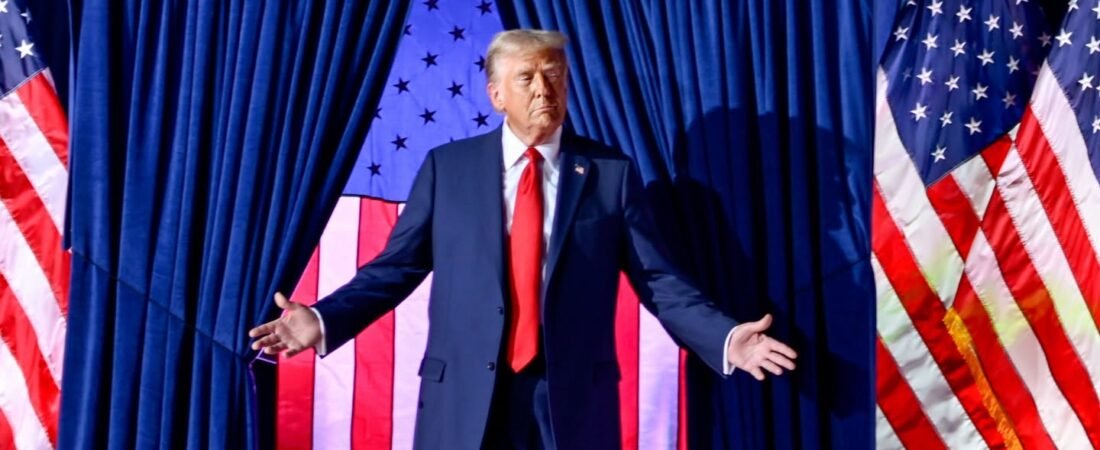
Photo Credit: Donald Trump / Facebook
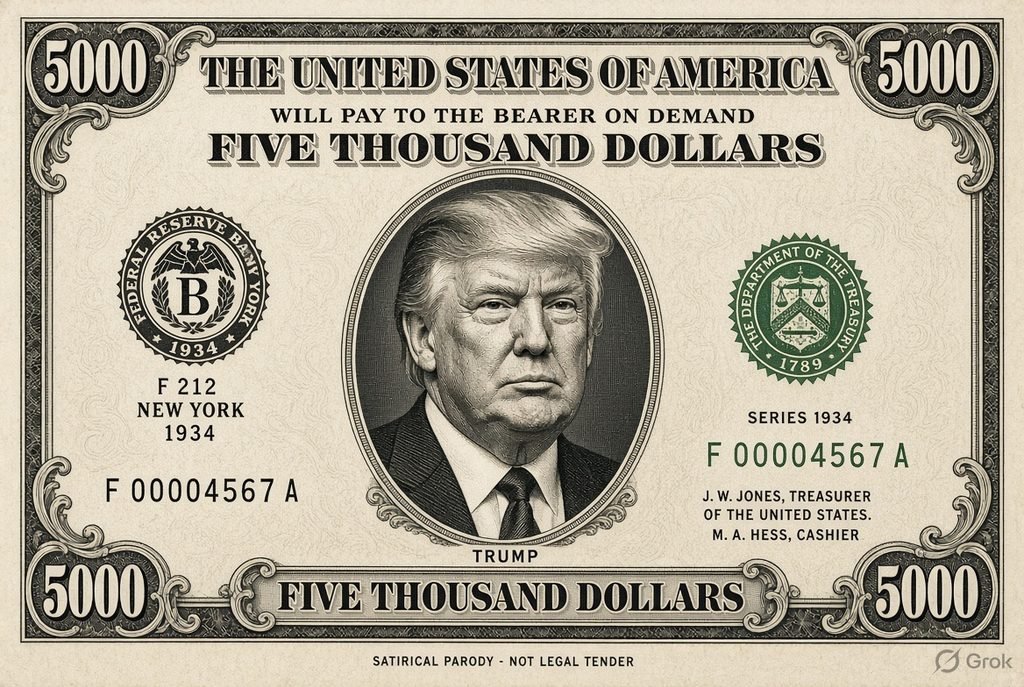
The $5,000 Offer: What Trump Actually Proposed
On September 9, 2026, President Donald Trump stood on stage at the Republican Party’s first-ever midterm convention in Dallas and made a promise: if Republicans hold both the House and the Senate in November’s midterm elections, every adult American citizen will get a $5,000 check. He called it the “Trump Dividend,” comparing it to a company paying shareholders a cash distribution, according to TIME’s report on the announcement. “If the Republicans win the House of Representatives and the United States Senate, both of them,” he told the crowd, “I will issue a dividend to every adult citizen in the United States of America for $5,000.”
The condition is the whole story here: this isn’t a policy proposal moving through Congress. It’s a payment tied explicitly to an election outcome. Trump said the money would have to be spent inside the US, though he gave no detail on how that would even be enforced.
Using the US Census Bureau’s estimate of roughly 240 million adult citizens, the total cost comes to about $1.2 trillion, according to the Tax Foundation’s analysis. Vice President JD Vance suggested tariff revenue could fund it — tariffs brought in around $154.5 billion over the first ten months of fiscal 2026, per TIME’s reporting — but the Tax Foundation puts that at roughly a tenth of what’s needed to cover the dividend. As for the process: no bill is currently moving through Congress, though Ohio Senator Bernie Moreno has said he’s drafting one, which he plans to introduce only after the November 3 election, according to Fox News.
This also isn’t Trump’s first dividend promise. A smaller $2,000 “tariff dividend” was floated in late 2025, but it stalled earlier in 2026 after the Supreme Court ruled against major parts of his tariff authority, undercutting its funding basis. That history matters: promises like this one have a track record of not actually arriving.
No opinion yet on any of this — just the facts, laid out precisely, because the rest of this piece depends on getting them right.
Cash Is Not Automatically Corrupt
Before going further, it’s worth saying plainly: governments handing citizens money is not inherently a problem. Unemployment assistance, child benefits, disaster relief, and pandemic-era stimulus checks are all forms of direct cash support, and in many cases they work better than complicated, bureaucratic programs — money reaches people faster, with less overhead, and lets them decide what they actually need it for. Poverty relief exists because markets don’t automatically catch everyone, and disasters don’t wait for slow-moving aid pipelines.
The problem is not helping people. The problem is turning help into a political instrument.
The Line That Matters: Welfare vs. Electoral Strategy
There’s a real difference between permanent, rules-based welfare — a program anyone meeting a defined criteria can access, year-round, regardless of who’s in power — and a payment that only exists if voters deliver a specific election result. Emergency assistance responds to a crisis. Election-timed benefits respond to a calendar.
Here’s why $5,000 landing in someone’s bank account is politically more powerful than a politician saying “GDP grew by 3%”: one is abstract, the other is rent paid, a bill cleared, a gift for a child. It’s visible. It’s immediate. It becomes a family conversation, a social media post, a story people tell each other. No economic statistic does that.
So here’s a test worth applying to any government payment, and I’ll keep returning to it throughout this piece: would this policy exist if there were no election?
India Has Seen a Similar Political Incentive
This isn’t uniquely an American story. India has run this exact playbook more than once.
Take Maharashtra’s Ladki Bahin Yojana. Launched in June 2024, just months before a closely fought state election, it paid eligible women aged 21–65 from lower-income households ₹1,500 a month, according to BBC coverage of the scheme. More than 26 million women enrolled. The ruling alliance’s chief minister publicly promised that a “bigger mandate” would raise the payment to ₹2,000, then ₹3,000 — a direct, on-record promise to increase a welfare payment in exchange for more votes. The alliance went on to win that November’s election by a wide margin, though how much of that result the scheme itself drove is a campaign talking point rather than something an independent results study has isolated. Two separate accountability problems surfaced afterward, worth keeping distinct: India’s federal auditor, the CAG, found ₹3,541 crore in spending beyond the sanctioned budget; separately, a later eligibility review removed around nine million beneficiaries who no longer qualified, of whom roughly 29,000 turned out to be men, according to the BBC.
Then there’s Bihar’s Mukhyamantri Mahila Rozgar Yojana in 2025: a one-time ₹10,000 transfer to women, approved by the state cabinet in late August, with money hitting bank accounts on October 6 and 17 — during the official election model code period, days after the Election Commission had already announced the poll schedule, according to Deccan Herald’s reporting from the ground. One beneficiary quoted in that report put it plainly: “I have received Rs 10,000 in my account. I will vote for the person who has given this money.” The opposition called it an “official bribe.”
To be clear: this does not prove Trump copied India, and there’s no evidence he did. The point isn’t imitation. It’s that separate democracies, with completely different political systems, independently arrived at the same discovery — that cash, timed right, moves people more than any other form of political communication.
Can Money Actually Move Voters?
It’s worth being precise here, because “money buys votes” is too crude a claim. Influence is not the same as a bought ballot.
What cash transfers more plausibly do: they strengthen the loyalty of voters who were already leaning your way. They give undecided voters a concrete, personal reason to feel the government “did something” for them, rather than an abstract policy argument. They build a sense of being seen and helped, which builds political loyalty over time, election after election. And crucially, that Bihar quote above — a voter openly saying she’d vote for whoever paid her — coexists with plenty of examples of voters who take a benefit and vote against the government anyway, because rising prices, corruption scandals, or local grievances mattered more to them. Elections are decided by dozens of factors stacked together, not one check.
What should never be claimed is the simple version: give people money and they will vote for you. Reality is messier — but “messier” doesn’t mean “no effect.” It means the effect is real, uneven, and hard to fully separate from everything else happening in a campaign.
The Bidding War: What Happens When Politicians Compete With Cash?
Here’s the part that should worry anyone who cares about how democracies function long-term. Once one party discovers that cash payments move votes, what stops the next election from becoming a bidding war? $1,000 becomes $2,000, becomes $5,000, becomes $7,000 — Maharashtra’s own chief minister openly promised to double, then triple, a welfare payment purely in exchange for “a bigger mandate,” which is about as explicit as this dynamic gets.
Where does that competition stop? In practice, it usually doesn’t stop on its own — it stops when a government runs out of money, or when a court or auditor intervenes, as happened with Maharashtra’s overspending. Promises made for one election become expectations for the next. Benefits that were sold as temporary become almost impossible to remove once millions of people are relying on them. Voters start expecting the next campaign to outbid the last one, and legitimate, carefully designed programs get politically weaponized right alongside timing-driven show payments.
Who Actually Pays for the Money?
A government does not create economic value simply by announcing a cheque. Every dollar it hands out has to come from somewhere: taxes, tariffs, borrowing, or money creation — and each of those has consequences.
If it’s tariffs, as Vance and Moreno both suggested, that money is effectively a tax that ordinary consumers already pay through higher prices on imported goods. If it’s borrowing, it adds to a national debt already sitting near $40 trillion, and the Tax Foundation estimates a single round of payments would widen the federal deficit from roughly $1.8 trillion to nearly $3 trillion in one year. If it’s simply spent without matching revenue, it risks feeding the same inflation that a $5,000 check is supposed to help people cope with in the first place.
There’s also an opportunity cost worth naming directly. A trillion dollars spent on one-time checks is a trillion dollars not spent on schools, infrastructure, healthcare, or the kind of long-term investment that actually raises wages and productivity over time — the things that make an economy genuinely stronger rather than temporarily more liquid. A government can redistribute money. It cannot simply create economic value by announcing a cheque.
When Giving People Cash Is Actually the Right Policy
This is where intellectual honesty matters most, because the argument above could easily curdle into “governments should never give people money,” and that’s not the claim being made here.
During a recession, a pandemic, a natural disaster, a sudden economic shock, a spike in severe inflation, or in cases of deep, persistent poverty — direct cash payments are often exactly the right tool. This isn’t just intuition: MIT’s Poverty Action Lab, co-founded by Nobel laureates Abhijit Banerjee and Esther Duflo, describes a “widespread consensus” among researchers that well-targeted cash transfers improve consumption, business investment, school attendance, and health outcomes, with little evidence they discourage work or get wasted on non-essentials, according to J-PAL’s own summary of the evidence. Cash is fast, it respects people’s own judgment about their needs, and it avoids the bureaucratic delays that let people fall through cracks during an emergency. The same policy tool — a direct cash payment — can be completely responsible in one context and irresponsible in another. The difference isn’t the tool. It’s the purpose, the timing, who it targets, and how it’s funded.
The Four Questions Every Democracy Should Ask
Here’s a framework worth applying to any government cash payment, anywhere:
- Why is the money being given? Because of need — or because of votes?
- Who receives it? People who actually need help — or voters who happen to be strategically important?
- Why is it being announced now? Is this part of a normal policy or budget cycle — or is it timed to an election season?
- Would it exist if there were no election? This is the sharpest test of all.
Run Trump’s $5,000 dividend through these four questions, and the answers aren’t flattering. It isn’t targeted at need — it goes to every adult regardless of income. It’s explicitly conditioned on an election outcome, not a policy trigger. It was announced at a campaign convention, not in a budget address. And the honest answer to the fourth question is almost certainly no — a payment this large, this untargeted, announced this way, with no funding plan, doesn’t look like something that exists independent of the vote it’s tied to.
If This Spreads, What Happens to Democracy?
This is bigger than America or India. If governments across democracies learn that direct financial promises reliably move votes, the incentive structure of politics starts to shift in a specific direction: elections become auctions rather than arguments. Parties keep raising the number because the last party did. Once-generous welfare becomes politically impossible to reform, because touching it costs votes regardless of whether it’s still fiscally sustainable. Long-term investment — the unglamorous stuff, infrastructure, education systems, R&D — loses out to the visible, immediate cheque. Governments inherit fiscal commitments they didn’t plan for and can’t easily unwind. And political accountability itself can shift from “what did you build?” to “what did you give me?” — a genuinely corrosive change in how citizens relate to their own governments.
But it’s worth holding the opposite possibility too, honestly: well-designed, needs-based welfare — the kind that actually reaches people who need it, funded sustainably, not timed to a ballot — can strengthen democracy. It gives citizens real economic security, which frees them to participate in civic life without being one bad month away from crisis. The tool isn’t the enemy. Cynical, election-timed deployment of the tool is.
My Take: I Am Not Against Giving People Money
I want to be unmistakably clear about where I land on this. I am not against governments giving citizens money. I am against turning citizens’ economic needs into an electoral strategy.
Trump’s $5,000 dividend and Maharashtra’s Ladki Bahin scheme are different countries, different systems, different amounts — but they share the same structural DNA: a payment whose timing, size, and framing are inseparable from an election, announced by the people who’d benefit politically from that payment landing before voters decide. I’m not claiming Trump copied India, or that either country’s leaders sat down and designed this cynically from scratch. I think it’s more troubling than that, actually — it suggests this isn’t a trick unique to one party or one country. It’s a discovery. And discoveries, once made, tend to get reused, refined, and escalated by whoever’s in power next, regardless of ideology.
Genuine welfare, done responsibly, is one of the best things a government can do for its people. What worries me is not the cash. It’s the calendar it’s timed to.
Final Verdict: Help Because Citizens Need It — Not Because Politicians Need Their Votes
A government should help its citizens when they need help. But if political parties discover that the easiest way to win elections is to promise increasingly larger cheques, democracy risks becoming a bidding war over public money — one where the winner isn’t the party with the best long-term plan, but the party willing to write the biggest check right before people vote.
The question was never really whether governments should give. The question is why they are giving — help because citizens need it, or help because politicians need their votes?
By U. V. Samma | September 2026