Photo Credit: The Lion Capital / AI-generated
The Internet Has Gone Back to the 80s
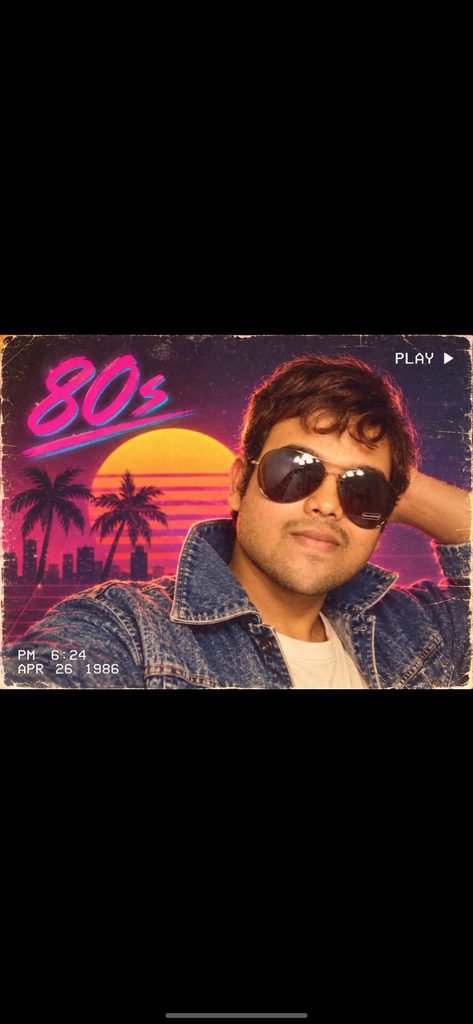
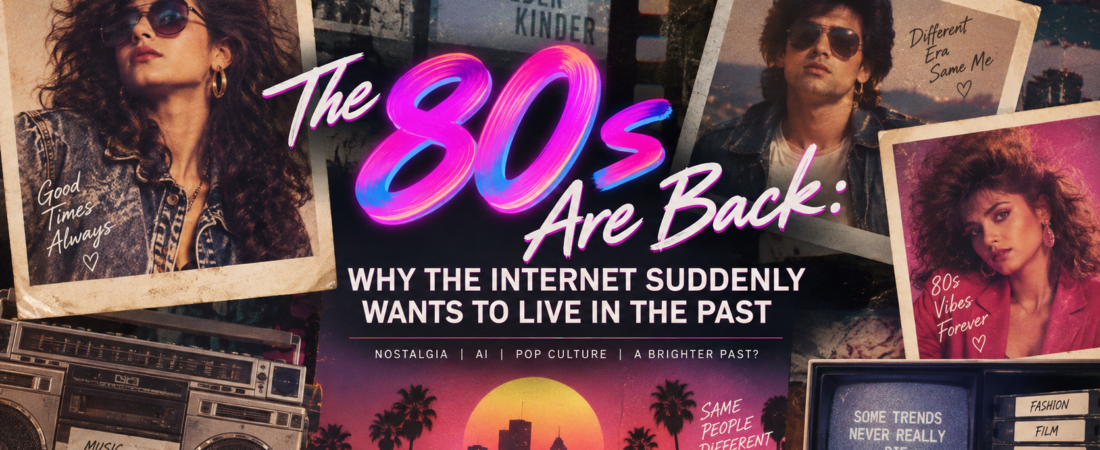
Open Instagram this second week of September 2026, and you’ll see it everywhere: grainy film photos, feathered hair, oversized sunglasses, and shoulder pads. Politicians, cricketers, Bollywood stars, and regular people are all posting the same kind of picture — a version of themselves that looks like it was pulled straight out of 1985. None of these photos are real. They’re all made by AI, and the trend exploded across social media between September 8 and 12, according to reporting on the craze.
What Is the 80s AI Trend?
Here’s how it works: you upload a normal, modern selfie to an AI tool, and ask it to recreate you as if you’d been photographed in the 1980s. The AI keeps your actual face, but rebuilds everything around it — the clothing, the hairstyle, the lighting, even the grain and color of old film cameras. The result looks like a family album photo, a vintage magazine cover, or a movie poster from four decades ago. It’s not a filter slapped on top of your photo — it’s a full repaint.
Why Is Everyone Doing It Now?
Three things are colliding at once: AI image tools got good enough to do this convincingly, nostalgia is genuinely trending in fashion and culture right now, and social platforms reward exactly this kind of easy, shareable, “show yourself as someone else” content. It’s also not the first trend like this — it follows the Studio Ghibli-style portraits and 3D “action figure” avatars that went viral earlier, using the same basic formula: one photo in, one delightful surprise out.
Gen Z and Nostalgia for a Time They Never Lived Through
Here’s where it gets genuinely interesting. A lot of the people posting these 80s photos weren’t born until the 2000s. They never experienced the actual decade. There’s actually a word for this — anemoia, nostalgia for a time you never lived through, a term the writer John Koenig invented back in 2012 for his project cataloguing emotions that don’t have names yet. It’s not just a vibe, either: Spotify’s own Culture Next research found that 68% of Gen Z say they like watching and listening to media from earlier decades because it “reminds them of when things were simpler,” according to coverage of the Spotify data — that’s about earlier eras broadly, not the 80s specifically.
The 80s pull is its own separate story: Kate Bush’s 1985 track “Running Up That Hill” went massively viral among Gen Z after appearing in Stranger Things, a show set in the decade, pulling an entire generation’s attention toward that specific era. People aren’t missing their own past. They’re borrowing someone else’s.
The 80s Were Already Coming Back
This AI trend didn’t appear out of nowhere — fashion got there first. Designers at Richard Quinn, Versace, and Chloé all leaned hard into 80s style for their 2026 collections, bringing back bold shoulders, clashing prints, and statement jewelry, according to WhoWhatWear’s runway coverage. Street style followed, with power-dressing blazers and almond-toe pumps showing up everywhere well before the AI photos started. The internet trend is really just catching up to something the fashion industry had already decided.
AI Isn’t Bringing Back the 80s — It’s Rewriting It
This is the part worth sitting with: nobody using this trend is experiencing the actual 1980s. They’re experiencing an idealized, filtered, algorithm-friendly version of it — the glamorous parts, the confident parts, the cinematic lighting. None of the decade’s actual textures make it in: no economic anxiety, no grainy TV static, no waiting a week to get film developed. AI doesn’t recreate history. It performs a highlight reel of it, tuned specifically to look good on a phone screen.
Why These Trends Explode — and Disappear
Viral AI trends tend to follow a familiar arc: something feels novel and fun, it spreads fast because it’s easy to join, everyone gets one out of their system within days or weeks, and then attention moves on to the next thing. Nobody can say exactly when this one ends — that’s just how internet trend cycles work. This time, there’s also a backlash brewing alongside the fun: critics have pointed out that mass AI image generation burns real electricity and water, echoing what happened during the earlier Ghibli-trend surge, when OpenAI CEO Sam Altman posted on X, “It’s super fun seeing people love images in ChatGPT, but our GPUs are melting,” as OpenAI scrambled to add rate limits, according to Digital Trends’ report at the time. Fatigue plus a guilty conscience tends to be exactly what kills a trend like this.
The Bigger Question: Why Are We So Drawn to the Past?
My own read on this: nostalgia trends tend to spike when the present feels uncertain or overwhelming. The past — especially a past you didn’t actually live through — is safe precisely because it’s not real. You get to keep the aesthetic without the actual stress of the era. AI just makes that fantasy easier and faster to produce than it’s ever been, for anyone, instantly.
Final Verdict
The 80s AI photo trend itself will fade, like every viral format before it — Ghibli portraits already have. What won’t fade is the underlying instinct: reaching backward for eras that feel simpler, warmer, and more stylish than reality ever actually was.
By The Lion Capital Editorial Team | September 2026