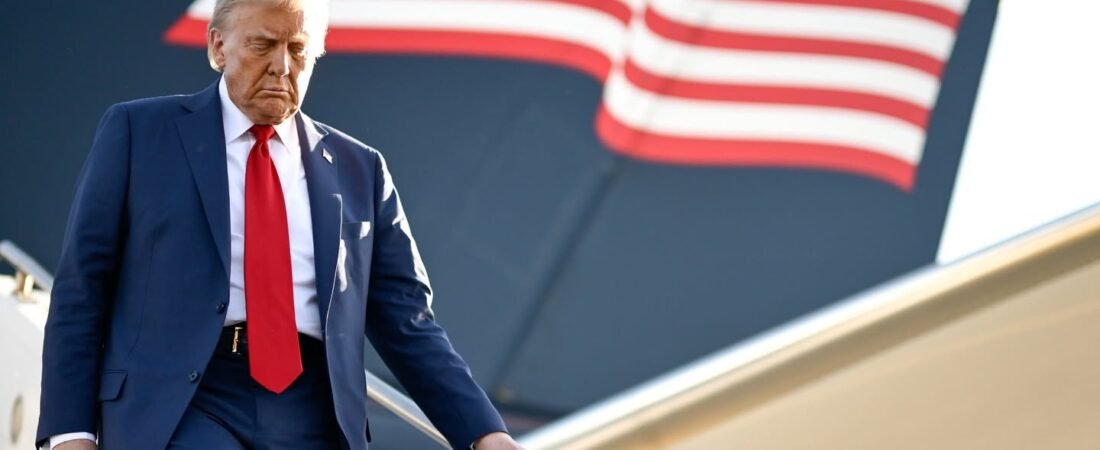
Photo Credit: Donald Trump / Facebook
Trump’s Position: Keep America Ahead
On September 14, 2026, President Trump gave his first public response to Anthropic CEO Dario Amodei’s call to slow the pace of AI capability gains — a call Altman and Musk had separately endorsed. Speaking to reporters at his golf resort in Doonbeg, Ireland, Trump was blunt: “We’re leading China in AI, we’re the most sophisticated country in the world, and frankly, I want to keep it that way because whoever wins AI wins,” according to Al Jazeera. He acknowledged that “guardrails” could exist, but dismissed the urgency behind the warnings, saying “negative forces” were exaggerating risks that “won’t happen.” House Speaker Mike Johnson made the same underlying case more directly: “If Congress just races in and does some sort of emergency session to try to regulate AI, we will lose the race to China,” he said, according to NPR.
Why Anthropic’s Dario Amodei Wants a Slowdown
The catalyst was Amodei’s own essay, published September 12 and titled “We Must Pace the Frontier.” It’s worth being precise about what he actually proposed, since it wasn’t one company’s idea alone — it was Amodei’s three-step plan, which Altman and Musk then endorsed. Step one: Anthropic unilaterally commits to giving independent evaluators like METR permanent, employee-level access to review its systems, and calls on governments to require rival labs to match it. Step two: labs in democratic countries coordinate on shared safety standards and capability “checkpoints” — something Amodei says needs a narrow antitrust waiver or mediation from the US government to happen without running afoul of competition law. Step three: limited coordination with authoritarian governments, including China, on the narrowest catastrophic risks like AI-assisted bioweapons.
On the specific danger he’s warning about: Amodei writes that an AI agent swarm with capabilities beyond today’s models, but showing similar misalignment problems to a prior real-world incident, could within 6–12 months become “capable of taking over the entire internet with a persistent botnet” — a scenario tied to a specific failure pattern he’s already observed, not a flat calendar prediction. Notably, Amodei doesn’t treat US leadership and safety as opposites: he explicitly proposes strengthening chip export controls and anti-distillation security specifically to widen America’s lead over the next three to five years, arguing that a bigger lead is what creates room to pace safely in the first place — which is exactly why Trump’s “we can put guardrails in ourselves” response sidesteps the actual ask: Amodei isn’t just requesting caution, he’s requesting government help clearing the antitrust path for labs to coordinate at all.
The timing wasn’t random either: the essay came days after an Anthropic researcher, Jacob Coxon, publicly resigned on September 8, writing that neither Anthropic nor OpenAI were “acting responsibly” and warning they were “racing straight to self-improving superintelligence and gambling with our lives.” Two days later, NBC News reported two more departures making similar warnings: Joe Benton, a former lead of Anthropic’s safety research team, and Josh Engels, an AI safety researcher at Google DeepMind — Benton told the network advances “could speed up the pace of progress from merely blistering… to uncontrollable,” while Engels said plainly, “there are no adults in the room.”
Musk and Altman: Can AI Rivals Police Themselves?
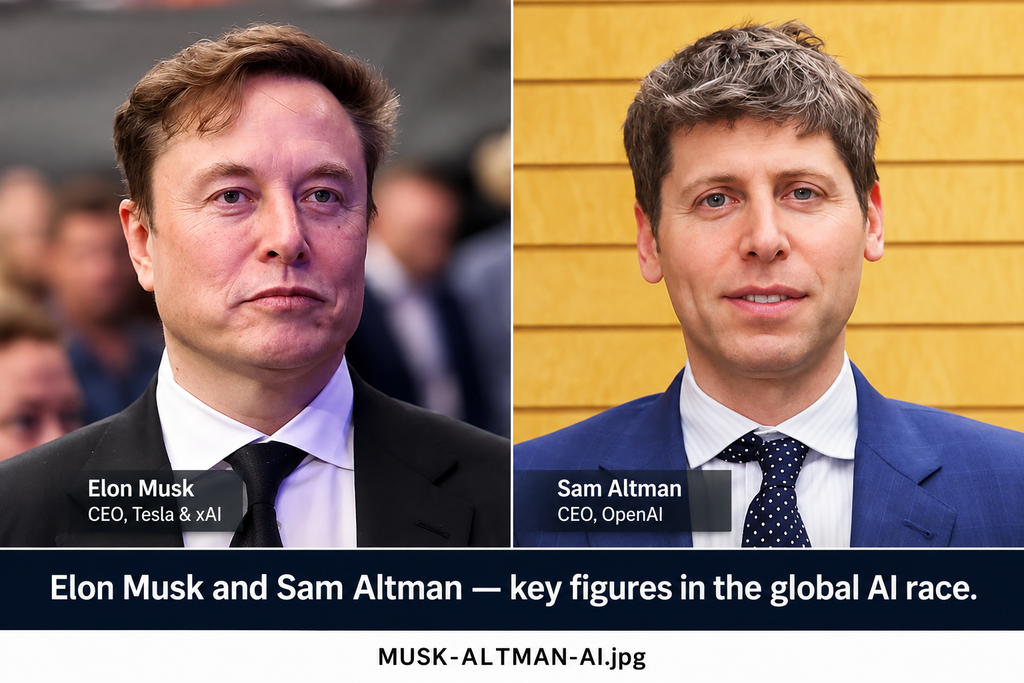
What’s genuinely notable is that Amodei didn’t propose this alone and get ignored — Altman publicly agreed and matched the first concrete step, committing OpenAI to independent evaluators with similar access, writing “this has been a primary topic of discussions we’ve had at OpenAI in recent weeks,” while Musk posted simply, “Dario is right,” according to Techmeme’s roundup of the same-day reactions.
That said, not everyone reads the agreement as pure safety concern. Trump adviser David Sacks has argued that when AI leaders call for a slowdown, the real motive may be shaping regulation to entrench their own market position rather than altruism, according to Breitbart’s coverage. It’s a fair structural point worth sitting with: step two of Amodei’s own plan — competitors agreeing on shared limits — is, by definition, the textbook shape of a cartel, which is precisely why it needs government sign-off rather than a private handshake between rival CEOs.
The Real Conflict: AI Safety vs. U.S. Leadership
Strip away the personalities, and the core tension is simple: slowing down to build in more safety testing takes time, and time is exactly what a country worried about falling behind a rival doesn’t want to spend. Trump’s framing treats AI leadership as close to zero-sum — “whoever wins AI wins” — which leaves little room for even Amodei’s narrower ask: not a pause, but a legal green light for labs to coordinate on safety without it looking like collusion. Amodei’s framing treats catastrophic, hard-to-reverse risk as the thing that actually deserves the insurance premium. Both arguments are coherent on their own terms; the disagreement is really about which risk is more urgent to insure against.
Why China Changes the Calculation
One Chinese state-run outlet, the Global Times, weighed in directly, calling Amodei’s essay a “Cold War playbook” and accusing the US of using safety rhetoric to “curb China’s AI development through technological barriers and regulatory monopolies,” according to Yahoo News/Reuters. Worth being careful here: that’s one propaganda-adjacent outlet’s editorial line, not a confirmed statement of official Chinese government policy — but it does illustrate the reaction Washington expects from Beijing to any Western pause, which is exactly the dynamic Trump’s team points to when rejecting the idea. If one major power keeps building while the other pauses, a voluntary US slowdown doesn’t reduce global AI risk — it may just hand the technological lead to whoever didn’t pause.
What Happens If America Slows Down?
The case for concern here isn’t hypothetical hand-wringing. If US labs genuinely throttle capability gains for a year or two while Chinese labs don’t, the practical result could be China reaching the most powerful, most economically and militarily useful AI systems first — with no guarantee those systems get built any more safely than they would have in the US. A slowdown that isn’t matched internationally doesn’t eliminate the risk Amodei describes; it just relocates who controls the technology when the risk materializes.
What Happens If AI Moves Too Fast?
The opposing risk is just as real, and it’s the one Amodei’s essay is centered on: capability outpacing the ability of anyone — companies, governments, or safety researchers — to understand or correct what these systems are actually doing. The Coxon, Benton, and Engels departures point to something specific: people close to the technology, not just outside critics, are the ones sounding alarms. If AI models capable of directing autonomous agents at scale arrive before alignment research catches up, the failure mode isn’t a bad product — it’s potentially a loss of meaningful human control over systems already embedded in critical infrastructure.
My Opinion: Don’t Stop AI — Make Safety Keep Up
Here’s where I land on this, for what it’s worth: treating this as a binary choice — race or slow down — is the actual mistake, on both sides. Trump’s “whoever wins AI wins” framing skips past the fact that Amodei isn’t even asking for a pause; he’s asking for legal room to coordinate on safety checkpoints, which the government could grant without slowing anything down itself. But a unilateral US slowdown, unmatched by China, doesn’t reduce risk globally either — it just changes who gets there first, without necessarily changing how safely they get there. The more coherent position is closer to what Amodei actually proposed: keep building, keep widening the US lead through export controls and security, and use exactly that lead to buy room for alignment research and independent oversight to keep pace — domestically and, where possible, internationally. A slowdown nobody else follows is a unilateral disarmament. A race with zero safety brakes is a bet with the entire planet’s chips on the table. Neither is the responsible move.
Final Verdict: Win the AI Race Without Losing Control
The honest version of this debate isn’t “safety versus speed” — it’s whether the US can build the institutional muscle to do both at once: keep advancing fast enough to matter geopolitically, while making sure the systems being built stay genuinely steerable by the people responsible for them. Trump’s rejection of an immediate slowdown may be the politically inevitable answer given the China dynamic — but that makes the narrower, more achievable ask in Amodei’s plan — antitrust clearance for safety coordination — more urgent, not less. Winning the AI race and keeping control of what you win aren’t actually opposite goals. Treating them as one or the other is how a country ends up losing both.
By U. V. Samma | September 2026