Photo Credit: Oval Office
Mesabi Metallics, owned by India’s Essar Group, plans a huge steel plant in Iowa fed by its new iron mine in Minnesota. The announcement is big. The questions behind it are bigger: who is paying, how much is promised versus real, and can a company with a troubled past deliver it?
Trump’s $15 Billion Steel Announcement
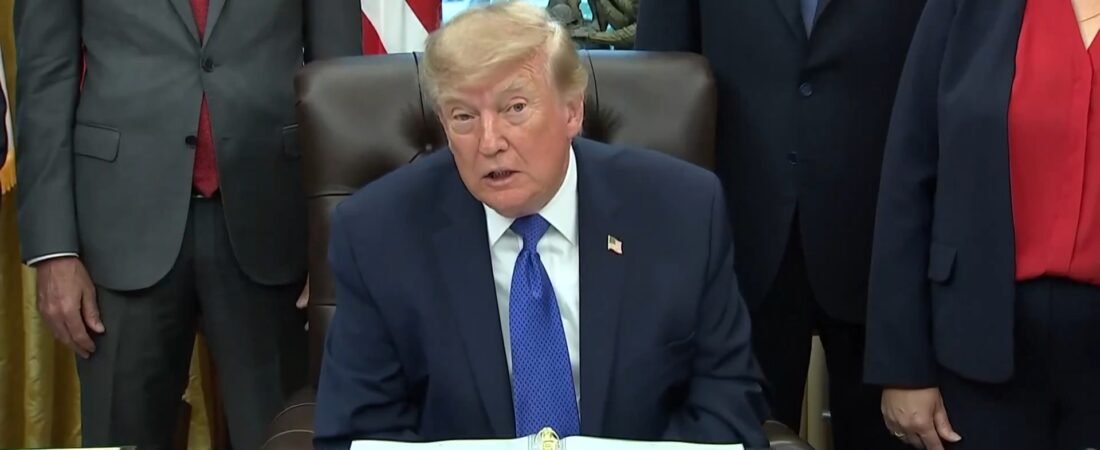
On Monday, September 28, President Donald Trump stood in the Oval Office and announced what he called “the largest steel plant in American history.”
The company is Mesabi Metallics. It plans to spend about $15 billion building a steel plant in southeast Iowa.
Here are the numbers, according to the White House:
- 7.5 million tons of steel a year in the first phase, rising to about 10 million tons
- 1,750 permanent jobs in Iowa
- Up to 6,000 construction jobs
- First steel expected in 2030
- A projected $95 billion boost to the US economy
“This steel will be mined, melted and made right here in the USA,” Trump said.
Iowa Governor Kim Reynolds, who was at the White House, called it “a transformational opportunity for our country, our state, and American families,” according to her office.
The timing matters too. The announcement came five weeks before the November midterm elections, with several Iowa Republicans facing close races, CBS News noted.
It’s Really an $18 Billion Project
Different headlines use different numbers: $15 billion or $18 billion. Both are right. They just count different things.
- $15 billion: the new steel plant in Iowa
- About $3 billion: finishing the company’s iron ore mine in Minnesota
- Together, about $18 billion: one connected system, from mine to mill
The idea is simple. Dig iron ore in Minnesota, turn it into pellets, send it by rail to Iowa, and make steel there. The company calls this “mine to mill.”
The Indian Company Behind the Deal
Mesabi Metallics is based in Nashwauk, Minnesota. But it belongs to the Essar Group, a large business group founded in India in 1969 by the Ruia family.
Essar has worked in steel, oil, power, ports and shipping. Mesabi’s chairman is Rewant Ruia, a member of the founding family. Another family member, Prashant Ruia, also sits on Mesabi’s board. Both were in the Oval Office.
“With the new steel complex in Iowa, we will complete the fully integrated American supply chain, from mine to mill,” Rewant Ruia said, according to Iowa Public Radio. “American ore carried on American railroads to an American steel plant powered by American energy.”
It’s worth being clear about what this is. India isn’t sending steel to America. An Indian-founded business group is putting its money into building factories inside America, with American workers and American ore.
This isn’t Essar’s first big steel project. In India, Essar once ran one of the country’s largest steel companies, Essar Steel. It fell into heavy debt and went through India’s insolvency process, and in 2019 it was sold to a joint venture of ArcelorMittal and Nippon Steel. That history is part of why the Iowa promise deserves careful attention, not just applause.
From Minnesota Iron Ore to Iowa Steel
The Iowa plant depends completely on the Minnesota mine. So how far along is the mine?
The mine sits on Minnesota’s Iron Range, near Nashwauk. According to the company, it’s a $2.5 billion project on more than 16,000 acres, built to produce about 7 million tons of iron ore pellets a year. The White House calls it “the first new iron ore mine in the United States in 50 years.”
It is further along than the Iowa plant, but it isn’t finished:
- Mining and startup work have begun. EXIM’s chairman visited on September 17 as the operation began its startup, according to EXIM.
- The mine produced its first iron concentrate in September. But concentrate still has to be turned into pellets. The company originally planned to produce pellets by September; it now says pellet production will follow soon after its processing plants come online, according to KAXE, a public radio station in northern Minnesota.
- A recent company filing with the US Securities and Exchange Commission says first production is expected in the last three months of 2026, with full commercial production 8 to 12 months after that, according to reporting that cites the filing.
So when the White House calls it a “newly opened” mine, that means it has started up. It does not mean it’s producing at full size yet.
Iowa Isn’t the Only Next Step
The Iowa plant is not Mesabi’s only big new plan. Eleven days before the White House event, the company announced another expansion, back in Minnesota.
On September 15, CEO Joe Broking told the Itasca County Board about a $5 billion “next phase of investment” at the Minnesota site, according to KAXE:
- $3.1 billion to grow iron ore pellet output from 7 million to 18 million tons a year
- $1.9 billion for a direct reduced iron (DRI) plant, a process seen as a cleaner way to turn ore into iron
- About 500 new jobs
- A total Minnesota project cost of about $7.5 billion
Like Iowa, this plan has no public financing yet. And it depends on something the company doesn’t have. Mesabi wants back state mineral leases covering 2,600 acres, which Minnesota’s Department of Natural Resources revoked in 2021 after years of missed deadlines, and later handed to rival miner Cleveland-Cliffs. Mesabi is suing Cleveland-Cliffs. It has also asked Minnesota to drop its requirement for environmental impact studies.
Broking was frank about timing. “As many of you know, we set aggressive targets from time to time,” he told the board.
So there are really two big, unfunded next steps: a $5 billion expansion in Minnesota and a $15 billion plant in Iowa, both depending on the same company, and both on top of a mine that isn’t in full production yet.
Trump’s 50% Steel Tariffs: Why Now?
Trump gave the credit to his tariffs, the taxes the US puts on imported goods.
“Soon after my inauguration, I imposed powerful 50% tariffs on all foreign steel, and now our steel industry is roaring back to life,” he said.
The argument goes like this: when foreign steel costs more because of tariffs, making steel in America becomes more attractive. The US still charges a 50% tariff on most imported steel, even after the Supreme Court struck down many of Trump’s other tariffs earlier this year.
But there’s an important difference between what Trump says and what has been shown:
- Trump’s claim: the tariffs are bringing steel plants back.
- What the company says: in its public statements so far, Mesabi talks about building an all-American supply chain, from ore to steel. It has not publicly said the tariffs are why it chose to build.
Tariffs can make a project like this look better on paper. But tariffs can also change. A plant that won’t make steel until 2030 is a bet that today’s trade rules will still be there years from now.
The $10 Billion Question
This is the part of the story most headlines got wrong.
You’ll read that the US government “will finance $10 billion” for this project. Here is what the official record actually shows:
- March 2026: EXIM announced support of up to $10 billion in potential financing for Mesabi’s expansion on Minnesota’s Iron Range. “Up to” and “potential” mean this is a ceiling, not money handed over.
- September 24, 2026: EXIM’s board approved a $770 million direct loan for the company’s iron ore mine in Minnesota, according to EXIM.
- Mesabi’s CEO, Joe Broking, said that loan completes the funding for the $2.5 billion mine project, according to KAXE.
So the confirmed number is $770 million, for the mine. There is no announced government money for the Iowa plant.
EXIM is the US government’s export-credit bank. Its traditional job is lending to help American companies sell abroad. Under a newer programme, called the Make More in America Initiative, it can also finance factories and mines inside the US, if what they produce can compete in export markets. That’s how an export bank ends up funding a Minnesota mine.
That also matters to taxpayers. EXIM loans are backed by the US government, so if a loan isn’t repaid, the government carries the risk. The terms of the $770 million loan, such as the interest rate and what happens if the company can’t pay, have not been made public.
Who Is Paying the $15 Billion?
This may be the biggest unanswered question.
For the Minnesota mine, we know quite a lot. According to the company’s own March 2026 statement:
- Essar has put in more than $2 billion of its own money
- A private lender, Breakwall Capital, provided a $520 million loan
- EXIM has now added a $770 million loan
For the Iowa plant, almost nothing has been made public:
- No details on how much Essar itself will put in
- No details on bank loans or other borrowing
- No announced state incentives, tax breaks or local deals from Iowa
- No confirmed site. Iowa media report it will be in Lee County, but the company hasn’t named one.
Keep three things separate:
An announced investment is not money already spent. And money promised is not financing already secured.
Right now, the $15 billion Iowa plant is a plan with a price tag. How it will be paid for hasn’t been explained.
Can a 10-Million-Ton Steel Plant Work?
To understand the size, compare it to the whole country. The US makes roughly 80 million tons of steel a year. A plant making 10 million tons would add about an eighth of that.
That raises real business questions:
- Will there be enough buyers? The US still imports a lot of steel. Replacing imports is the plan, but that depends on demand and prices years from now.
- Can it compete? Existing American steelmakers, like Nucor and Cleveland-Cliffs, already fight for the same customers.
- What will steel cost in 2030? Prices swing up and down. A plant planned today is betting on prices years ahead.
- Who is it for? The White House says the plant will be able to supply high-grade steel for defence, and Trump said it would sell steel at home and abroad.
None of these questions means the plant will fail. They mean the answer isn’t known yet.
The $95 Billion Figure: Fact or Forecast?
The $95 billion number is everywhere. It’s worth reading carefully.
Reuters reported that the White House expects the first phase to generate $95 billion in total economic impact during construction and its first 10 years of operation, according to a Reuters report carried by Virginia Business.
So it is:
- A projection, not a result
- A “total economic impact” figure. Numbers like this usually count the plant’s own sales plus the spending it causes elsewhere: suppliers, workers’ shopping, local businesses. That makes them much bigger than the plant’s own output.
- Spread over more than a decade
What hasn’t been published: who calculated it, which model they used, and what they assumed about steel prices and demand. No independent group has checked it publicly.
The fair way to say it is: the White House projects $95 billion. Not: the plant will add $95 billion.
The Jobs Promise
Here are the job numbers, sorted by type:
| Type | Number | Where it comes from |
|---|---|---|
| Permanent jobs at the Iowa plant | 1,750 | White House |
| Construction jobs in Iowa | Up to 6,000 (the company says 5,000–6,000) | White House and company |
| Permanent jobs at the Minnesota mine | About 350 | Company |
| Extra jobs from the $5 billion Minnesota expansion | About 500 | Company |
The key difference: construction jobs are temporary. They last while the plant is being built. The permanent jobs are what remains once the building stops.
All of these are estimates from the company and the White House. None has been independently checked. And none of the Iowa jobs exist yet; they depend on the plant actually being built.
The Project’s Troubled History
This is not the first time big promises have been made here.
- 2008: Essar’s company, then called Essar Steel Minnesota, began work on a huge iron mine and processing plant in Minnesota, according to CBS News. The plan also included a steel mill.
- The years that followed: delays, missed deadlines and money problems.
- 2016: Essar Steel Minnesota filed for bankruptcy. It came out of bankruptcy as Mesabi Metallics, and Essar eventually regained control.
- 2019: Frustrated by the delays, Minnesota’s Department of Natural Resources took steps to potentially bar Essar Global from working with the state. The company sued, and the state never completed that process, CBS reported.
- 2021: The Department of Natural Resources revoked Mesabi’s leases on 2,600 acres after repeated missed deadlines, and later gave them to Cleveland-Cliffs, according to KAXE.
- 2026: The mine is finally starting up, about two decades after the idea began.
Local leaders have felt this for years. In an earlier statement, two Minnesota state lawmakers said northern Minnesotans had “waited patiently — too patiently, in fact” for economic gains that had been “dangled in front of their eyes for many years.” At the mine’s September event, one state representative said his advice to the owners had been simple: “Don’t do what you did last time.”
The mine is now nearly real. That’s genuine progress. But it took about 20 years, a bankruptcy and fights with the state to get here. The Iowa plant would cost six times as much, and it hasn’t started.
What Could Go Wrong?
These are risks, not predictions. Any project this size faces them:
- Money: neither the Iowa plant nor the Minnesota expansion has announced financing.
- Delays: big industrial projects often run late. This company’s last one ran very late.
- Rising costs: building costs can climb over five years.
- Steel prices: if prices fall, the business case gets weaker.
- Tariffs: a future government could change them.
- Permits: a steel plant needs environmental approvals.
- Transport: ore must move by rail from Minnesota to Iowa, reliably.
- Workers: thousands of skilled workers will be needed.
- The mine: if the Minnesota mine struggles, the Iowa plant has no ore.
What It Means for India and the US
The Indian angle here is real, and interesting.
For decades, the usual story was Western companies building in India. This is the reverse: an Indian-founded group making one of the biggest industrial bets in America. It follows Japan’s Nippon Steel buying US Steel in 2025, part of a wider pattern of foreign steelmakers building inside the US to get around tariffs and serve American buyers.
For Indian readers, the lesson isn’t simply “an Indian company has made it big in America.” It’s that Indian business groups now compete for American industrial projects at the very top level, and they will face the same hard questions as anyone else: can they pay for it, and can they finish it?
What We Know, and What We Don’t
Confirmed:
- Trump announced a planned $15 billion steel plant in Iowa on September 28.
- Mesabi Metallics, owned by India’s Essar Group, is behind it.
- It would use ore from the company’s Minnesota mine, which is starting up.
- Planned output: 7.5 million tons a year, rising to about 10 million.
- Target: first steel in 2030.
- EXIM approved a $770 million loan, for the Minnesota mine.
- The company has separately announced a $5 billion expansion plan in Minnesota.
Projections (not yet real):
- 1,750 permanent jobs and up to 6,000 construction jobs in Iowa
- $95 billion in economic impact over about a decade
Still unanswered:
- How the $15 billion Iowa plant will be paid for
- How the $5 billion Minnesota expansion will be paid for, and whether Mesabi gets its revoked leases back
- Whether Iowa is offering tax breaks or other incentives
- The exact site
- The terms of the government loan
- Who calculated the $95 billion, and how
- Whether the plant gets its permits and is built on time
Conclusion
The announcement is real, and so is the ambition. An almost-finished mine in Minnesota shows this company can build something big, eventually.
But a White House event is not a steel plant. The Iowa plant has no public financing plan, no confirmed site, and no independent check on its biggest numbers, and it sits beside a second unfunded expansion in Minnesota. The company behind both took two decades and a bankruptcy to finish its last project. The honest verdict today is simple: this is a promise worth watching, not yet a plant worth celebrating.
By The Lion Capital Editorial Team | September 2026