After 15 years under Tim Cook, Apple enters a new chapter with hardware veteran John Ternus at the helm — just as the company faces mounting pressure in AI, products and supply chains.
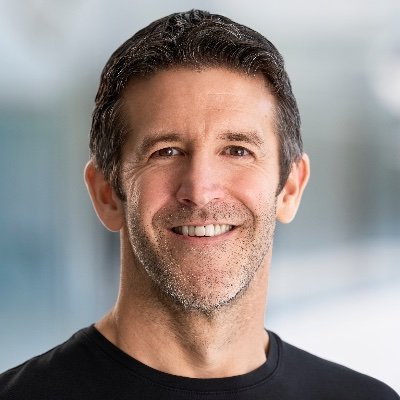
Photo Credit: John Ternus via his official X account (@johnternus)
Introduction — Apple Has a New CEO
On September 1, 2026, John Ternus became the CEO of Apple.
It was not sudden. Apple announced the transition months ago. But when Tuesday came, the change was official. Tim Cook, who led Apple for 15 years, moved into a new role: Executive Chairman. Ternus stepped into the job that is the most powerful position in technology.
This matters because it marks a turning point. Apple under Cook was about scaling and maintaining. Apple under Ternus will be about building and innovating.
And Ternus is stepping in at a moment when Apple has never faced more pressure.
The End of the Tim Cook Era
Tim Cook became CEO on August 24, 2011. Steve Jobs had resigned that day. Jobs remained as chairman until his death on October 5, 2011 — six weeks later.
At that moment, Apple was already huge. But Cook did something that seemed impossible: he made Apple bigger.
When Cook started, Apple’s market value was roughly $350 billion. When he stepped down in 2026, it was $4 trillion. That is 11 times larger.
How did he do it? By making sure Apple’s machines and services worked reliably. By managing supply chains across the entire world. By keeping costs down while keeping quality high. By making sure that when you bought an iPhone, it would work perfectly.
But Cook was not just an operator. Under his leadership, Apple launched the Apple Watch, built AirPods into a category nobody expected, created custom silicon chips (Apple Silicon) that changed how Macs work, and built a services business worth over $100 billion.
Still, there is something true: Cook managed and scaled what Jobs imagined. For 15 years, Apple was profitable and stable. But it was also cautious. Innovation slowed. iPhone stayed basically the same, updated year after year with incremental improvements.
Now Ternus has to do something Cook did not fully accomplish: he has to innovate at scale.
Read more: Tim Cook to become Apple Executive Chairman, John Ternus to become Apple CEO — Apple Newsroom, April 2026
Who Is John Ternus?
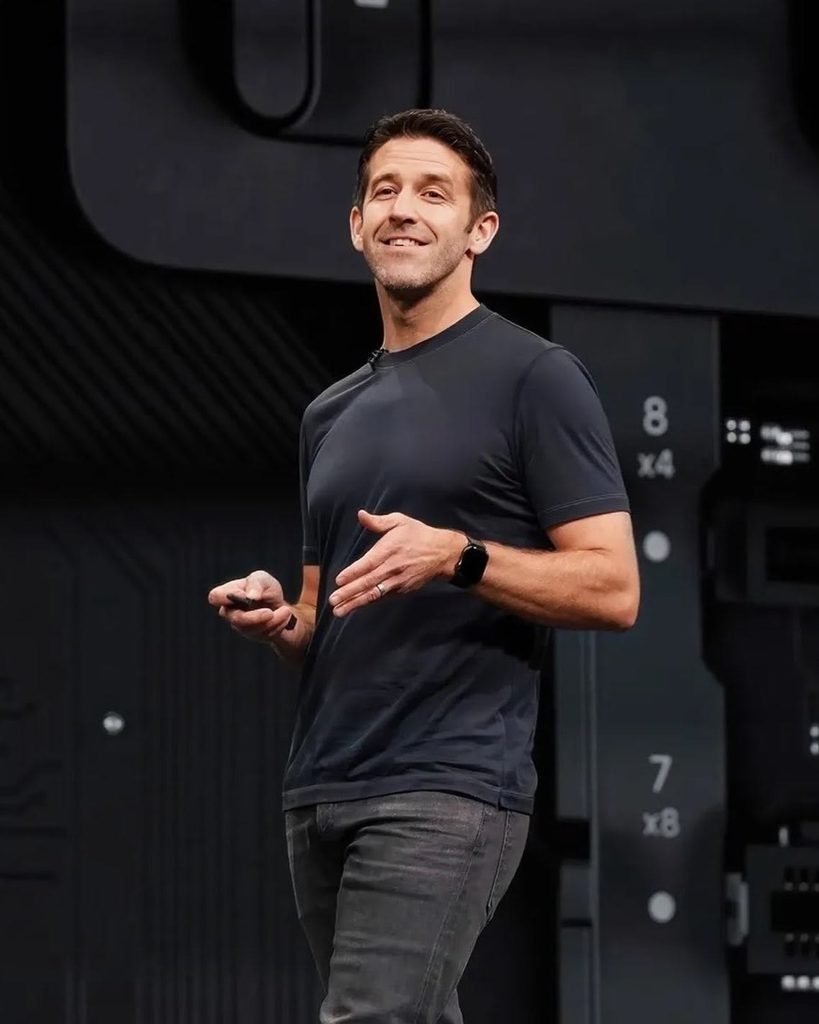
John Ternus is 50 years old. He studied mechanical engineering at the University of Pennsylvania. He joined Apple in 2001.
That was 25 years ago. He was there when the company was much smaller. He has seen Apple grow from a computer maker into the world’s most valuable company.
For most of his career, Ternus worked on hardware. He understood how to design products that people actually wanted to use. He understood how to make them real — how to actually build them, manufacture them, ship them to stores.
In 2013, he became Vice President of Hardware Engineering. In 2021, he became Senior Vice President of Hardware Engineering. That was the job right before he became CEO.
When you become SVP of Hardware at Apple, you control the organization that builds everything physical. Every device. Every part. Every manufacturing process.
From 2021 onward, Ternus ran that division. He oversaw the engineering of products including the latest iPad, the refined Apple Watch, and the Vision Pro — Apple’s expensive headset for virtual and augmented reality.
From Hardware SVP to CEO: What Ternus Led
Starting in 2021, when he became SVP, Ternus oversaw the hardware teams that made things work.
The Vision Pro, Apple’s boldest product in years, shipped under his watch. It was expensive. It was complex. It was risky. But it worked. People put it on, and it did what Apple said it would do.
That matters. Because Ternus knows the difference between something that sounds good in a presentation and something that actually works when you buy it and take it home.
He knows manufacturing. He knows supply chains. He knows where things can go wrong and how to fix them before they do.
This is different from Tim Cook. Cook was even more obsessed with operations — he ran supply chains like a conductor running an orchestra. But Ternus comes from the product side. He understands what it feels like to hold something in your hand and know whether it is good or bad.
Why Apple Chose a Product-Focused Leader
Apple’s board had a choice.
They could have picked an operations expert to replicate what Cook did. They could have hired someone from outside Apple.
Instead, they picked an engineer.
Why? Because Apple has a problem. It is not broken. But it is not pushing forward like it used to.
The iPhone is 19 years old. It is still a great phone. But it is basically the same phone — just updated year after year with incremental improvements.
Apple needs to build something new. Not just improve what exists.
A hardware engineer understands this. Ternus spent his entire career asking: “How do we make this better? How do we solve this problem? What would it take to build something people have never seen before?”
That is different from asking: “How do we scale this? How do we make this process more efficient? How do we protect what we have?”
Apple’s Biggest Challenge: AI
Ternus’s first real test is immediate.
Artificial intelligence is reshaping technology. Google is building AI into everything. Microsoft is doing the same. OpenAI is building ChatGPT. Anthropic is building Claude. Every big tech company is racing to lead in AI.
Apple is behind.
Apple Intelligence — Apple’s version of AI — has been delayed. It does not do what competitors’ AI does. Analysts are critical. Investors are impatient.
Investment analysts have noted growing fatigue about Apple’s AI delays. Some have estimated Apple has roughly 18 months to make Apple Intelligence compelling before investor patience runs out. The timeline stems from delays announced in 2024, when Apple demonstrated Apple Intelligence but then postponed key features, leaving investors skeptical about execution.
That is Ternus’s first major challenge. He has to prove that Apple can catch up in AI while still being Apple — focused on privacy, focused on what actually works.
This is hard for hardware engineers. AI is software. AI is abstract. It is not something you can hold in your hand and test in a factory.
But Ternus has to figure it out. Because if Apple falls behind in AI, it falls behind everywhere.
The Foldable iPhone: Ternus’s First Test
One week after Ternus became CEO, Apple is expected to hold its fall product event.
The rumored announcement: the foldable iPhone.
Apple is expected to enter the foldable phone market. Samsung has been making foldable phones since 2019. But Apple waited. It has been waiting until it could do it right.
The foldable iPhone is expected to cost more than $2,000. That is expensive. But Apple is betting that people will pay for it.
Analysts forecast Apple could sell 7 to 10 million units in the first year, and that the foldable could add 11% to overall iPhone pricing by mid-2027.
But the foldable also faces real challenges. Reports indicate the display has higher-than-expected failure rates. Supply constraints on memory and components could limit availability. Engineering challenges remain unsolved, though some reports suggest Apple believes it can overcome them by September.
This is Ternus’s first test as CEO. Can he ship a new product that works? Can he build something that people want? Can he manage the manufacturing complexity?
If the foldable phone works and sells well, Ternus proves he can innovate. If it fails or has problems, people will say Apple lost its way.
Read more: Apple’s new iPhone strategy comes with a $2,500 question — Yahoo Finance / TheStreet, August 31, 2026
The Supply Chain Problem
Apple makes iPhones in China. It makes AirPods in China. It makes most of its products in China or relies on Chinese manufacturers.
This was fine for years. China had the factories, the expertise, the cost advantage.
But now there are problems. Geopolitical tensions between the US and China are rising. Trade wars are happening. Companies are looking to move manufacturing away from China.
Ternus has to figure out how to build Apple products in different countries. Thailand. India. Vietnam. Mexico.
But these countries do not have the experience China has. The factories are not as established. The supply chains are not as smooth.
Cook managed this complexity. But it is harder now. And Ternus has to do it while also launching new products and building AI.
What Could Actually Change Under Ternus
Here is what might happen differently:
Apple could move faster. Ternus was an engineer for 25 years. He is used to moving quickly, testing ideas, fixing problems. Cook was more cautious about changes. Ternus might be less cautious.
Apple could take more risks on new products. Vision Pro could get better funding and focus. New categories could get real investment.
Apple could challenge its own products. An engineer asks: “Is this the best way to do this? What if we tried something completely different?”
Here is what probably will not change:
Apple will stay focused on making things that work. That is in Ternus’s DNA. He will not release a product until it is ready.
Apple will stay expensive. Ternus believes in quality over quantity. Premium pricing will stay.
Apple will stay private about its plans. Tim Cook was secretive. Ternus probably will be too.
The Real Question
The question investors and customers are asking is simple: Can Ternus do what Cook did, but also do what Jobs did?
Cook scaled and protected what Jobs built. But he did not create new categories the way Jobs did.
Jobs imagined the iPhone. Cook made sure it worked for billions of people.
Ternus has to both protect Apple’s business (make sure it stays profitable and strong) and innovate (build something new and exciting).
No one has ever done both perfectly. Steve Jobs was a visionary but not great at operations. Tim Cook was great at operations but not a visionary at new categories.
Can Ternus be both?
The foldable iPhone will give us some clues. Vision Pro’s future will tell us more. The AI strategy will tell us the most.
Read more: John Ternus takes over Apple as Tim Cook steps aside — NPR Here & Now, September 1, 2026
Conclusion — A New Apple Begins
Tim Cook inherited an iconic company and made it vastly more profitable and more powerful.
John Ternus inherits that same powerful machine. But now he has to make it do something new.
He does not have as much time as Cook did. Competition is fiercer. Markets move faster. Investors are impatient.
But he has something Cook did not fully have: he thinks like a maker, not just a manager.
That might be exactly what Apple needs right now.
The test comes next week, next month, next quarter. Can Ternus build products people want? Can he move fast enough? Can he lead Apple into the AI era while keeping Apple focused on what made it great?
We will see.
By The Lion Capital Editorial Team | September 2026