
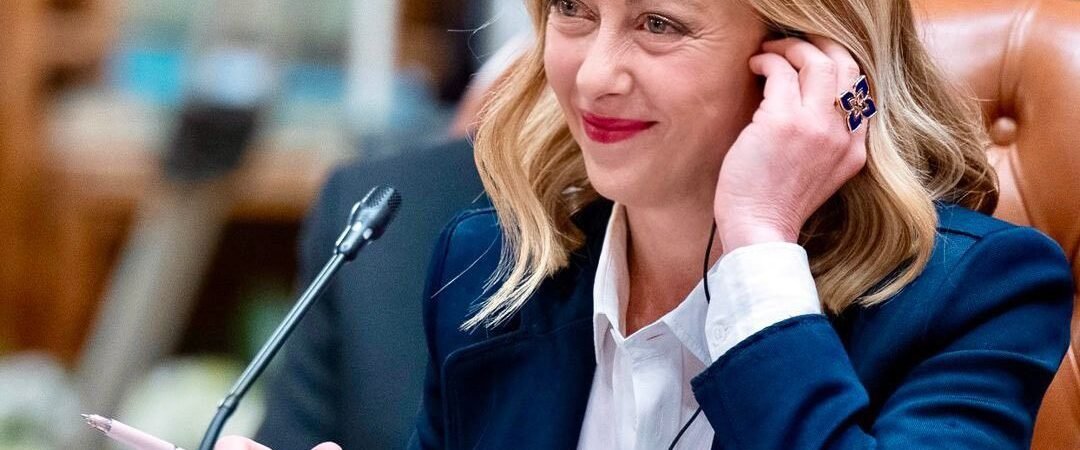
Photo Credit: Unknown / Source Unverified
Introduction — Meloni Breaks Italy’s Political Stability Record

On September 4, 2026, something unusual happened in Italy. Giorgia Meloni, the country’s first female prime minister, reached a milestone that would seem ordinary in most democracies but felt almost revolutionary in Rome: her government lasted longer than any other in Italy’s postwar history without a major coalition collapse.
One thousand four hundred and thirteen days. That’s how long Meloni’s coalition maintained the same basic structure and parliamentary majority. It broke the previous record of 1,412 consecutive days set by Silvio Berlusconi’s second government between 2001 and 2005—which was itself a coalition of four parties, not a single-party government.
In a country that has cycled through 68 governments in the past 80 years—an average of one new government every year and one month—this matters. Political stability isn’t just a number. It affects whether businesses invest, whether the government can pass laws, whether Italy can plan more than a few months ahead. And right now, Italy has that in a way it hasn’t for decades.
But this record comes with a question: Can Meloni keep it?
Who Is Giorgia Meloni?
To understand why Meloni’s record is significant, you need to know who she is and how she got here.
Meloni was born in Rome in 1977. She entered politics young, becoming involved in youth movements as a teenager. In 2008, at just 31 years old, she became Italy’s youngest-ever government minister when she was appointed Minister for Youth under Berlusconi. She brought intellectual credentials from her work with think tanks and political activism—not the typical path of a firebrand. According to Il Giornale, her rise reflected a shift from protest politics to institutional consolidation.
In 2012, she helped co-found the Brothers of Italy (Fratelli d’Italia), a right-wing party that positioned itself as different from other European populist movements. While they held strong positions on migration, national identity, and traditional values, Meloni developed a reputation as someone willing to work within the system, not against it.
When elections came in September 2022, the Brothers of Italy won the largest share of votes in a fragmented parliament. Meloni was asked to form a government. She built a coalition with two other center-right parties: Forza Italia (the party founded by Berlusconi) and the League (a smaller right-wing party). The coalition took office on October 22, 2022.
What’s important about Meloni’s rise is this: she came to power not as a protest vote against “the system,” but as someone who could actually lead it. And that shift from opposition to governance is what has allowed her government to endure.
How Meloni Surpassed Berlusconi’s Record
Berlusconi’s record of 1,412 consecutive days came from his second government, which ran from June 2001 to April 2005—itself a coalition of Forza Italia, the National Alliance, the League, and the CCD–CDU. That coalition held through five years despite coalition tensions.
Meloni’s record is comparable but under different pressure. She reached the same number—and then passed it—while managing a three-party coalition with different regional bases and political priorities. The difference was that Meloni’s government saw minister rotations without a formal government collapse. Tourism Minister Daniela Santanchè resigned over legal issues in 2024. Justice Undersecretary Andrea Delmastro left over remarks. Raffaele Fitto moved to Brussels to become a European Commission vice president. Each time, Meloni reshuffled individual positions but the underlying coalition majority—the parliamentary votes she depended on—stayed intact. That technical distinction matters in Italian political counting: the government endured because the coalition didn’t fracture, even as individual ministers cycled out.
She also made strategic compromises. When the opposition pushed for certain policies, she sometimes gave ground. When coalition partners wanted different priorities, she found ways to balance them. This isn’t glamorous governance, but it’s the work that keeps governments alive.
By September 2026, journalists who had written premature obituaries for her government looked back at four years of relative continuity. In Italian terms, that felt almost impossible.
Why Meloni’s Coalition Has Stayed United
The real question isn’t whether Meloni is a good leader in abstract terms. It’s why three parties with different ideologies and power bases haven’t ripped each other apart.
The answer has several parts.
First: Shared fear of the left. Italy’s opposition is deeply fragmented. The main left-wing party, the Democratic Party, has failed to build broad appeal. This means the center-right coalition faces no unified opposing force. When one coalition partner thinks about abandoning ship, they look at the alternative and decide to stay.
Second: Electoral math. Polls consistently show Meloni’s Brothers of Italy topping voting intention. Her coalition partners know they’re better off with her in charge than fighting her on the outside. If they left the coalition, Meloni would likely survive politically, but they would lose government positions, minister titles, and leverage.
Third: Economic performance. The government added approximately 1.3 million workers to Italy’s employment rolls during its tenure. It kept budget deficits under control in a period of inflation and European economic stress. When the economy isn’t collapsing, governments tend to hold together better.
Fourth: Pragmatism over ideology. Meloni ran on populist themes during her campaign, but governed as a pragmatist. She worked with Europe, not against it. She supported NATO positions on Ukraine. She made deals with business rather than waging war on elites. This moderation frustrated some of her own supporters but stabilized the coalition.
There have been bumps. A judicial reform referendum she backed was defeated in March 2026, a public setback. Some coalition partners pushed for policies she resisted. But nothing broke the coalition’s basic structure.
Meloni’s Key Priorities: Jobs, Security and Reform
What has Meloni actually done in four years? Here are the concrete moves, not the slogans.
On jobs: The government expanded incentives for businesses that hire workers, particularly in southern Italy, where unemployment was persistently higher. It reformed labor regulations to make hiring easier for small businesses while maintaining protections for permanent workers. According to government figures and Italy’s national statistics office Istat, employment rose by approximately 1.3 million workers during Meloni’s tenure. Important context: this occurred during a European economic recovery period after 2022. The gains are real, but they happened alongside broader EU economic improvement, not in isolation.
On security: Meloni’s government took a harder line on migration. It negotiated with other European countries to reduce sea arrivals and pushed to relocate migrant processing centers away from coastal towns. This was popular with her base, but it also created practical problems. Human rights groups complained about conditions in detention centers. Other European countries sometimes resisted sharing the burden. But the government pursued the policy consistently.
On reform: Meloni tried to change Italy’s judicial system, proposing changes to how judges are appointed and how trials proceed. She believed the courts moved too slowly and the judicial system was too politicized. In March 2026, Italians voted on the reform in a referendum. Approximately 54 percent voted against it, with unusually high turnout for an Italian referendum. It was a real blow to Meloni’s agenda. But she didn’t try to force it through without democratic approval, and the government survived the defeat without fracturing.
The pattern matters: Meloni pursued right-wing policies (migration restrictions, employment incentives favoring businesses, judicial reform) through normal democratic channels, sometimes winning, sometimes losing. This isn’t governance by crisis or emergency powers.
International Leaders React to Meloni’s Leadership
How does the rest of the world see Meloni’s government?
European leaders view it as stable and predictable. Yes, Meloni represents the right wing of European politics. But she’s not trying to leave the EU or NATO. She’s not threatening democracy from within. She’s someone they can negotiate with. As The Guardian and other European outlets have noted, Meloni’s pragmatism in foreign policy contrasts with some of her campaign rhetoric.
“When it comes to foreign policy, Italy has never been so central, particularly in Europe,” Marco Osnato, a prominent lawmaker from her party, told international media. This is partly hype—every government likes to say it’s central to Europe. But Italy’s diplomatic role has been steadier under Meloni, partly because the government hasn’t been in crisis mode.
American officials have worked with Italy on NATO issues and Ukraine support without major friction. France and Germany, who sometimes clash with Italy over policy, have found Meloni a predictable partner.
The international takeaway: Meloni is center-right, but she’s establishment center-right. That consistency has diplomatic value.
Why Political Stability Matters for Italy
Before you dismiss this record as meaningless number-crunching, consider what stability actually does.
When businesses consider opening a factory or making a long-term investment, they look at political risk. Will the government be there in two years? Will policies stay stable? Will they have someone in power they can work with? Frequent government collapses make companies hesitant to invest.
Italy’s economy is the world’s eighth-largest, but it underperforms compared to similar countries. As Reuters has reported, part of the reason is political volatility—companies don’t invest in countries that might have a new government every 14 months. Stability creates conditions for investment, even if it doesn’t guarantee growth.
Stability also allows long-term planning. Healthcare systems, infrastructure projects, educational reform—these take years to implement. If you’re always fighting a government crisis, you can’t focus on these basics.
Four years of continuity under Meloni has meant Italy can actually think beyond the next election cycle.
It also affects the EU relationship. Brussels tends to trust governments that stick around. A stable Italy is a more cooperative partner on European issues—whether that’s climate policy, defense spending, or economic coordination.
Meloni’s Next Challenge: Reforms and the Next Election
The record is history now. The question is what comes next.
Parliamentary elections are scheduled for 2027—sometime in the spring or early summer, unless something forces an earlier vote. Meloni’s coalition will likely run together again. Current polls show her winning.
But the landscape is fragmenting. Roberto Vannacci, a former general, launched a new party called Futuro Nazionale that’s polling around 7 percent. As Politico and other outlets have covered, Vannacci’s party attacks migrants and LGBTQ+ people—positions further right than Meloni. If he emerges as a power broker, he could destabilize the coalition post-election by demanding significant influence.
On the left, voter abstention is growing. Turnout in 2022 was 64 percent, already a postwar low. In European elections in 2024, it fell below 50 percent. This raises a question: if fewer Italians vote, is the government truly legitimate, even if it’s stable?
Meloni also faces the unfinished business of reform. Her judicial reform lost the referendum. She’d like to try again, but she’s learned to be cautious. Constitutional changes require bigger supermajorities and broader support than her coalition alone provides.
There’s also the question of whether she can maintain the economic performance that’s held her coalition together. Global economic slowdowns, changes in interest rates, or shocks outside her control could destabilize the coalition by making coalition partners blame each other for economic problems.
What Her Record Means for Italy’s Future
Italy’s political history is a cautionary tale. The country went through 68 governments in 80 years partly because its electoral system fragmented parliament into small pieces. Coalitions were hard to build, constantly falling apart under pressure.
Meloni’s record shows that with the right conditions—a clear electoral winner, pragmatic leadership, opposition weakness, economic performance—coalition governments can actually last in Italy.
But longevity doesn’t automatically mean success. You can have a stable government that fails to reform, innovate, or prepare for challenges. You can have a long-lasting government that’s just marking time.
The real measure of Meloni’s government won’t be the calendar. It will be what Italy looks like in 2027 compared to 2022: Are employment levels higher? Is the country more secure? Is the institutional framework stronger? Have core reforms been accomplished?
By those measures, the verdict is mixed. Employment is up, security policies were pursued, but the judicial reform failed. Italy still has serious challenges in education, infrastructure, and long-term economic competitiveness.
Conclusion — Can Meloni Maintain Italy’s New Stability?
The bigger question facing Italy isn’t whether Meloni can maintain this stability personally. It’s whether the country can keep it at all.
Italy’s 68 governments in 80 years weren’t accidents. They reflected structural problems: an electoral system that fragmented parliament, regional divisions, and a political culture where loyalty was often personal rather than institutional.
Meloni benefited from circumstances—a unified coalition partner in Forza Italia, weakness on the left, electoral momentum. She also governed with pragmatism when she could have governed with ideology alone.
But the 2027 elections could change things. New forces might emerge. The coalition could splinter. And Meloni’s government, for all its recent longevity, is still competing in a system that has historically made long-term stability rare.
Italy’s stability record under Meloni matters because it shows the country can hold together. But whether that becomes the new normal or just a four-year exception depends entirely on what happens next.
By The Lion Capital Editorial Team | September 2026