
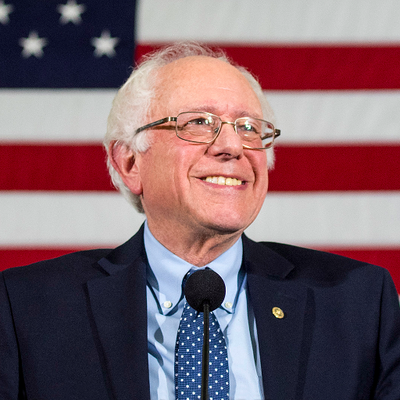
Photo Credit: Bernie Sanders/X (@BernieSanders)
Introduction — What Happened
Bernie Sanders recently criticized Elon Musk for having too much wealth while millions of Americans struggle with healthcare, housing, and basic costs.
Musk fired back, arguing that his wealth isn’t actual cash—it’s mostly stock in Tesla and SpaceX. He said that’s completely different from having billions sitting in a bank account. Republican Senator Mike Lee joined in, defending Musk’s property rights and questioning whether extreme wealth should automatically become government money.
The exchange might seem like just another celebrity Twitter argument. But it’s actually part of a much bigger American debate: Should billionaire wealth be taxed more heavily? Is stock-based wealth the same as earned income? Does extreme inequality hurt the country? And most fundamentally: Who owns what, and what does society get to claim?
This argument reveals how differently Americans think about money, ownership, and fairness.
Bernie Sanders’ Argument
Bernie Sanders didn’t pull a number out of nowhere. He pointed to real struggles: millions of Americans living paycheck-to-paycheck, millions without reliable healthcare, people facing homelessness while working full-time jobs.
In his original post, Sanders highlighted that while Musk accumulates vast wealth, the gap between the richest and everyone else has become obscene. He argued that when one person can become this wealthy while so many people struggle with basic needs, the system has failed.
Sanders’ larger argument is this: Extreme wealth concentration is fundamentally unfair. He believes billionaires should pay more in taxes to fund healthcare, education, and infrastructure that ordinary Americans desperately need.
This is part of Sanders’ consistent position: the tax system allows the ultra-wealthy to pay lower effective tax rates than middle-class workers. Musk didn’t earn his wealth through salary—he got it by owning massive stakes in companies that became extremely valuable. But Sanders argues that doesn’t make it acceptable to let that wealth escape taxation while ordinary people shoulder the tax burden.
Elon Musk Responds
Musk’s response was direct: “I don’t have billions of dollars in cash. My wealth is primarily in Tesla and SpaceX stock.”
This distinction matters to understanding his argument. Musk owns a significant stake in Tesla and a larger stake in SpaceX. When those companies increase in value, his net worth increases. But he doesn’t actually have access to billions in liquid cash.
“Other shareholders, including many retirement accounts, also benefit when these companies become more valuable,” Musk argued. He pointed out that Tesla’s growth has made the company more useful—better electric vehicles, more efficient manufacturing, expanding globally. When a company becomes more useful, its value increases, and shareholders benefit. That’s how capitalism is supposed to work, in Musk’s view.
He also said that selling large amounts of stock to raise cash would trigger massive tax bills. So even though his net worth is enormous, actually converting that to spendable money would be complicated and costly. The wealth exists on paper, not in his bank account.
Mike Lee Defends Musk
Senator Mike Lee, a Republican, entered the conversation with a property rights argument.
Lee’s point: Musk earned (or owns) Tesla and SpaceX stock. That stock is his property. The fact that it became very valuable doesn’t mean it automatically belongs to society or that it should be taxed away.
In essence, Lee argued: “Nobody has the right to someone else’s property just because they wish they had it.” He suggested that Sanders’ criticism was based on envy rather than sound economic policy.
Lee represents a common conservative position: wealth that’s earned or owned legitimately shouldn’t be treated as automatic government revenue just because it’s large. That crosses into taking what isn’t yours, in this view.
Why Musk’s Wealth Is Mostly Different From a Bank Account
This is where understanding the actual distinction matters.
Let’s say you own a house worth $2 million. That’s part of your net worth. But you don’t have $2 million in your pocket. If you need actual cash, you have to sell the house (pay realtor fees, taxes), wait for a buyer, and then access the money. Until then, the $2 million is real but not liquid.
Musk’s situation is similar but more extreme. His wealth is held almost entirely in company stock. If he wanted to convert all of it to cash, he’d have to sell shares. Selling that many shares would:
- Take months or years
- Trigger enormous capital gains taxes
- Potentially crash the stock price
- Strip him of control of his companies
So while his net worth is genuinely in the hundreds of billions, most of that wealth is “on paper.” He can’t access it like cash without massive consequences.
This is the key distinction: Net worth and liquid wealth are not the same thing. Most billionaire wealth sits in company stock, real estate, or other assets. It’s valuable, it’s real, but it’s not cash.
The Bigger Debate: Wealth Inequality
But here’s where the technical distinction gets complicated by real disagreement.
Sanders’ perspective: Even if the wealth is mostly stock, the gap is still obscene. Musk’s stock holdings give him enormous power—over his companies, over his employees, over politics through his influence. Plus, the tax system allows him to hold this wealth indefinitely without paying taxes on gains until he sells. The real debate is about “unrealized gains” and strategies where billionaires borrow against their stock to access money without ever selling (avoiding taxes for decades). Ordinary investors face the same rules, but Musk’s scale lets him play by different rules in practice. And if he’s this wealthy, he can certainly afford to pay more in taxes.
Musk and Lee’s perspective: Ownership is ownership. The stock represents actual ownership of companies he built. Forcing him to sell stock to pay taxes strips him of company control and punishes success. Plus, when he does sell shares (the only time capital gains taxes apply), he pays them like everyone else. If the government needs more revenue, raise income taxes or sales taxes instead—don’t create new wealth taxes that would force billionaires to liquidate their holdings.
These aren’t technical disagreements. They’re fundamental disagreements about property rights, fairness, and how much wealth one person should be allowed to accumulate.
What the Numbers Actually Show
Let’s check what Sanders actually said, then look at what the real numbers are.
What Sanders Posted:
Sanders pointed out that millions of Americans live paycheck-to-paycheck, without reliable healthcare, facing homelessness, or stuck in poverty. He said this coexists with Elon Musk becoming absurdly wealthy.
What the Actual Numbers Show:
According to the Federal Reserve’s Survey of Consumer Finances (Q1 2026), the bottom 50% of American households hold approximately $4.3 trillion in total net worth. Total U.S. household net worth is roughly $170 trillion. This means the top 50% holds approximately $166 trillion. So the wealth gap is real and enormous—the top half holds 97% of everything.
Elon Musk’s net worth according to recent billionaire listings is approximately $700 billion to $900 billion (it fluctuates daily with Tesla stock). Some days it’s crossed $1 trillion.
Here’s the arithmetic: $900 billion (Musk) is actually less than $4.3 trillion (bottom 50% combined). So Sanders’ implied claim—that one man has more wealth than half of America—doesn’t actually check out mathematically.
What is true: Musk’s wealth is roughly 20% of what the entire bottom half of households owns. That’s still extraordinary. One person has roughly one-fifth of the wealth of the poorest 165 million households combined.
The Healthcare Number:
Sanders mentioned millions of Americans without reliable healthcare or facing healthcare hardship. The Census Bureau reports about 8% (26-27 million) without health insurance at any given moment. But Sanders was referring to a broader measure—people who skip doctor visits because they can’t afford it, people who ration medication, people afraid of medical debt. That number is much larger: tens of millions. Both numbers are real; they measure different things.
Why This Matters:
The technical point is: Musk’s wealth is genuinely staggering, but the math doesn’t support “more than 50% of America combined.” He has roughly 20% of what the bottom half owns—which is still a powerful argument without being arithmetically wrong.
On Taxes and How They Actually Work:
Here’s where people often get confused: Musk doesn’t pay capital gains taxes yearly on his stock holdings just sitting there. He pays capital gains taxes when he sells shares—same as any investor. You don’t pay taxes on paper gains. You pay when you convert them to cash.
The real debate isn’t “he doesn’t pay taxes, ordinary workers do.” The debate is about strategies like “buy-borrow-die,” where billionaires borrow money against their stock holdings (avoiding taxes), live off the loan proceeds, and eventually pass the stock to heirs (who get a tax break that erases the gains). That lets someone live off $900 billion without ever paying taxes on it—something impossible for ordinary workers. That’s the legitimate argument. But it’s different from claiming Musk pays nothing while workers pay everything.
What This Exchange Reveals About America’s Economic Debate
This isn’t just about Musk and Sanders. The disagreement highlights three fundamental questions America hasn’t resolved:
First: Should wealth be taxed differently? The current system taxes wage income higher than investment income. Most Americans earn money through salaries (taxed at normal rates). Billionaires accumulate wealth through stock appreciation (taxed at lower capital gains rates, or not at all until they sell). Should this be equal?
Second: What is ownership worth? Musk founded SpaceX and built Tesla into a massive company (though he wasn’t Tesla’s founder—he was an early investor and chairman who shaped it). The companies became valuable. Does his ownership stake represent legitimate reward for creating value, or does society have a claim on that value?
Third: Does inequality itself matter? Some argue inequality is fine as long as everyone’s living standards improve. Others argue extreme inequality—even if everyone has more—undermines democracy and fairness. This exchange is really that disagreement.
These are old questions. America has been debating them since the beginning.
Conclusion
Bernie Sanders looked at Elon Musk’s $700+ billion net worth, compared it to millions of Americans struggling with healthcare and housing, and said something has to change.
Elon Musk responded that his wealth is mostly stock, not cash, and that taxing him heavily for stock he owns would mean taking his property.
They’re both technically correct on those points. Musk’s wealth is mostly paper wealth. And it is technically his property. But that doesn’t resolve the core disagreement: Should an economy allow this much wealth to concentrate in one person’s hands? And if it does, should that person contribute more to fixing the problems that inequality creates?
This argument will continue because it’s not about facts—it’s about values. And America hasn’t agreed on those values yet.
By The Lion Capital Editorial Team | September 2026