
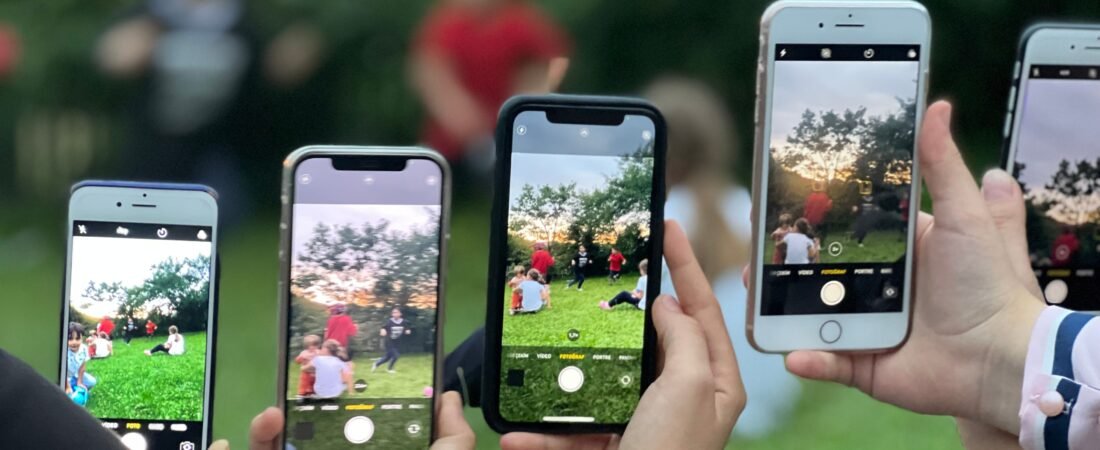
Photo Credit: Rumeysa Demir
Many Android phones offer more for less money. Yet most iPhone owners never switch. The reason isn’t really the phone. It’s everything that comes with it.
Every year, people have the same argument. Android phones charge faster. Some have bigger batteries or better zoom cameras. Some even fold in half. And many cost much less than an iPhone.
But every year, most iPhone owners buy another iPhone.
In the first three months of 2026, 87% of people who bought a new iPhone in the United States already had one before, according to the research firm CIRP, as reported by MacRumors. Only 12% came from Android.
That number has limits. It only covers buyers in the US, and CIRP doesn’t say how many people it asked, as Notebookcheck pointed out. In most of the world, including India, far more people use Android.
Still, it raises a good question. If Android often gives you more, why do so many iPhone users stay?
The simple answer is this: Apple doesn’t just sell a phone. It sells a whole system. And once you’re in it, leaving is hard.
Everything works together
An iPhone is built to work with Apple’s other products.
Take a photo on your iPhone, and it shows up on your Mac. A call can ring on your iPad. AirPods move between your devices on their own. An Apple Watch can unlock your laptop. Your messages, passwords and files follow you everywhere through iCloud.
Each of these things is small. But together, they make switching a lot of work. Leave the iPhone, and you may lose old messages, pay again for apps, and need new accessories.
Not every iPhone owner uses all of this, though. CIRP has found that more than half of iPhone users don’t own a Mac, as MacRumors has reported.
For them, the ties are everyday things: years of photos stored in iCloud, family members sharing apps and storage through one Apple account, and group chats on iMessage that don’t work the same way on Android. None of these is impossible to move. But each one is a reason to put off switching.
Updates for years
Another big reason is how long iPhones keep getting updates.
Apple’s newest software, iOS 27, came out in September 2026. It still works on the iPhone 11, a phone from 2019, according to Apple. That’s seven years of updates, including security fixes that help keep the phone safe.
There’s a catch, though. An old iPhone gets the update, but not every new feature. Apple’s new AI tools, including its smarter Siri, only work on an iPhone 15 Pro or newer, MacRumors reported, and some of the most advanced features need even newer models.
Android is catching up here. Google and Samsung now promise around seven years of updates on their newer top phones. But cheaper Android phones often get far fewer.
Simple and familiar
Lots of people stay with the iPhone not because it does more, but because they know it.
Apple makes both the phone and its software. So every iPhone gets updates on the same day. Apps look and work the same way on every iPhone. And moving everything to a new iPhone is easy.
Android is different. Many companies make Android phones, and each one looks and works a little differently. That’s great if you like choice. But if you just want your phone to work without thinking about it, the iPhone’s sameness is part of its appeal.
Privacy
Apple talks a lot about privacy. For example, the App Store shows “privacy labels” that tell you what information an app collects, according to Apple. iPhones also ask you before apps can follow what you do in other apps and websites.
But two things are true. These features don’t mean every app on an iPhone is safe. And Android has added many similar privacy tools in recent years.
Even so, many people stay with the iPhone because they trust Apple with their data.
Habit and value
Some of it is just habit. You know where everything is. Switching means learning a new phone from scratch.
Money matters too. iPhones often sell for a good price second-hand, or get a good trade-in deal. That makes the next iPhone feel a little cheaper. Many people think about what a phone costs over several years, not just on the day they buy it.
Where Android wins
To be fair, Android has real strengths.
You can buy an Android phone at almost any price, from very cheap to very expensive. You can change how it looks and works much more freely. Android phones were first with foldable screens and super-fast charging. And because so many companies compete, new ideas often show up on Android first.
That’s a big reason Android is so popular in countries like India. For many buyers, an iPhone simply costs too much, however good it is.
The AI test
Apple’s next big test is artificial intelligence.
With iOS 27, Apple launched Siri AI, a smarter version of its voice assistant, along with other AI tools. But they only work on newer iPhones. And Google is moving fast too, with its Gemini AI on Android.
AI could give people a new reason to stay with the iPhone. Or, if Android’s AI turns out to be more useful, a reason to leave. It’s too early to know. What matters is how useful these tools are in real life, not what companies promise.
It’s not about the phone
The iPhone’s real strength isn’t its camera, its chip or its screen. Android phones match it, or beat it, on many of those.
Its real strength is that everything stays the same and keeps working: years of updates, devices that work together, a phone you already know, and the hassle you’d face if you left. Apple has turned the difficulty of switching into one of its best features.
Is it worth paying for? That depends on you. If you already use other Apple products, it often is. If you’re on a tight budget, or you want more choice, Android may be the better deal.
By The Lion Capital Editorial Team | October 2026