Photo Credit:
Unknown
Introduction — Tesla’s Cybercab Hits Austin Streets
On September 3, 2026, Tesla held a private ride-along event for select invitees at its Austin headquarters. On September 4, the company opened public booking for its Cybercab—a small, two-seater robot taxi with no steering wheel, no pedals, and no driver—to anyone in Austin willing to download the Tesla app and wait for availability.
The Cybercab is real. It’s driving on real streets with real passengers.
But there’s a problem: the gap between promise and reality is showing up immediately. Wait times exceed an hour. Pricing isn’t consistently cheaper. And scaling from 45 vehicles to thousands is a mountain Tesla hasn’t climbed yet.
What Is the Tesla Cybercab?
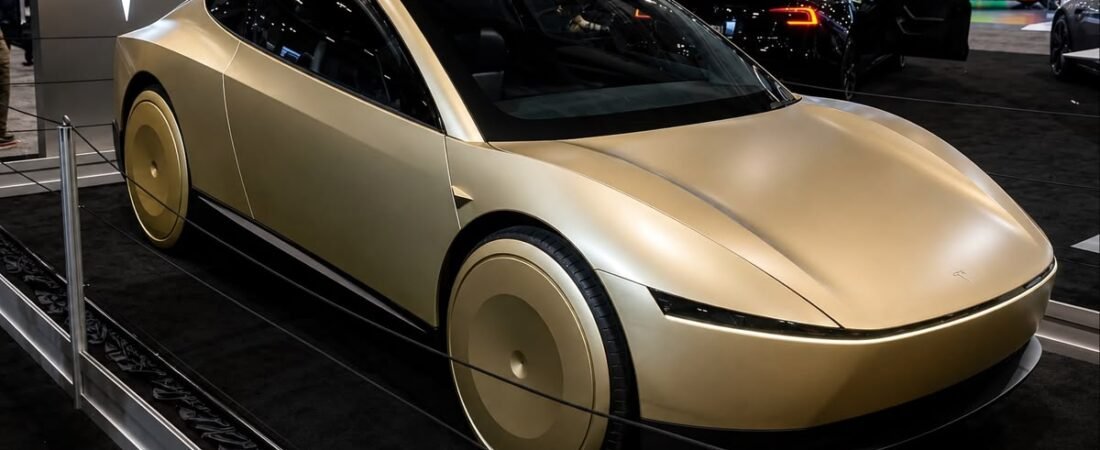
The Cybercab isn’t a modified Model 3 with the steering wheel removed. It’s a purpose-built robotaxi—a vehicle designed from the ground up to work without a human driver ever sitting behind the wheel.
According to specs confirmed by multiple outlets, the Cybercab has a single front-wheel-drive motor, a 47.6 kWh battery, and an estimated real-world range of around 290-300 miles. The vehicle weighs just 3,113 pounds—lighter than a Model 3—which is how Tesla squeezes impressive range out of a modest battery pack.
The big difference from other self-driving systems: Tesla’s Cybercab relies entirely on cameras and artificial intelligence. No lidar. No radar. Just vision and software.
According to TechCrunch’s coverage of the system, Elon Musk claims the operating cost will be approximately $0.20 per mile. That sounds incredible until you do the math: at that rate, a 10-mile trip costs $2. A 30-mile trip costs $6.
The question isn’t whether the numbers sound good. It’s whether those costs translate to fares low enough to be competitive, while still generating profit. As launch-day pricing showed, cheap operations don’t automatically mean cheap rides.
Inside the Cybercab
Walking into a Cybercab feels like entering a small spaceship. The cabin is intimate—designed for exactly two passengers sitting side by side. The doors open upward like a DeLorean, which looks cool but raises practical questions about parking garages and tight spaces.
Inside: a 22-inch central touchscreen serves as the entire interface. There are no buttons, no physical controls, no steering wheel to grab. The seats recline, which Tesla emphasizes means you can work, relax, or sleep during your ride. The company imagines you taking a nap during your commute.
The ride itself? Early reports from riders who attended Tesla events describe acceleration that’s gentle (not the aggressive feel of a performance car), handling that’s smooth, and a driving experience that feels cautious. The vehicle moves like a driver who’s never been confident behind the wheel—slow through turns, deliberate at intersections, alert to obstacles.
That’s either reassuring or concerning depending on your perspective.
Early Riders Put the Cybercab to the Test
On Thursday, September 3, Tesla held a private ride-along event for select invitees. On Friday, September 4, the service opened to public booking in Austin.
The invitees—mostly content creators and Tesla enthusiasts—shared their first-hand impressions on X (formerly Twitter). One described acceleration as smooth and the cabin as quiet. Another praised the seats and touchscreen response.
But this isn’t a test program in the research sense. These were controlled rides on Tesla-selected routes within a geofenced service area. The company invited fans, not critics. Early-adopter riders tend to be forgiving of early tech.
The real feedback came from public riders starting Friday. Wait times became the dominant complaint. Reports of 30-60 minute waits outpaced complaints about ride quality or price. With only 45 Cybercabs registered in Texas (in a larger Model Y Robotaxi fleet), supply simply couldn’t meet demand in the first hours of public availability.
Cybercab vs. Uber: How Much Does a Ride Cost?
The pricing story is more complicated than “cheaper than Uber.”
On launch day (Friday, September 4), early riders reported varied prices. Some quotes came in lower than Uber: a posted rider booking showed $12.15 on Cybercab compared to roughly $8 for Uber on the same route. But there’s a catch: the Cybercab had a 40-50 minute wait, while Uber arrived in under 10 minutes. Price per mile doesn’t matter if you’re waiting an hour for a car.
Tesla uses surge pricing during peak demand, just like Uber. Fares fluctuate based on time, demand, and available vehicles. Early reports showed price advantages during off-peak times and price parity (or worse) during rush hours.
The data is still sparse. Neither Tesla nor Uber has published detailed pricing comparisons for the same routes at the same times. Extrapolating from a handful of rider reports overstates what we actually know.
Musk’s claim about $0.20 per mile operating cost is important to understand: it’s a target, not a measurement. It represents what Tesla aims to achieve with full-scale production and high utilization. Current operations are far from that reality.
Elon Musk Responds to Cybercab Reactions
Musk’s public comments on the Cybercab have acknowledged the real constraint: supply.
When riders reported long waits, Musk replied that demand is “exceeding supply” and that Tesla is “rapidly expanding the fleet.” He confirmed capacity is the bottleneck, which aligns with the reality of just 45 Cybercabs in a market that wants thousands of rides daily.
He’s defended the design. The gull-wing/scissor doors, he noted, minimize the space needed to enter and exit. The compact cabin fits two people and optimizes for urban parking constraints.
Musk’s public statements confirm the product is real and functional. But they’re his perspective on his own product. They’re not independent verification of performance or safety.
Why Demand Could Be a Problem
Tesla’s fundamental scaling challenge isn’t technology. It’s fleet size.
Austin currently has just 45 Cybercabs. That’s enough for a pilot program, not enough for a transportation network. Waymo operates roughly 4,000 vehicles across multiple cities. Even in Austin alone, Uber operates thousands of vehicles.
Wait times are the real story. Riders report 30-60 minute waits for a Cybercab during peak hours—far longer than ordering a traditional Uber or calling a Waymo. That advantage dissolves if getting a car takes longer than expected.
Producing Cybercabs at scale is difficult. Tesla aims to build thousands per year, but current production reports suggest they’re still in the hundreds. Manufacturing is the bottleneck, not demand. Tesla can sell every Cybercab it builds. The company just can’t build them fast enough.
The Safety and Regulatory Question
Safety history and regulatory scrutiny are two different things.
First, the history: According to Reuters reporting on NHTSA investigations, the National Highway Traffic Safety Administration opened an investigation into Tesla’s Full Self-Driving system on supervised-mode vehicles (primarily Model 3/Y/S/X) in October 2025. The agency documented 58 reported incidents involving FSD—including 14 crashes and 23 injuries—where the system allegedly ran red lights, turned into oncoming traffic, or failed to stop at intersections. These are documented problems with a deployed system.
Important: Those numbers are about FSD on conventional Tesla vehicles, not about Cybercab crashes. The Cybercab is too new to have that kind of track record. There’s no Cybercab crash ledger yet.
Second, the regulatory structure: The Cybercab operates under self-certification. Tesla decided the system is safe enough to operate. It wasn’t independently audited by NHTSA before launch. Tesla registered the vehicle and confirmed it’s roadworthy, but there’s no external pre-deployment safety verification.
This is standard practice for new vehicle types. It’s also different from how established robotaxi companies like Waymo approached their launches—with extensive testing and public transparency before commercial service.
The regulatory question: As Cybercab scales beyond Austin, will NHTSA impose additional requirements? The agency’s ongoing FSD investigations suggest watchfulness, but there’s no announced timeline or threshold.
Can Tesla Make Robotaxis a Real Business?
The economics are brutal.
If Cybercab operating costs truly reach $0.20 per mile and fares start at roughly $0.30-0.50 per mile, the margin is razor-thin. Factor in battery degradation, maintenance, insurance, customer service, and payment processing, and the math gets worse.
Musk’s vision depends on three things: (1) Operating costs drop further as volume increases, (2) utilization rates stay high (the car is constantly working, not idle), and (3) fares can increase as network effects take hold.
None of those are guaranteed. Tesla’s main competitor is Waymo, which is already operating at scale. Uber is also developing self-driving technology. The company with the lowest costs wins. But cutting margins to win market share is different from building a sustainable business.
On competition: According to Waymo’s public deployments, the company operates roughly 4,000 vehicles across multiple cities and regions—San Francisco, Phoenix, Los Angeles, and expanding. Waymo has been more deliberate about scaling, prioritizing reliability over speed. The field is crowded with money and ambition, but no one has solved the fundamental problem: making autonomous vehicles profitable at scale. Tesla is trying to do it with lower costs and simpler technology. Waymo is trying with higher caution and more testing. Both approaches are still unproven.
Conclusion — Cybercab Is Promising, But Scaling Is the Real Test
Tesla’s Cybercab is a real product launching into a real market. The rides work. Early riders report acceptable experiences—when they can get a car. But waits are long and pricing isn’t consistently cheaper than alternatives.
But the gap between “interesting pilot program” and “functional transportation network” is enormous. Cybercab currently has just 45 vehicles in Austin. Building thousands while maintaining safety, keeping prices low, and staying ahead of regulatory scrutiny is a different challenge entirely.
Musk has a track record of being wildly optimistic about timelines. The Roadster was supposed to ship in 2020. Full autonomy was supposed to be here by 2018. The Cybercab was supposed to launch in 2026—which technically happened, but at a scale far smaller than Musk’s past rhetoric suggested.
The real test isn’t whether the Cybercab can work in Austin with a carefully curated fleet and controlled routes. It’s whether Tesla can build, maintain, and operate thousands of vehicles safely and profitably across multiple cities while regulators watch closely and Waymo—already operating at scale—pushes back.
That’s the challenge ahead. And unlike the engineering—which appears to work—this challenge is about operations, capital, and discipline. It’s where moonshot ambitions meet operational reality.
The Cybercab has arrived. The question now is whether it can survive.
By The Lion Capital Editorial Team | September 2026