
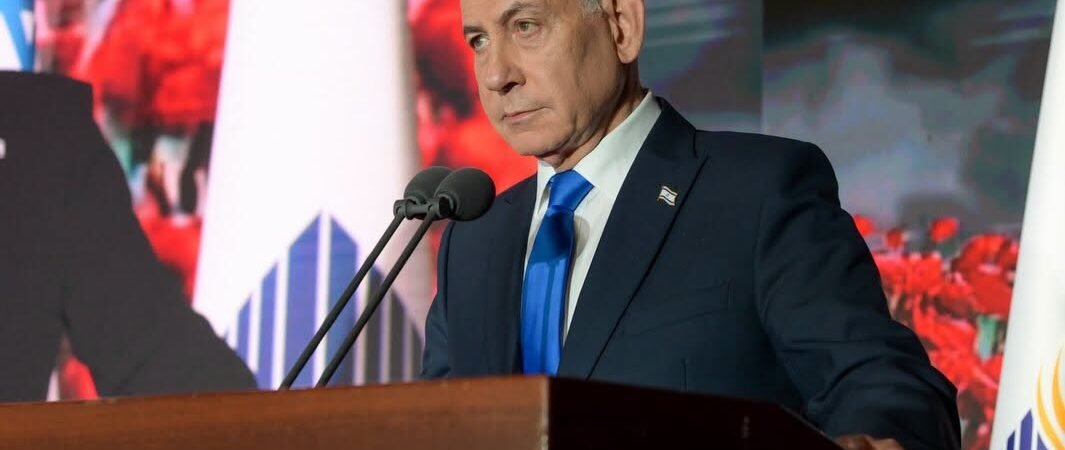
Photo Credit: Benjamin Netanyahu
Neither Benjamin Netanyahu nor his rival Gadi Eisenkot is close to the 61 seats needed to govern. Weeks of bargaining, or even another election, may lie ahead.
Israel’s election has produced no clear winner. Neither Prime Minister Benjamin Netanyahu nor his main challenger, former army chief Gadi Eisenkot, appears to have won enough seats to form a government.
Israelis voted on Tuesday, October 27. Exit polls from two of the country’s main TV channels, Kan and Channel 13, showed Netanyahu’s camp and Eisenkot’s camp tied at 51 seats each. A third channel, Channel 12, gave Netanyahu’s camp a narrow lead, 52 to 49.
To govern, a leader needs the support of at least 61 of the 120 members of the Knesset, Israel’s parliament. Neither side is close.
These are projections, not final results. The final count is expected by the end of the week, and the official results will be published on November 4.
The projections have already shifted once. Early exit polls on election night put Eisenkot’s camp slightly ahead. Revised projections later that night closed the gap. More than 650,000 special ballots, cast by soldiers, diplomats and others who vote away from home, are counted separately and could still move the final numbers.
Two leaders, two claims
Both men spoke to supporters as the results came in. Neither claimed victory, but both claimed the right to lead.
Netanyahu called for “a strong, right-wing national government.”
Eisenkot said voters had rejected Netanyahu and urged him to step aside. “We are setting Israel on a new path,” he told supporters.
Netanyahu, 77, is Israel’s longest-serving prime minister. He is also on trial for corruption, which he denies. Eisenkot, 66, is a former head of the army. He lost a son and two nephews in the war in Gaza.
The maths of power
Israel’s parliament has 120 seats, and no single party has ever won a majority on its own. Every Israeli government is a coalition, a deal between several parties.
Netanyahu’s Likud party is expected to remain the largest single party. But his allies, including far-right and religious parties, do not add up to 61. At its peak, his outgoing coalition held 68 seats.
Here is the simple maths. If the two main camps each have about 51 seats, that leaves about 18 seats with parties outside both camps, mostly Arab-led parties. That is a record.
So the Arab-led parties could decide who governs. But that is not simple either. Netanyahu has attacked them, and Eisenkot has all but ruled out forming a government that depends on them.
Record turnout
Turnout reached 77.7%, the highest in more than 20 years and about seven points higher than in 2022.
Many voters came out because of what Israel has lived through since October 7, 2023, when Hamas attacked Israel and killed about 1,200 people. That day led to the war in Gaza, fighting with Hezbollah in Lebanon, and direct clashes with Iran.
Many Israelis blame Netanyahu’s government for the security failures of October 7. He has refused to take personal responsibility, and has said the full story will be told after the wars end.
Other issues mattered too: the cost of living, and the long fight over whether ultra-Orthodox Jewish men should have to serve in the army like other Israelis.
What happens now
Israel’s process from here is slow and full of steps.
First, the votes are counted and confirmed. Then President Isaac Herzog meets every party and asks which leader it supports. He chooses the person he believes has the best chance of building a coalition.
That person then has up to 42 days to form a government. If they fail, someone else can try. If no one succeeds, Israel heads to another election.
Until a new government is sworn in, Netanyahu stays in office as caretaker prime minister. That means a deadlock could keep him in power for months, even without a majority.
What it means for Israel’s policies
The result matters far beyond Israel.
During the campaign, Netanyahu promised to keep working with US President Donald Trump against Iran. Eisenkot accused him of using security for political gain.
Whoever governs next will face the same big questions: the future of Gaza, the West Bank, the threat from Iran, and relations with Arab neighbours. Campaign promises, however, are not the same as policy. Much will depend on which parties end up in the coalition, and what each demands as its price.
What The Lion Capital asked
The Lion Capital put questions in public posts on X on October 28 to the Israeli Embassy in India (post) and to West Asia specialist Kabir Taneja of the Observer Research Foundation in Delhi (post). We asked whether Israel expects any change in its ties with India after the election, and what the most likely path to a government is.
Neither had responded by the time of publication.
What to watch
The final vote count this week, the official results on November 4, and the President’s choice of who gets the first chance to form a government. If no one can build a majority, Israelis may be voting again in 2027.
By The Lion Capital Editorial Team | October 2026