Photo Credit: Social Media / X
Flydubai flight FZ1073 from Dubai to Tel Aviv dropped more than 14,000 feet in seconds and diverted to Tabuk, Saudi Arabia, where it landed safely. The airline confirms an “altercation” in the cockpit. Israeli officials say the Omani co-pilot stabbed the Indian captain, and that passengers and crew overpowered him.
The Flight That Suddenly Dropped
On the morning of Wednesday, September 30, Flydubai flight FZ1073 took off from Dubai, heading for Tel Aviv. The plane was a Boeing 737 MAX 8.
For more than two hours, the flight was normal. It climbed to about 34,000 feet and cruised toward Israel.
Then something went badly wrong in the cockpit.
According to the flight-tracking service Flightradar24, this is what happened next (times are UTC, three hours behind Saudi time):
| Time (UTC) | What happened |
|---|---|
| 03:05 | Takes off from Dubai |
| 05:21 | The plane’s height starts jumping up and down |
| 05:22 | It drops more than 14,000 feet in under 30 seconds |
| 05:31 | Sends code 7700: general emergency |
| 05:38 | Sends code 7500: unlawful interference, the code for a possible hijacking |
| Later | Switches back to 7700 and turns toward Saudi Arabia |
| About 06:45 | Lands at Tabuk, Saudi Arabia |
The plane never reached Israel. It landed safely in Saudi Arabia instead.
What Happened Inside the Cockpit?
Here is what has been reported so far. Most of it comes from Israeli officials, and the investigation is still going on.
- The co-pilot allegedly stabbed the captain in the cockpit.
- Israeli officials said the co-pilot is an Omani national.
- Netanyahu said the co-pilot “apparently attempted to crash the plane, with everyone on board.”
- Passengers and crew entered the cockpit and overpowered the co-pilot.
Flydubai’s own statement is much more careful. It said only that an “altercation occurred in the flight deck.” It did not mention a stabbing.
Why the co-pilot did this is still unknown. Israeli officials said the motive is under investigation.
The 14,000-Foot Drop
The most frightening moment came at 05:22 UTC. In under 30 seconds, the plane fell more than 14,000 feet, according to Flightradar24.
That works out to a fall of more than 28,000 feet a minute. A normal airliner descent is usually a few thousand feet a minute. This was many times faster.
After that, the plane didn’t return to its normal cruising height. Its altitude settled around 15,000 feet, and both its height and speed kept changing for the rest of the flight, Flightradar24 said.
What caused the drop is not yet officially known. Investigators will need to find out exactly who was controlling the plane, and how, during those seconds.
How Passengers Helped Stop the Attack
Flydubai says only that on-duty crew on board “secured the aircraft.” Israeli officials and passengers describe more.
According to Netanyahu, the injured captain fought back and opened the cockpit door.
“Despite being stabbed and seriously injured, he fought back, resisted, opened the cockpit door, and enabled passengers and crew to overpower the attacker — preventing a catastrophic mid-air disaster,” Netanyahu said, according to CNBC.
Once the door was open, passengers and crew rushed into the cockpit and held the co-pilot down. One passenger, Yaniv Hayun, was later photographed with Netanyahu at Tel Aviv airport, still wearing a bloodstained shirt, according to Euronews.
These accounts come from Israeli officials and passengers. Flydubai has not described what happened in this much detail.
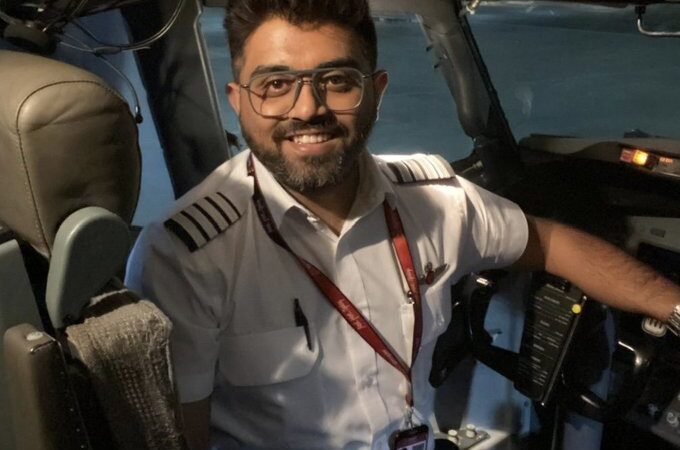
Captain Smit Machchhar
The captain is Smit Machchhar, an Indian citizen. Netanyahu named him and praised his “extraordinary bravery,” according to CBC News.
After landing, he was taken to hospital in Tabuk. The Indian Embassy in Riyadh said on X that he is in hospital there and is reported to be in stable condition.
The co-pilot was also injured and taken to hospital, according to Tabuk airport, as reported by Reuters.
How Did the Plane Land Safely?
This is one of the most important questions, and one of the luckiest parts of the story.
There were two more Flydubai pilots on board. Israeli officials said that once the co-pilot was overpowered, this second pair of pilots took over and landed the plane safely in Tabuk, according to CBC News.
Flydubai’s statement says the same thing in plainer words: Flydubai crew who were on board “secured the aircraft,” diverted it, and landed it safely.
In other words, the plane was flown down by fully trained pilots. That’s a big part of why everyone survived.
Why Saudi Arabia?
The flight’s route was simple: Dubai → Tel Aviv. It ended up as Dubai → emergency → Tabuk, Saudi Arabia.
Tabuk is in north-western Saudi Arabia, near the Jordan border. The plane was already flying over that area when the emergency began.
Tabuk airport said its air traffic control centre received a distress call from the plane at 8:44 a.m. local time. Emergency teams were ready before the plane arrived. The airport is big enough for a Boeing 737 and has medical help close by.
174 People Were on Board
Reuters reported that 174 passengers were on board, most of them Israeli citizens.
All of them were safe. Flydubai said all passengers and crew were “safe and accounted for.”
After landing, the airport helped passengers in the terminal while Flydubai sent a replacement plane. Later that day, the passengers were flown on to Tel Aviv, where Netanyahu met them at the airport.
What We Know, and What We Don’t
We know:
- Flight FZ1073 was diverted to Tabuk on September 30.
- It dropped more than 14,000 feet in under 30 seconds, according to Flightradar24.
- It sent emergency codes 7700 and 7500.
- Flydubai says there was an “altercation” in the cockpit.
- Both pilots were injured and taken to hospital.
- The captain, Indian national Smit Machchhar, is in stable condition, according to the Indian Embassy.
- Two other Flydubai pilots on board landed the plane safely.
- All passengers were later flown to Tel Aviv.
Still being investigated:
- Whether the captain was stabbed, as Israeli officials say. Flydubai has not confirmed it.
- Why the co-pilot allegedly attacked the captain.
- Exactly what happened inside the cockpit, minute by minute.
- Whether he really intended to crash the plane, as Israeli officials say.
- Who was controlling the plane during the drop.
- Why the plane sent the hijacking code, 7500.
Flydubai has asked people not to speculate while the investigation goes on.
The Bigger Question: When the Danger Is Inside the Cockpit
After the September 11 attacks in 2001, airlines made cockpit doors stronger and kept them locked, to stop attackers in the cabin from getting in.
But that same locked door creates a problem when the danger is already inside. In this case, according to Israeli officials, the door had to be opened from the inside, by an injured captain, before anyone could help.
This has happened before. In 2015, a Germanwings co-pilot locked his captain out of the cockpit and deliberately crashed the plane in France, killing all 150 people on board.
After that crash, many airlines adopted a “two-person rule,” so a pilot is never alone in the cockpit. But this case shows that two people in the cockpit isn’t a full answer either, if one of them turns on the other.
Investigators will likely look at:
- How pilots are checked and screened before and during their careers
- How cockpit access works in an emergency
- How crew are trained to respond if a pilot attacks
- How countries share security information about crew
One Flight, Many Countries
This single flight touched an unusual number of countries:
- An Emirati airline, flying from Dubai
- Heading to Israel, with mostly Israeli passengers
- An Indian captain
- An Omani co-pilot, according to Israeli officials
- An emergency landing in Saudi Arabia
- And a rescue carried out by passengers and crew together
It’s a reminder of how international modern air travel is, and why investigations like this one will need many countries to work together.
What Happens Next?
- Saudi authorities have arrested the co-pilot and are questioning him, according to Netanyahu.
- Israeli security services are investigating.
- Flydubai is carrying out its own investigation.
- The aircraft will be examined, along with its flight data.
- Aviation regulators may look again at cockpit security rules.
The most important answer, why it happened, is still missing.
By The Lion Capital Editorial Team | October 2026