
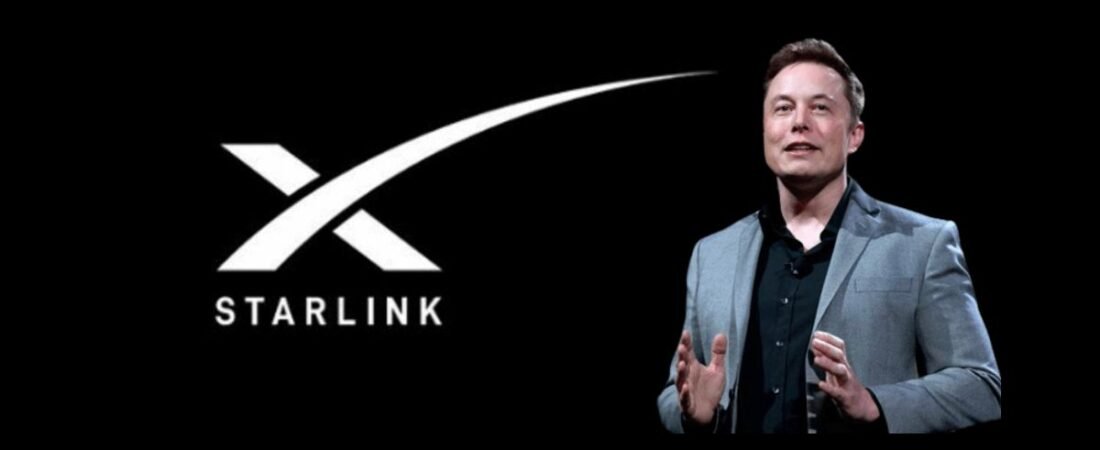
Elon Musk says unnamed Indian “oligarchs” are keeping Starlink out of India to protect a “monopolistic chokehold.” He has not said who they are, or offered evidence. Starlink says it is ready to launch, and is waiting for the final government approvals.
Elon Musk has accused unnamed Indian “oligarchs” of blocking his satellite internet company, Starlink, from launching in India.
“Unfortunately, we are being blocked by certain oligarchs in order to maintain their monopolistic chokehold on the Indian people. You can guess who they are… This is a crime against the people of India!” Musk wrote on X on Wednesday, October 7.
Musk did not name any person or company, and he did not offer any evidence. His post is an accusation, not an established fact.
The claim matters because millions of Indians, mostly in villages and remote areas, still lack reliable internet. Satellite internet could reach places where cables and mobile towers don’t. Who is responsible for the delay, and why, affects all of them.
What Musk said
Musk was replying to another post on X, which argued that India needs Starlink and pointed to Indian villages that still don’t have mobile coverage.
Musk has said before that Starlink could help connect rural and underserved parts of India. This time, he went further, saying powerful people were standing in the way.
He chose not to say who. The Lion Capital will not guess for him.
Starlink says it is ready
Starlink’s position is that it has done its part.
Speaking at the India Mobile Congress in New Delhi on the same day, Lauren Dreyer, a vice-president at SpaceX, Starlink’s parent company, said the company had already built its ground network in India.
“We’ve already made the investment and built the existing ground infrastructure here, 20 gateway sites comprising hundreds of antennas, and we’ve established the operations to be ready to serve India,” she said.
Gateways are ground stations that link Starlink’s satellites to the internet. India requires satellite companies to route Indian users’ traffic through gateways inside the country.
Dreyer said Starlink had built its India operations around India’s security rules, and was “keeping Indian user data within India.”
“Hopefully, next time I address the Congress, the government’s work will be complete, and Starlink will be authorized and ready,” she said.
Why hasn’t Starlink launched?
Starlink already has a licence. India’s Department of Telecommunications lists three companies authorised to offer satellite internet: Jio Satellite Communications, OneWeb India, and Starlink, according to the Department of Telecommunications.
But a licence is not the last step. The government’s own rules say the licence “does not confer any right to assignment and use of spectrum.” Spectrum, the radio frequencies satellites use to send signals, must be assigned separately by the government.
The licence also comes with strict security conditions. These include privacy rules, routing Indian traffic through gateways in India, and “lawful interception,” meaning Indian security agencies must be able to monitor communications when the law allows it.
Starlink says it is still waiting for spectrum and final security clearances. India’s government has not publicly explained the timing, and there was no public response from the government to Musk’s post at the time of writing.
Why India wants satellite internet
India’s government itself says satellite services are meant to reach “rural, remote, and unserved areas,” in the words of the Department of Telecommunications.
That includes mountain villages, border areas, islands and forests, where laying cables or building towers is slow and costly. For people in those places, satellite internet could be the only realistic way to get online.
The competition question
Musk’s post raises a fair question: is Starlink being slowed down by competition?
Here is what is known. Starlink isn’t the only satellite company licensed in India. Jio Satellite and OneWeb have the same kind of licence. Starlink would also compete with India’s mobile and broadband companies for customers.
There has been a fight before. In 2024, Starlink and Indian telecom companies disagreed over how satellite spectrum should be handed out. Some Indian firms wanted it sold at auction; Starlink wanted it assigned by the government, as is common internationally. India chose to assign it, the outcome Starlink wanted.
And in 2025, India’s two biggest mobile companies, Reliance Jio and Bharti Airtel, both signed deals to sell Starlink’s service to their customers. In other words, the companies many readers might “guess” are also Starlink’s business partners.
There is no public evidence that any Indian company or person is deliberately blocking Starlink’s launch.
Regulation or competition?
There are two ways to see the delay.
India’s government has strict rules on national security, spectrum, data and monitoring. It applies these rules to every satellite company, and checking a foreign-owned network carefully can take time.
Starlink says it has already built its India operations to meet those rules, and that the remaining delay is on the government’s side.
Both can be true at once. A slow, careful approval process is not the same as a plot, and frustration over delays is not evidence of one.
What happens next
Starlink needs its spectrum assigned and its final security clearances before it can begin selling its service in India.
Whether Musk names the “oligarchs,” or offers evidence, will decide how seriously his claim is taken.
Until then, the question remains open: is Starlink’s delay about India’s rules, about business rivals, or about both?
By The Lion Capital Editorial Team | October 2026