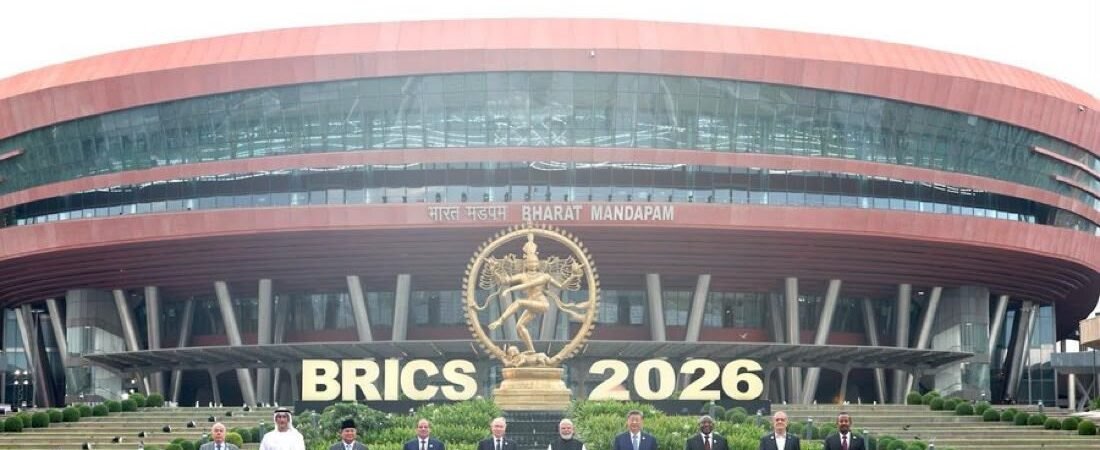
Photo Credit: BRICS India 2026
A same-weekend recap, built mostly from India’s own pool coverage and the leaders’ own remarks — so it leans naturally toward Modi’s framing, with less direct material from Brazil and South Africa.
Why New Delhi Hosted This Summit
For two days, September 12 and 13, 2026, India hosted the 18th BRICS Summit as this year’s chair, under the theme “Building for Resilience, Innovation, Cooperation and Sustainability.” The timing made it unusually high-stakes: a real war was still unfolding in the Middle East, the Ukraine conflict dragged on, global trade tensions were rising, and the world’s power balance was visibly shifting. Leaders from eleven member countries, plus BRICS partner countries and heads of institutions like the UN, WTO, and WHO, gathered at Bharat Mandapam to try to find common ground — or at least look like they had.
The Leaders Arrive in Delhi
The arrivals stretched across several days. Russian President Vladimir Putin and Iranian President Masoud Pezeshkian both landed in New Delhi on September 11, according to NPR’s coverage of the summit. Chinese President Xi Jinping arrived in time for the summit’s opening on September 12, alongside South African President Cyril Ramaphosa, Egyptian President Abdel Fattah El-Sisi, Indonesian President Prabowo Subianto, and Ethiopian Prime Minister Abiy Ahmed. Brazil sent Foreign Minister Mauro Vieira rather than President Lula, the UAE was represented by Abu Dhabi Crown Prince Sheikh Khaled bin Mohamed bin Zayed, and Malaysia’s Prime Minister Anwar Ibrahim attended as a partner-country guest. India’s Ministry of External Affairs had laid out the arrival schedule in advance, and it largely held.
Before the Summit: India Starts the Diplomacy
Modi didn’t wait for the summit to begin working the room. On September 11, his schedule listed a meeting with Putin at 3:30pm, followed by Pezeshkian at 6:15pm and UN Secretary-General António Guterres at 6:45pm, all at Bharat Mandapam, according to The Tribune’s report on the day’s schedule. With Putin, the two leaders covered energy, trade, defence, investment and strategic matters. Modi’s meeting with Guterres focused on reforming multilateral institutions, including the UN Security Council — a topic that would resurface throughout the weekend.
The Biggest Problem: Iran, UAE and the West Asia War
This was the summit’s real test. Iran, a full BRICS member, was in the middle of an actual war with the US and Israel. The UAE, another member, had its own security concerns after coming under attack itself. Getting Iran and the UAE to agree on common language for a joint statement was never going to be easy — and it wasn’t: BRICS foreign ministers had already failed to produce a joint statement back in May over exactly this split.
Yet the leaders managed something notable this time. Pezeshkian told the summit that lasting security cannot exist if it’s guaranteed for some countries while others are left insecure, and called on BRICS to take a stronger stand against attacks on civilian infrastructure and peaceful nuclear facilities. He also urged the bloc to resist unilateral sanctions and establish a permanent BRICS secretariat, according to both Anadolu Agency and Press TV’s report on his address, which independently confirm the same core lines.
Most striking of all: Pezeshkian and the UAE’s Crown Prince held a sideline meeting — which Reuters described as the highest-level contact between the two countries since the war began — to discuss de-escalation and regional stability, with Iran’s own state agency IRNA releasing video of the meeting, according to Daily News Egypt. Whatever else came out of New Delhi, that meeting alone was the weekend’s strongest diplomatic fact.
Day One: What Happened Inside Bharat Mandapam
September 12 followed a full schedule: leaders’ arrival and welcome, a closed-door session on global governance, a BRICS Business Forum, the traditional leaders’ family photograph, a ceremonial tree plantation, bilateral meetings on the sidelines, and a gala dinner that evening. At the Business Forum, Ramaphosa called BRICS “a very important forum for all of us,” pointing to the bloc’s population and GDP weight, while pushing South Africa’s own priorities around intra-BRICS trade, investment, and African infrastructure financing, according to Daily Prabhat/ANI. Vieira attended the same Business Forum sessions alongside Ramaphosa, though his own remarks at this year’s summit drew markedly less international coverage than the other headline leaders — a reflection of Brazil’s lower profile now that it has handed the rotating chairmanship to India. The most consequential item of the day happened in the closed session: leaders reached consensus and formally adopted the New Delhi Declaration — a 140-point document — on the very first day, according to Free Press Journal’s report on the declaration.
What Modi Said
Modi told the summit that the Global South should move from being a “rule-taker” to a “rule-shaper,” describing the existing global system as a “pyramid of privilege” that should become a “platform of partnership,” according to the Prime Minister’s Office. He said BRICS was “not against anyone” and operates through consensus. Modi also proposed a 10-point roadmap for global governance reform focused on representation, responsiveness and rule-making, called for time-bound UN Security Council reform, and raised concerns about the weaponization of technology and critical minerals. He also proposed a Seafarers Emergency Support Network.
What Xi Jinping Said
Xi’s biggest announcements came a day later than the declaration — at the summit’s closing session on Sunday, September 13, not the Saturday session that adopted the New Delhi Declaration. He called for stronger “Greater BRICS” economic cooperation, urging members to protect supply-chain stability and build a more integrated market, according to Reuters. China, he said, would take the lead in setting up a BRICS AI Open Source Zone — described in some official Chinese materials as an “open source community” — for cooperation on large language models and AI training, and he proposed a BRICS Special Economic Zone partnership, plus a BRICS Service Trade Forum that China will host in 2027, when China takes over the BRICS chairmanship from India. Xi also said the Middle East war does not serve the interests of the international community, and separately pushed for deeper China-India cooperation as part of a more multipolar world.
What Putin Said
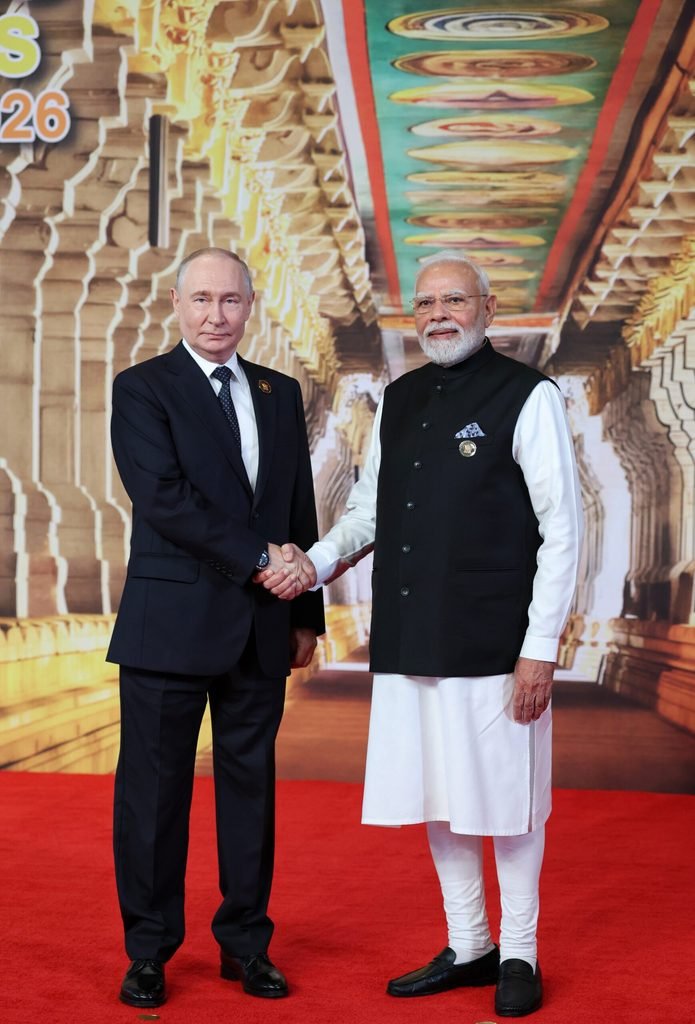
Putin described BRICS as a powerful driving force for a fairer, multipolar world order, and urged members to combine their individual economic strengths rather than compete separately, according to Reuters. He is reportedly targeting $100 billion in bilateral trade with India, and he described Western sanctions as an attempt at global dominance “by any means.” In his meeting with Modi, the two covered energy, trade, and the conflicts in both West Asia and the Black Sea. Putin also invited Modi to Russia for the next India-Russia annual summit.
What Pezeshkian Said — and Why It Matters
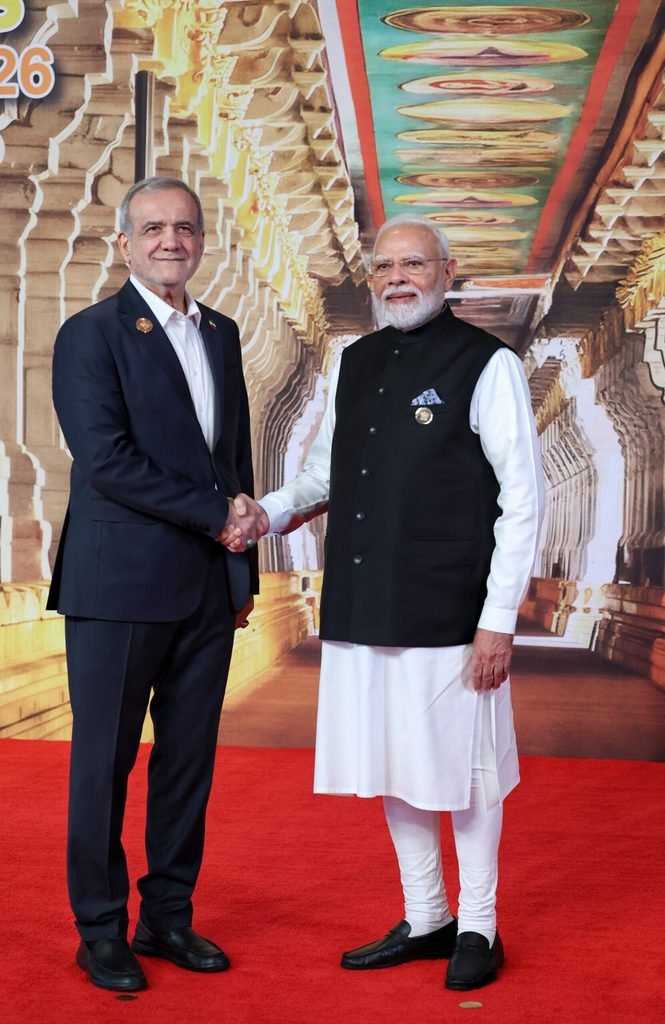
Pezeshkian’s address is worth reading on its own terms, because it’s the clearest window into how Iran experiences this war and what it wants from BRICS. He described watching Iran’s economic, energy, and development infrastructure targeted, saying “the people of Iran have paid a heavy price” and calling on BRICS to play a “more effective role” in defending sovereignty and the principle of non-use of force. He laid out three to four priorities across different reports: sovereignty and UN Charter-based political coordination, economic and financial independence from what he called “monopolistic instruments,” resisting unilateral sanctions, and expanding cooperation in science, technology, energy and food security. Whatever one makes of the framing, it’s a direct, unfiltered statement of how a country at war sees the bloc it belongs to.
Modi and Xi: The Meeting Everyone Was Watching
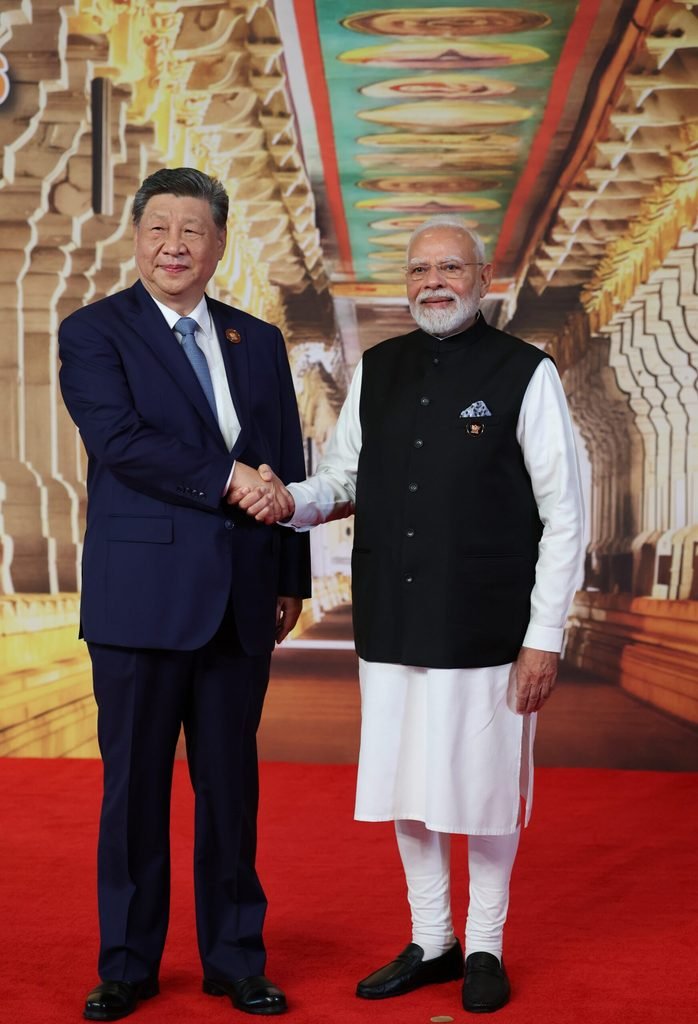
This was Xi’s first visit to India since 2019, before a deadly border clash in the Galwan Valley froze high-level contact between the two countries for years — and this was their first bilateral meeting on Indian soil since that clash. In their bilateral meeting, Modi told Xi that peace along the border was essential for the relationship to keep developing, and both leaders agreed that ties should be guided by “mutual respect, mutual sensitivity, and mutual interest,” according to The Week. They also discussed India’s roughly $112 billion trade deficit with China and agreed to address trade imbalances and market access concerns. No new territorial breakthrough was announced — but simply holding this meeting, six years after Galwan, is itself the story, and it matters well beyond BRICS: it’s a signal of where the world’s two most populous countries think their relationship is heading.
The New Delhi Declaration: What BRICS Actually Agreed
The declaration, adopted by consensus on day one, touched nearly every part of the BRICS agenda:
- Middle East: expressed deep concern over the escalation of conflict and urged maximum restraint, alongside a strong condemnation of attacks on civilian infrastructure and peaceful nuclear facilities under IAEA safeguards
- Terrorism: condemned the April 2025 Pahalgam attack in Jammu and Kashmir and called for stronger cooperation against terrorist financing and safe havens
- Global governance: backed UN Security Council reform and a stronger, more representative multilateral system
- Trade: rejected carbon border adjustment mechanisms as protectionist, pushed for WTO reform, and reaffirmed preferential treatment for developing countries
- Currencies and payments: backed greater local-currency settlement and stronger interoperability between BRICS payment systems
- AI: supported cooperative AI governance and development initiatives
- Health: agreed to coordinate medicine regulators and boost local production of vaccines and medical supplies
- Food security: backed a proposed BRICS Grain Exchange and a new farmer-focused network called BRICS AGRIN
- Critical minerals: affirmed the need for reliable, diversified, and fair mineral supply chains while protecting resource-rich countries’ sovereign rights over their own resources
The Dollar Question: What BRICS Did NOT Do
Despite years of speculation, the New Delhi Declaration does not create a common BRICS currency, and there is no roadmap or launch date for one. India’s Ministry of External Affairs made this explicit on the record: “The BRICS currency is not a topic that is being discussed,” MEA Secretary (Economic Relations) Sudhakar Dalela told reporters, explaining that the actual work is focused on reducing trade and transaction costs through local currencies and cross-border payment mechanisms, according to NewsDrum’s on-the-ground reporting from the summit. That’s a far less dramatic outcome than “de-dollarization” headlines suggest — but it’s also the more realistic one, given how differently members like India and Russia actually want to handle this.
Day Two: What Happened on September 13?
The second day opened with a session titled “Resilience, Innovation, Cooperation and Sustainability: Shaping the Future for Inclusive Global Growth,” part of the summit’s BRICS Plus/Outreach format that also included partner countries and international-organization heads. Modi warned that rising geopolitical tensions, supply-chain disruptions, and climate crises were increasingly affecting people’s lives worldwide, and repeated his warning that “weaponization of technology and critical minerals” could hinder shared progress, according to the Associated Press. He announced a new BRICS Logistic Supply Chain Cooperation Framework, a BRICS Incubator Network for startups, and a BRICS Network on Digital Agriculture. Ramaphosa also addressed this session with a statement on inclusive global governance and UN reform. This was also when Xi delivered his “Greater BRICS” closing-session initiatives described above. The day closed with final discussions and a formal handover: China takes over the BRICS chairmanship for 2027.
The Leaders Leave Delhi
As of this recap, individually-confirmed departure times for each leader hadn’t been widely reported — this is worth treating as unfinished business rather than assumed fact. What is confirmed is the summit’s formal close on September 13, following Xi’s closing-session remarks and the handover of the chairmanship to China. Departures likely happened in waves over the following day rather than all at once; that detail is worth checking against flight-tracking or embassy confirmations before treating any single departure time as settled.
What BRICS Looks Like After Delhi
BRICS leaves New Delhi bigger, more economically significant, and — by its own numbers — more globally relevant than ever: Modi told the summit the bloc now represents roughly 50% of the world’s population, 40% of global GDP, and more than 25% of global trade, according to Reuters. It is also, undeniably, more divided than the founding five ever were. It is not a military alliance, and despite plenty of speculation, it did not become a single anti-American bloc this weekend either. What it remains is a genuinely diverse group of countries — some at war with each other’s allies, some racing each other economically, all still choosing to sit at the same table.
Analysis
BRICS has become too important to dismiss, but too diverse to control. New Delhi showed that countries with very different interests can still find common ground — the Iran-UAE meeting alone proves that. But the real test isn’t whether they can agree on a declaration. It’s whether any of this — the AI zone, the supply chain framework, the payment interoperability — produces results after the leaders have gone home.
Final Verdict
The leaders arrived in Delhi with different agendas. They left with a common declaration. What happens after they’ve actually gone home — departures included — will determine what this summit ultimately meant.
By The Lion Capital Editorial Team | September 2026