A massive glacier collapse near the Nepal–Tibet border triggered devastating flash floods, destroying infrastructure and leaving thousands missing as rescue efforts continue.
What Happened
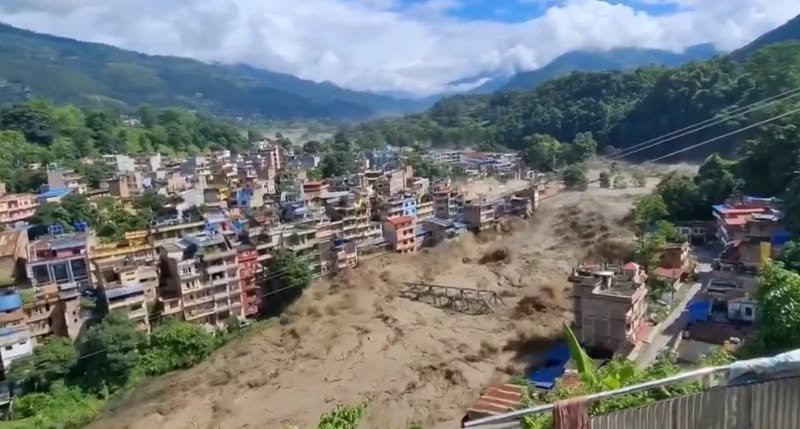
On August 26, 2026, a glacier on Langtang Lirung in the Himalayas collapsed near the Nepal-Tibet border. The collapse triggered an avalanche of rock, ice, and debris that rushed down the mountainside. The impact registered as a magnitude 5.2 seismic event—not an earthquake, but a rock-and-ice failure so large that it shook the ground. This event released enormous amounts of meltwater that mixed with mud and debris. The resulting flood swept down river valleys for roughly 72 kilometers (45 miles), affecting multiple districts in Nepal and reaching the border town of Gyirong in China within minutes.
The death toll stands at over 780 people confirmed. More than 3,000 others remain missing across Nepal and China. Officials say the count will likely increase as rescue teams reach remote areas.
The Glacier Collapse Triggered Floods
The collapse happened on the north face of Langtang Lirung on the Nepal side of the border. A large section of rock and glacial ice broke free and fell thousands of meters down the mountainside.
The falling material generated heat through friction, rapidly melting the glacier. This sudden melt produced enormous quantities of water. The water mixed with rock, mud, and more ice to create a debris avalanche—a dense flow of material that moved extremely fast.
The avalanche entered two river systems: the Lhende and Bhote Koshi rivers. From there, it funneled into the main Trishuli River corridor. The speed and power of the initial surge were devastating. The flood destroyed everything in its path as it traveled downstream.
Destruction Across Seven Districts
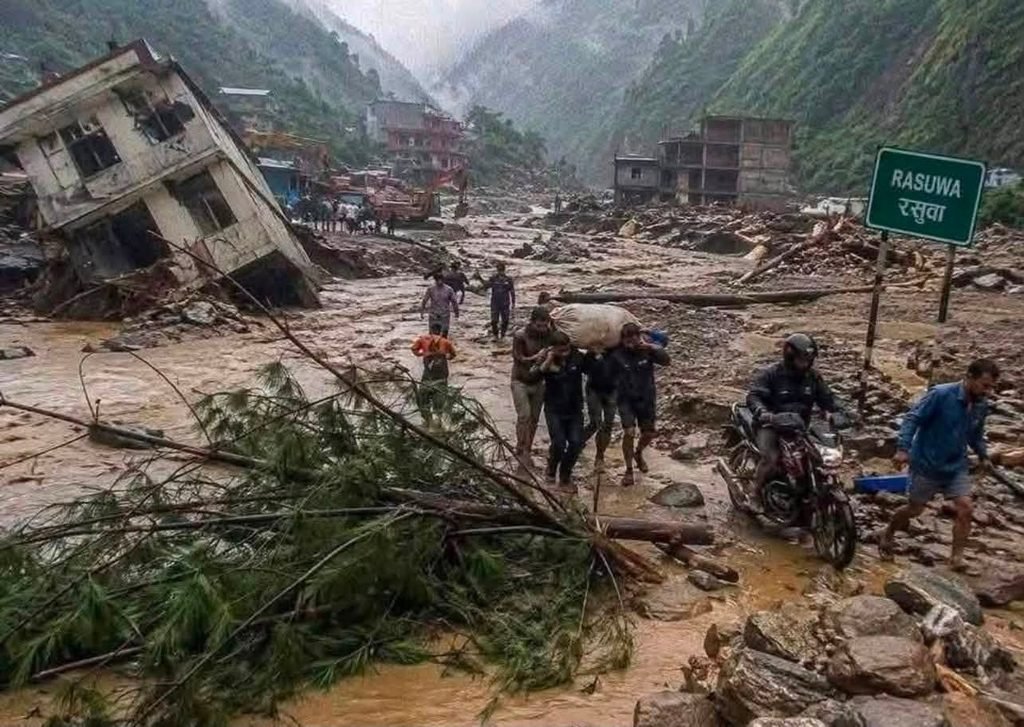
The flood affected settlements in seven districts of Nepal: Rasuwa, Nuwakot, Dhading, Gorkha, Tanahun, Nawalparasi, and Chitwan.
Major infrastructure was destroyed:
- Bridges across the Trishuli River were washed away
- Highways and mountain roads were torn apart
- Hydropower facilities were damaged
- Homes and government buildings were destroyed
At the Nepal-China border, the Gyirong Port complex—a major trade and tourism crossing—was hit and largely destroyed. The facility had been a key gateway for cross-border trade and pilgrimage travel.
The flood carried debris and bodies far downstream. Bodies were found up to 240 kilometers away in India, showing the extreme reach of the floodwaters.
Confirmed Casualties and Missing
Nepal authorities confirmed at least 734 deaths. China reported 16 deaths in Tibet’s Gyirong County. This brings the confirmed total to approximately 750 deaths, with the overall count now reported in the high 700s to 800 range as recovery work continues.
Missing persons total approximately 3,000:
- About 2,500 missing in Nepal
- About 550 missing in Tibet
The missing include many foreign nationals. At least 400-500 foreign tourists were in the region at the time.
One School Was Evacuated in Time
A school located in the path of the flood was evacuated before the water arrived. School officials made the decision to leave immediately as the initial collapse was detected.
Approximately 1,600 children were evacuated to safety. Two school staff members were killed during the evacuation process. Without the quick decision to evacuate, many more deaths would have occurred.
Rescue Challenges Continue
More than 5,000 military and police personnel are engaged in search and rescue operations. Helicopters deliver supplies to isolated communities.
Rescue efforts face significant obstacles:
- Destroyed roads and bridges make ground access difficult
- Many villages can only be reached by helicopter
- Ongoing rainfall creates additional landslide risk
- Weather conditions are deteriorating
A new concern has emerged: a debris-dammed lake formed at the collapse site. This lake is filling with water. If it overflows, it could trigger additional flooding downstream. Authorities are monitoring this risk closely.
Climate Context and Glacier Loss
Scientists note that rapid glacier melting in the Himalayas provides important context, though the exact trigger remains under investigation.
Recent data on Himalayan glaciers:
- Glaciers in the Hindu Kush Himalaya region lost ice 65 percent faster between 2011 and 2020 compared to the previous decade
- Nepal’s glaciers have lost approximately one-third of their ice volume over the past 30 years
- Satellite data showed unusually warm conditions and reduced snow cover at the collapse site before the event occurred
As glaciers weaken and retreat, mountain slopes can become unstable. Accumulated meltwater around glaciers also increases flood risk. Scientists emphasize that while climate change provides important context, determining its specific role in this event requires further study.
International Response and Recovery
The United States announced humanitarian assistance of approximately $3.6 million, including emergency food aid. Other countries are coordinating relief efforts.
Recovery needs are substantial:
- Temporary infrastructure must be rebuilt quickly
- Displaced families need shelter
- Medical care is needed for the injured
- Long-term reconstruction of roads, bridges, and buildings will take years
Authorities estimate that recovery and rebuilding will continue for an extended period. Bodies continue to be recovered and identified. Mental health support will be needed for affected communities.
Ongoing Risk and Lessons
This event is one of the largest glacier-related disasters in recent decades. Comparable events occurred in Peru in 1941, when a glacier collapse killed approximately 5,000 people.
The disaster demonstrates risks facing mountain communities worldwide. As global temperatures rise, glacier instability is expected to increase in the Himalayas, the Andes, the Alps, and other major mountain ranges.
Rescue operations continue. The search for missing persons remains active. The exact geological causes are still being investigated by scientists. Additional impacts—secondary flooding, landslides, or infrastructure failures—remain possible as the situation develops.
By The Lion Capital Editorial Team | August 2026