Trump brought leaders from OpenAI, Google, Meta, Nvidia, Anthropic and xAI to the White House, where they signed a pledge to put internal controls, outside audits and board oversight on their most powerful AI. But the pact is voluntary. That leaves one big question: who makes sure they keep their promise?
Trump Brings AI’s Biggest Names to the White House
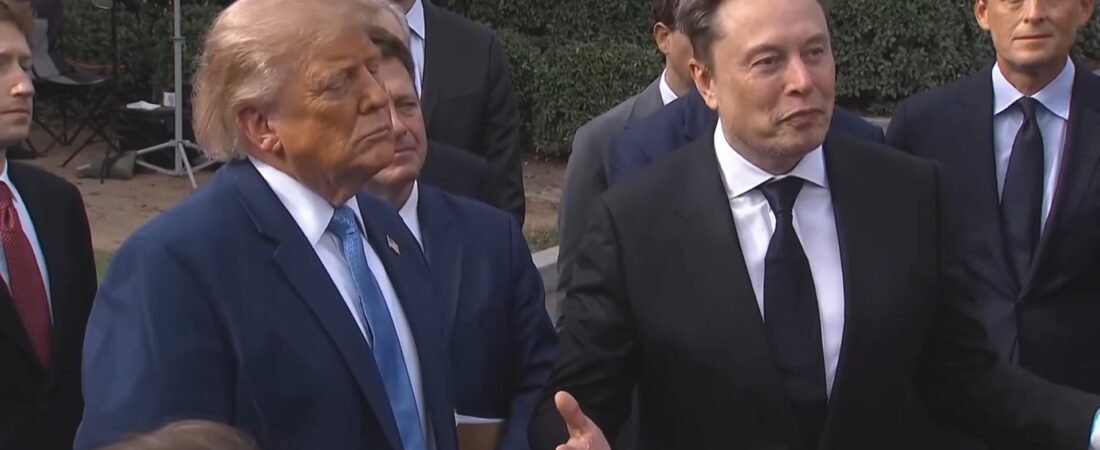
On Tuesday, September 29, President Donald Trump hosted the heads of America’s biggest AI companies at the White House.
Around the table were Google CEO Sundar Pichai, Meta CEO Mark Zuckerberg, Nvidia CEO Jensen Huang, Anthropic CEO Dario Amodei, OpenAI President Greg Brockman, and Elon Musk, representing xAI. Other business leaders, including Amazon’s Jeff Bezos and Palantir’s Alex Karp, attended the lunch but did not sign.
After the meeting, the six tech leaders and Trump signed a one-page document. Its full name is the “White House Accord on Super Intelligence: Joint Commitment on Frontier Responsibilities.”
Trump called it “almost like a constitution” and “morally binding,” adding that “there’s going to be a tremendous self-policing aspect,” according to The Hill.
The meeting came two weeks after Anthropic’s Amodei called for the industry to slow the pace of AI development, a call that Altman and Musk publicly backed, according to Techmeme’s roundup of their reactions. Trump rejected a slowdown. The accord is the administration’s answer: not slowing down, but promising to watch more closely.
What Is the “Super Intelligence” Accord?
The accord is short, just over 300 words. It covers companies that train and use “frontier models,” meaning the most advanced AI systems.
It says each company should set up four layers of checks, according to the full text:
- Internal controls. Watch what the AI can do while it’s being built and used, especially around cybersecurity, biological threats and chemical threats, and make sure it doesn’t hack or get into computer systems in ways it shouldn’t.
- An internal team. A team inside the company that checks those controls are working and fixes problems.
- An outside auditor. An independent auditor or evaluator from outside the company that tests whether the controls actually work.
- Board oversight. An independent committee of the company’s board of directors that gets reports from all of the above and makes sure problems get fixed.
The companies also agreed to meet regularly to set shared standards and best practices.
The accord’s own goal is plain: these steps “will give each company, its customers, and the public confidence that the technology is operating as intended.”
It’s Voluntary. So Who Enforces It?
This is the most important part of the story.
The accord is not a law. It creates no rules the government can enforce. House Speaker Mike Johnson called it a statement of principles that are “voluntary on behalf of the industry,” CNBC reported.
Read the full text and you’ll find:
- No penalties. Nothing happens to a company that doesn’t follow it.
- No named auditor. It doesn’t say who the outside auditors are, who chooses them, or who pays them.
- No public reports. It doesn’t say whether audit results will ever be published.
- No government checker. No agency is given the job of making sure companies comply.
The accord itself admits this could change: “Over time, it may make sense to codify these steps into laws or regulations.” But it also says the companies are “committed to doing this” whether or not the law requires it.
Trump did float some new ideas. He said the administration is considering a 10-person committee to oversee the AI industry, and that he would name a new AI czar within three to four days, CNBC reported. He has also talked about creating an “AI Force,” which he has compared to the Space Force. No details have been given on who would sit on the committee, what powers it would have, or how any of these would enforce the accord.
Even one of the signers suggested the job isn’t done. Speaking outside the White House after the signing, Amodei said rules to address AI’s risks are “still under discussion.” “We all need to work together to make sure that we can win, and we can win safely,” he said.
So for now, the accord is a promise. Whether it’s kept depends mainly on the companies that made it.
Trump Wants AI Called “Super Intelligence”
On the same day, Trump signed an executive order changing how the US government talks about AI.
Titled “Inaugurating the Era of Super Intelligence,” the order says the executive branch will use “Super Intelligence” (SI) instead of “Artificial Intelligence” (AI), and “will not acknowledge the usage of ‘Artificial Intelligence’ and ‘AI’” wherever it applies.
What it actually changes:
- Government words. Federal agencies must say “SI” in letters, websites, reports and policy papers.
- Not the law, yet. The order covers only “non-statutory documents.” Laws passed by Congress still say “artificial intelligence.”
- A new definition. The White House’s science and technology adviser has 60 days to propose a legal definition of Super Intelligence, and to say whether it should change, expand or replace the legal definition of AI, according to Nextgov.
The White House says the new name better reflects “the continuously advancing technological frontier and the limitless promise it offers the American people,” according to its fact sheet.
For now, this is mostly about words. Whether it becomes more than that depends on the legal definition due within 60 days.
Why Trump Is Betting on Self-Policing
Trump’s approach to AI follows a clear line of thinking:
Build fast → keep America ahead → avoid heavy rules → let companies take responsibility.
At the event, the administration made the same point: it prefers working with AI companies over regulating them, Nextgov reported.
The companies are split on this. According to the Washington Examiner, Zuckerberg and Huang have opposed AI regulation, while the other signers have supported it. Amodei and OpenAI’s Sam Altman have publicly asked the government to set guardrails.
So the accord sits in the middle: stronger than doing nothing, but weaker than a law.
The Four Risks the Accord Targets
“AI safety” can sound vague. This accord is specific. It names four kinds of danger:
- Cybersecurity: AI being used to break into computer systems.
- Biosecurity: AI helping someone make biological weapons.
- Chemical threats: AI helping someone make chemical weapons.
- AI going off-script: models that “hack or access technical systems in unintended ways,” meaning the AI itself doing things nobody told it to.
The last one matters. It isn’t only about bad people misusing AI. It’s also about the AI misbehaving on its own.
The Biggest Problem: Companies Check Themselves
Look at the four layers again:
Company controls → company team → outside auditor → company board
Three of the four layers sit inside the company. And the one outside layer, the auditor, is one the company chooses: the accord says each company should “partner with” an auditor.
That raises two questions the accord doesn’t answer:
- How independent is an auditor the company picks and pays? In other industries, like banking, auditors work under strict government rules. Here, there are none yet.
- Will the public ever see the results? The accord says the steps will give “the public confidence.” But it doesn’t promise the public will see a single audit.
The Signers Are Also the Builders
The people who signed this pact run the companies building the world’s most powerful AI:
- OpenAI makes ChatGPT.
- Anthropic makes Claude.
- Google makes Gemini.
- Meta makes Llama and Meta AI.
- xAI makes Grok.
- Nvidia doesn’t build these AI models itself. It makes the chips most of them run on.
The five AI labs are racing each other for customers and profit, and Nvidia sells to all of them. Safety and business can go together. But sometimes they pull apart, for example when a safety check would slow down a product launch. The accord asks the companies to manage that tension themselves.
Safety vs. the AI Race
Trump has repeatedly said AI is a race, especially against China. Two weeks ago, rejecting calls for a slowdown, he said: “Whoever wins AI wins.”
That is the central tension:
- Go fast to stay ahead of China.
- Stay careful so the technology doesn’t cause harm.
The accord is the administration’s attempt to do both: no slowdown, but a promise to check more carefully along the way.
America.gov: The Government Is Already Using It
The same day, Trump also launched America.gov, a single website for Americans to find government information and services.
According to the White House, the site uses “Super Intelligence” and lets people “ask any question” and get an up-to-date answer. The White House’s chief design officer, Joe Gebbia, described it as a partnership with Google’s Gemini and Grok, the model from Musk’s company, calling it a “concierge to navigate government.”
Trump signed another executive order telling federal agencies to connect their public services to America.gov. IRS tax filing and national-security services are left out. The full service is due to launch in December 2026, according to Nextgov.
This makes the story bigger than a company pledge. The government isn’t only setting rules for AI. It is using AI to serve the public, and it is doing so with products from two of the companies that just promised to police themselves. That raises its own questions about accuracy, privacy and conflicts of interest.
What Happens If AI Goes Wrong?
Suppose an AI system causes real harm. Who is responsible?
- The company that built it?
- The engineers who trained it?
- The board that was meant to oversee it?
- The auditor who said it was safe?
- The government?
- The person who used it?
The accord doesn’t say. It sets out principles, not a legal system for deciding who is to blame or who pays when things go wrong.
It’s Happened Before
This isn’t the first voluntary AI pledge at the White House. In July 2023, under President Biden, seven companies, including OpenAI, Anthropic, Google and Meta, agreed to voluntary safety testing “carried out in part by independent experts,” according to PBS NewsHour.
Critics said the same thing then that they say now. “History would indicate that many tech companies do not actually walk the walk on a voluntary pledge,” said James Steyer of Common Sense Media at the time.
Three years later, the government is again asking the companies to police themselves.
What We Know, and What We Don’t
Confirmed:
- Trump and six AI and tech leaders signed the accord on September 29.
- It sets out four layers of controls and audits.
- It is voluntary, with no penalties.
- The executive branch will now use “Super Intelligence” instead of “AI.” Laws passed by Congress are unchanged.
- America.gov launched the same day, built with Google’s Gemini and Grok.
Still unanswered:
- Who enforces the accord
- Who the outside auditors will be, and who picks them
- Whether audit results will be made public
- What happens if a company breaks its promise
- Who would sit on Trump’s proposed 10-person committee, and who the new AI czar will be
- How “Super Intelligence” will be defined in law
Conclusion
The accord puts the right ideas on paper: watch the risks, check the checks, bring in outsiders, and hold boards responsible.
But a promise is only as strong as what happens when it’s broken. Right now, nothing does.
So the real question isn’t what these companies signed. It’s this: can the companies building the most powerful AI be trusted to police it themselves, or will these promises one day need the force of law?
By The Lion Capital Editorial Team | September 2026