
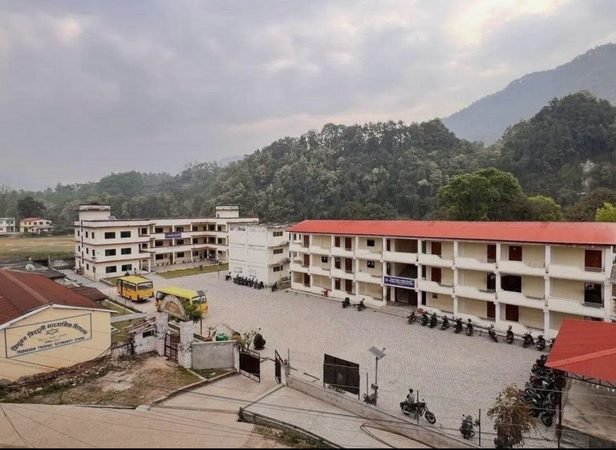
When a devastating flash flood tore through Nepal’s Trishuli Valley, Rajendra Dawadi had minutes to act. His decision to evacuate the school saved more than 900 students.
Photo: Source unknown
Introduction — Fourteen Minutes to Escape
It was 9:10 am on Wednesday, August 26, 2026.
Rajendra Dawadi, 47, was inside his classroom at Tribhuvan Trishuli Secondary School when the school’s accountant rushed in with a warning: floodwaters were racing through Nepal’s Trishuli Valley.
Moments later, a teacher received a phone call. Then a parent arrived, panicked, saying the river was rising.
Dawadi had roughly 14 minutes before the water would reach the school.
He had to make a decision in seconds. Stop classes. Evacuate. Move students to higher ground. Get them to safety.
He rang the bell.
The Warning That Changed Everything
The warning didn’t come from an alarm system or official alert.
It came from people who were already running.
A friend told Dawadi’s staff that the nearby village had been overwhelmed by the river. The water was coming fast. Faster than anyone expected.
At the same time, a parent arrived at the school, panicked. She had been driving through the valley and had seen the water rising.
These were not official warnings. There was no government siren, no rehearsed evacuation plan, no time to call authorities. Just ordinary people seeing danger and telling others.
Dawadi listened. He understood immediately: the warning was real.
The School Between the River and the Canal
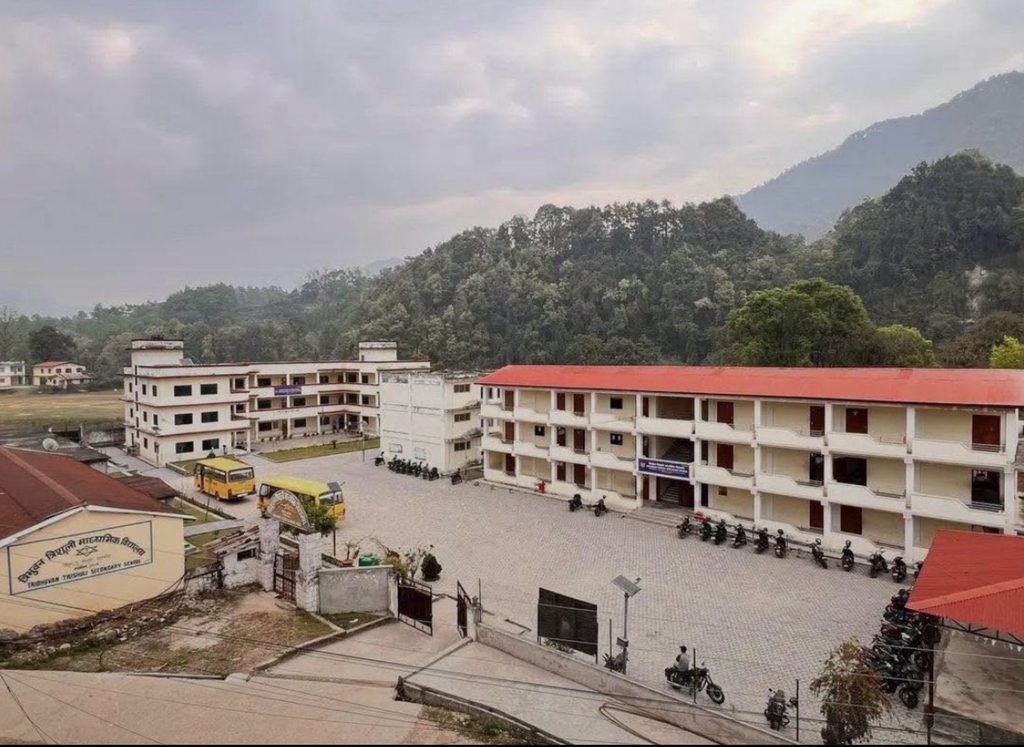
To understand why Dawadi’s quick decision mattered, you need to see where the school sat.
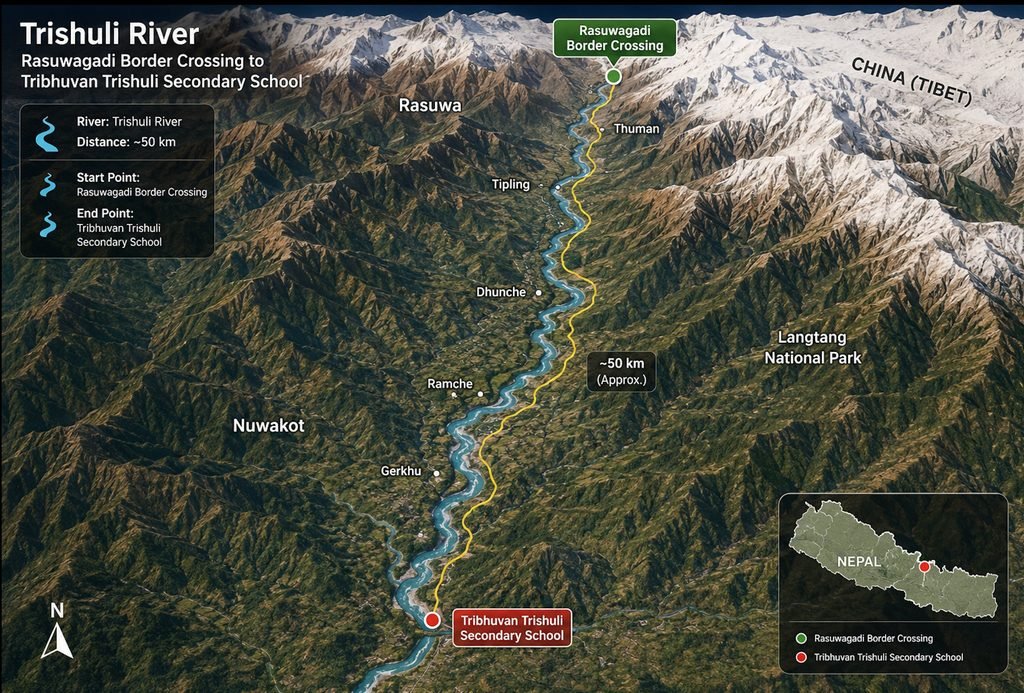
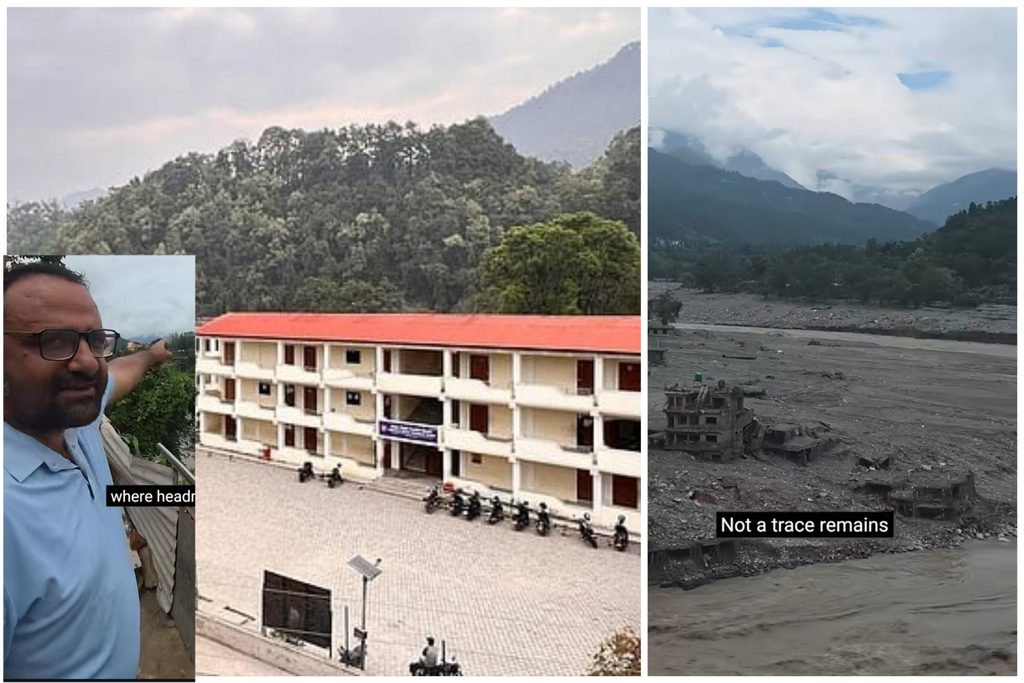
Tribhuvan Trishuli Secondary School was in Nepal’s Trishuli Valley, in the Nuwakot district. The valley is green and steep. The school building sat between the Trishuli River on one side and a canal on the other.
On a normal day, this wasn’t dangerous. The river was just water. Children attended classes. Teachers taught.
But when a glacial collapse high in the Himalayas releases massive amounts of water, ice, and rock, it races down the valleys. A valley becomes a trap. The water has nowhere to go but forward. Anything in its path gets destroyed.
The school building, sturdy as it looked, had no defense against a flood of that size.
The Bell Rings — And the Evacuation Begins
Dawadi rang the school bell.
Teachers understood immediately. They started moving students out of classrooms.
Some students were confused. But teachers didn’t have time to explain. They just said: “Go up the hill. Now.”
About 900 students were on campus that morning. The school’s older students, ages 11 to 18, had classes starting at 9:10. Younger students arrived later and were not yet in the building. Others were still making their way to school.
Dawadi called bus drivers who were on their way to the school. He told them not to come. He ordered them to higher ground.
One bus had already reached the school with a full load of students. Dawadi told the driver to turn back immediately.
The driver turned the bus around and drove across a newly built bridge. Moments later — just minutes later — the old bridge beside it collapsed into the floodwaters.
Those students had seconds to spare.
The Evacuation Gets Chaotic
Not everyone stayed calm.
Imagine being a child, suddenly told to run up a hill with no explanation. Imagine the panic when older students and teachers realized what was happening.
One girl became so frightened that she had a panic attack. Teachers put her on a motorbike and drove her up the hill to safety.
Most of the children ran on foot. Older students helped younger ones. Teachers stayed behind, making sure no one was left in the building.
Dawadi followed the children as they moved up the hill, away from the school.
The children eventually reached higher ground. They found shelter under a large bodhi tree.
They waited there.
Minutes Later, the School Was Gone
The water came fast.
It wasn’t just water. It was water mixed with rocks, mud, debris from upstream, pieces of bridges and buildings.
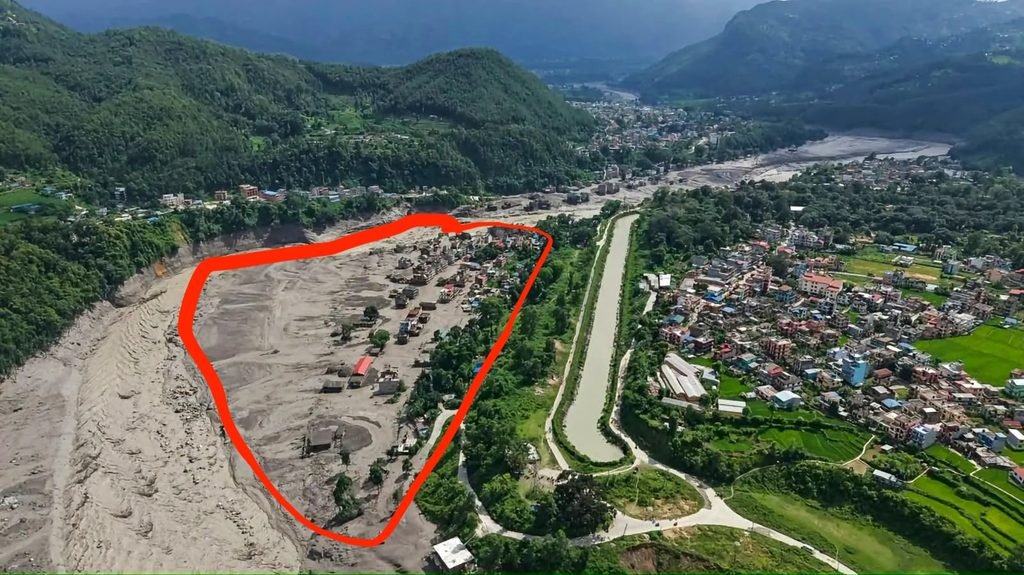
The floodwaters rose through the valley. They hit the school building with force.
The school building that had stood in that valley for years — where teachers taught and students learned — was destroyed. The floodwaters swept through it and tore it apart.
Vehicles parked at the school were carried away. Bridges collapsed. Trees were uprooted.
But the students were safe. They were on the hill. They were alive.
Two staff members did not make it to safety in time.
The Human Cost
While the evacuation was happening, two staff members made different choices.
Santos Pariyar, a 32-year-old social history teacher, left the school to return to his rented room beside the river. He was swept away by the floodwaters and remains missing.
The school’s janitor, identified as Sultan Lama in some reports and Chulrim Lama in others, remains missing. Some accounts say he may have gone back to close the school doors.
Their disappearances remind us that even when a principal makes the right decision to evacuate, a disaster of this scale takes people. Not everyone survived that day, even though most did.
Who Is Rajendra Dawadi?
Dawadi is a teacher and principal. He has spent his career at Tribhuvan Trishuli Secondary School. He knows the students. He knows the teachers. He knows the building.
He is 47 years old. He is not famous. He is not trained in disaster management. He is not an emergency responder.
He is a school principal who was in his classroom when danger arrived.
When asked about his decision, he was direct: “I immediately decided to stop school and get the children out.”
No heroic speeches. No talk of bravery. Just a man who acted.

Why This Mattered: The Informal Warning
The significance of Dawadi’s decision is this: the warnings that reached him came from informal networks — friends, a teacher’s phone call, a panicked parent — not from official alerts.
There was no government siren. No emergency broadcast. No official evacuation order.
Dawadi had only what ordinary people told him. And he had to trust that warning enough to evacuate 900 students.
He did.
The Disaster Beyond the School
Dawadi’s evacuation saved 900 students. But the disaster was enormous.
More than 900 people died across Nepal and Tibet. More than 4,700 people remain missing.
Villages were destroyed. Bridges collapsed. Entire communities were swept away.
The disaster was caused by a glacial collapse high in the Himalayas. Water, ice, and rock rushed down the mountains, triggering massive floods.
In that context, Tribhuvan Trishuli Secondary School was one location. One building. One principal and 900 students.
But it was a place where a different outcome happened. Where one decision made the difference.
Conclusion — The 14 Minutes
At 9:10 am on August 26, 2026, Rajendra Dawadi heard a warning.
By 9:24 am, the floodwaters had reached the school building and destroyed it.
In those 14 minutes, more than 900 students and almost all the teaching staff were out of the building and on higher ground.
Two staff members remain missing.
That is what happened in Nepal’s Trishuli Valley on that day.
It is not a story about a hero. It is a story about a man who heard danger and acted fast enough that the people in his school lived.
By The Lion Capital Editorial Team | September 2026