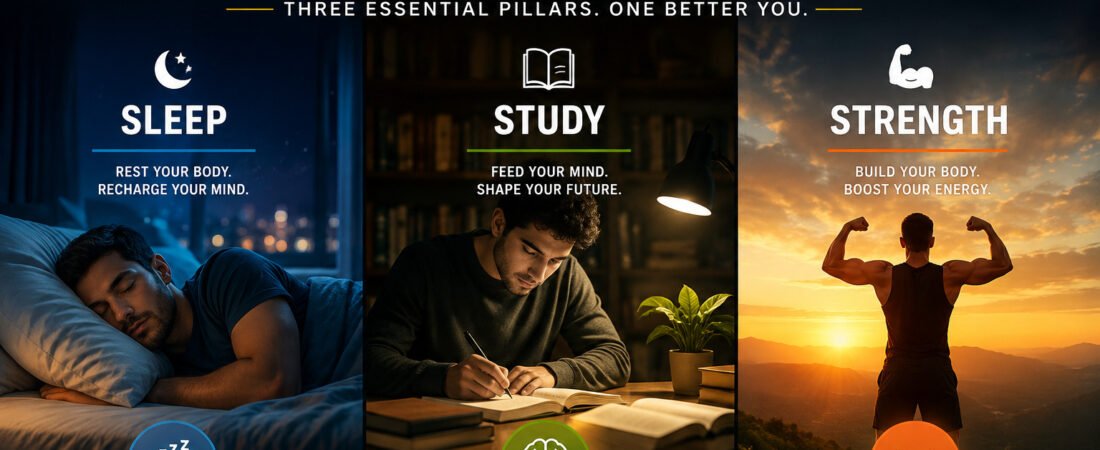
Three essential pillars that can shape how we rest, learn and build a stronger life.
Introduction
You know what’s funny? Most people think getting healthier requires some complicated secret or expensive program. The truth is much simpler.
Good health comes down to three basic things: getting enough sleep, keeping your mind active by learning new things, and moving your body to stay strong.
That’s it.
When you sleep well, your brain learns better. When you learn, you stay sharp and feel more confident. When you stay physically active, you feel stronger and more energized.
This post walks you through each one and shows you why they matter so much. Better yet, it shows you how to start small and build these habits naturally into your life.
Sources: World Health Organization (WHO) Health Topics | National Institutes of Health (NIH) Health Information
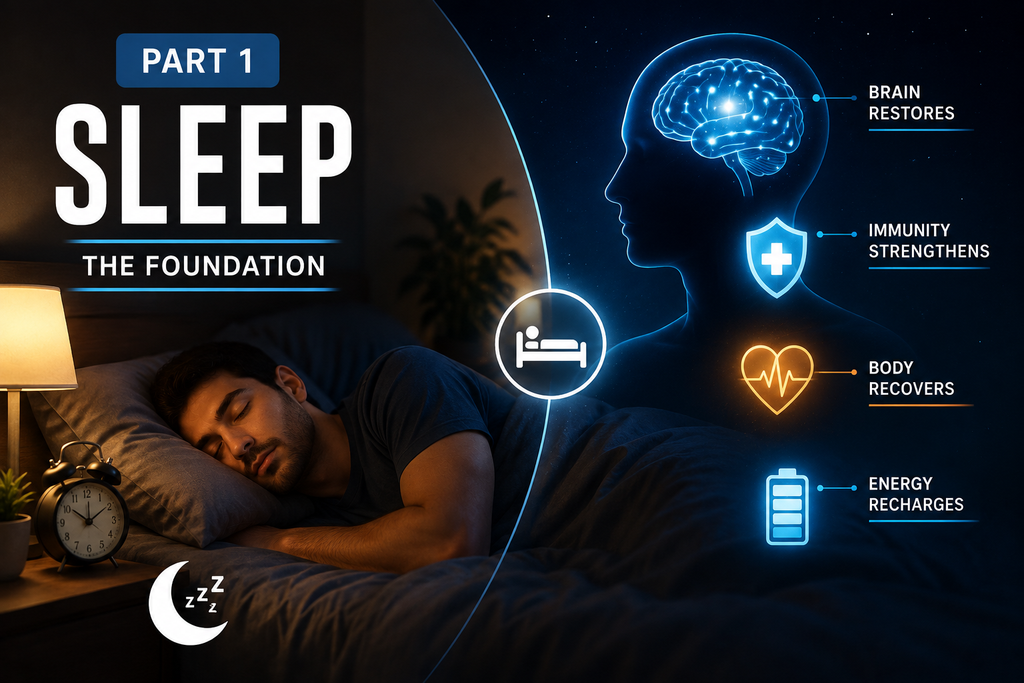
Part 1: Sleep—The Foundation
Why Sleep Matters
Let’s start with something that might surprise you: sleep is not lazy time. Sleep is when your body and mind actually do their most important work.
Think about charging your phone. If you run it on empty battery all day, it gets slow and glitchy. Eventually, it might stop working altogether. Your body is similar. You need good sleep to function well.
Most adults need about 7 to 9 hours of sleep each night. But honestly? A lot of us get much less than that.
What Happens When You Sleep
While you’re sleeping, something really amazing is happening inside your brain and body.
Your brain is actually cleaning itself. During the day, toxins build up in your brain, and sleep clears them away. This is why people who sleep well seem sharper and more alert.
Your immune system is also getting stronger while you sleep. Your heart gets a break. Your muscles repair themselves. Stress hormones calm down. Your entire system is renewing itself.
If you don’t get enough sleep, your body can’t do this repair work. You end up more vulnerable to getting sick, you age faster, and everything becomes harder.
Sleep Helps You Remember and Think
Here’s something worth knowing: sleep is when your brain actually stores memories.
You can study for hours without sleep and feel like you’re learning nothing. But sleep well, and then study for just a little bit? Your brain holds onto it much better.
This is why students who get good sleep before a test usually do better than students who stay up all night cramming. Your brain needs sleep to lock in what you learn.
When you’re sleep-deprived, you also can’t concentrate well. You make more mistakes. Everything feels harder. This is not because you’re lazy—it’s because your brain literally can’t function without rest.
What Happens When You Don’t Sleep Enough
When you regularly don’t get enough sleep, your health starts to suffer in ways you might not expect.
You become more likely to develop heart disease. Your risk of diabetes goes up. Depression and anxiety become worse. Your body gains weight more easily. Your immune system gets weaker, so you catch every cold going around.
Even just a few nights of bad sleep can make you feel foggy, irritable, and tired. Imagine what months or years of poor sleep does to your health.
How to Sleep Better
The good news is that you don’t need sleeping pills or complicated solutions. Sometimes the simplest changes make the biggest difference.
Try going to bed and waking up at the same time every day, even on weekends. This helps your body find its natural rhythm.
Make your bedroom cool, dark, and quiet. If it’s too warm or too bright, your body won’t sleep well.
Stop looking at your phone or computer about an hour before bed. The light from screens tricks your brain into thinking it’s still daytime, which makes it harder to fall asleep.
Don’t drink coffee or tea after lunch. It stays in your body longer than you’d think, and it can keep you awake.
If you eat a big meal right before bed, your body is busy digesting instead of sleeping. A light snack is fine, but save the big dinner for earlier in the day.
Move your body during the day. When you get exercise, your body wants to rest more at night.
Start with just one or two of these ideas. Small changes can make a real difference in how you sleep.
Learn more: National Sleep Foundation, CDC Sleep and Sleep Disorders, NIH What Happens When You Sleep
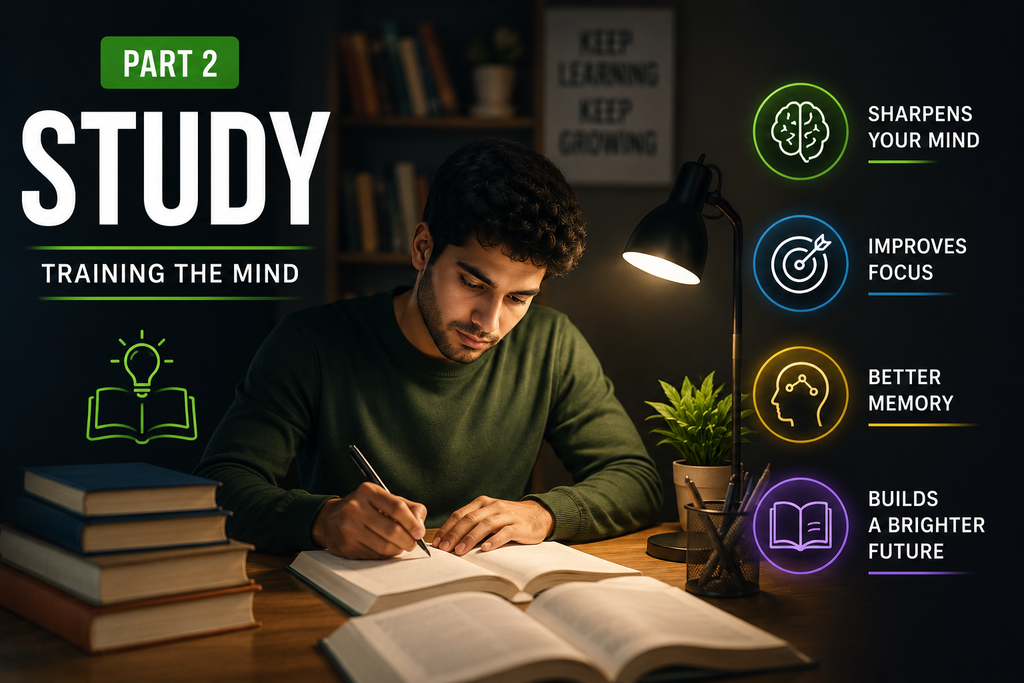
Part 2: Study—Training the Mind
Why Learning Matters
Your brain is a lot like a muscle. If you use it, it stays strong. If you don’t use it, it gets weaker.
This is why people who keep learning new things tend to stay mentally sharp their whole lives. They might read, take classes, learn a new hobby, or just stay curious about the world around them.
When you keep your mind active, something interesting happens. You don’t just learn new information. You also protect yourself from feeling foggy or forgetful as you get older. You feel more engaged with life. You feel more confident.
How Learning Makes Your Mind Stronger
When you learn something new, you’re actually building new connections in your brain. It’s like creating new paths in a forest—the more you use them, the stronger they get.
This mental activity makes your memory better. It helps you concentrate. It builds your confidence. And research shows that people who keep learning are less likely to develop memory problems later in life.
Learning something also makes you feel good. There’s a real sense of satisfaction when you finally understand something or master a skill.
Learning Something New
Maybe you’ve always wanted to learn guitar. Or speak Spanish. Or understand how to cook better. Or learn photography.
When you learn something new, your brain has to work in different ways. It has to focus. It has to practice. It has to solve problems. This is like a workout for your mind, and it keeps your brain healthy and young.
And here’s the best part—if you pick something you actually enjoy, learning doesn’t feel like work. It feels like fun.
The Power of Reading
Reading is one of the simplest ways to keep your mind active, and it’s incredibly good for you.
When you read, you’re learning new words and ideas. You’re giving yourself a break from stress. You’re training your concentration. Studies show that just reading for 20 minutes can actually lower your blood pressure.
People who read regularly also sleep better and feel less anxious. It’s like a simple tool that helps so many parts of your life.
You don’t have to read thick books. A blog post, a magazine article, or even stories online all count. Just make reading a regular habit.
Sleep and Learning Work Together
Here’s something really important: sleep and learning are connected.
When you sleep, your brain takes what you learned during the day and stores it in your memory. So if you skip sleep to study more, you’re actually making things worse. You’re losing the sleep that helps your brain remember what you studied.
The best learners know this: a good night’s sleep before you study helps. And a good night’s sleep after you study helps even more.
So don’t sacrifice sleep to study harder. Get good sleep and good study time. That’s the winning combination.
Learn more: American Psychological Association The Benefits of Learning, NIH Cognitive Development, WHO Mental Health and Education
Part 3: Strength—Building the Body
Why Physical Strength Matters
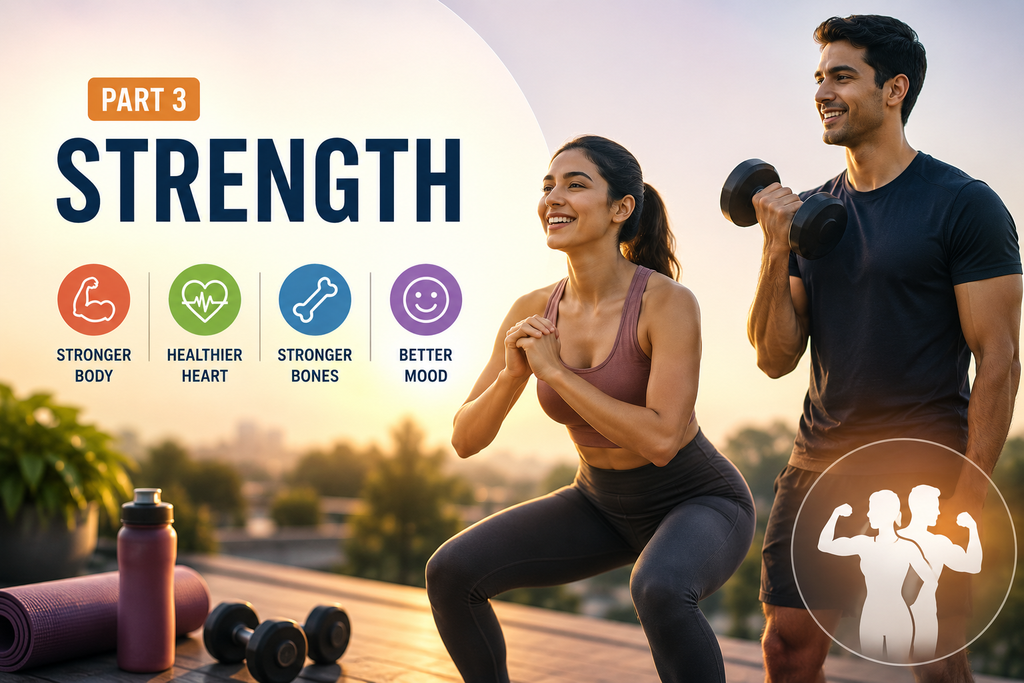
Strong muscles and strong bones are the foundation of feeling good.
When you have physical strength, everyday life becomes easier. Carrying groceries. Climbing stairs. Playing with kids. Traveling. Working in the garden. All of these things become less tiring when your body is strong.
Strength is also about independence. As people get older, the ones who stayed physically active can still do things on their own. They don’t need as much help. They can live the life they want to live.
This isn’t just about looking a certain way. It’s about being able to do the things you love.
What Strong Muscles and Bones Do
When you do strength training, you build muscle. These muscles protect your joints and support your bones. When you’re strong, you’re less likely to fall or get injured.
Strong muscles also burn more calories just by existing. So when you build strength, managing your weight becomes easier, even without constantly dieting.
The best part? When you’re strong, you move through life with more confidence and energy. You feel capable. You feel good.
How Exercise Helps Your Whole Body
Moving your body and building strength isn’t just about your muscles. It helps everything.
Regular physical activity lowers your blood pressure. It makes your heart healthier. It reduces your risk of diabetes and many types of cancer. It releases chemicals in your brain that make you feel happier. Exercise actually reduces anxiety and depression.
When you exercise, you sleep better. You feel calmer. You’re less stressed. You’re in a better mood.
This is why people who exercise regularly often say they feel so much better. It’s not just physical—it’s emotional and mental too.
How to Build Strength
The great news is that you don’t need an expensive gym or fancy equipment.
You can build strength with bodyweight exercises like push-ups and squats. You can use resistance bands or light dumbbells. You can try swimming or yoga. A simple walk is also valuable, especially if you do it regularly.
Even just 20 or 30 minutes, two or three times a week, makes a real difference. The key is doing something consistently that you actually enjoy.
Find something that feels good to you. Maybe that’s walking outside. Maybe it’s dancing. Maybe it’s lifting weights or swimming. If you enjoy it, you’ll stick with it.
Slow and Steady Wins
Here’s something important: consistency matters more than intensity.
A person who walks 30 minutes four times a week will be healthier than someone who does an intense workout once and then doesn’t exercise again for months.
Start slowly. Learn how to do things the right way. Build gradually. Listen to your body. Rest when you need to.
A routine that you can actually keep doing for years is much better than something so intense you burn out after a few weeks.
Learn more: CDC Physical Activity and Health, WHO Physical Activity Guidelines, NIH Exercise and Muscle Health
Part 4: How These Three Work Together
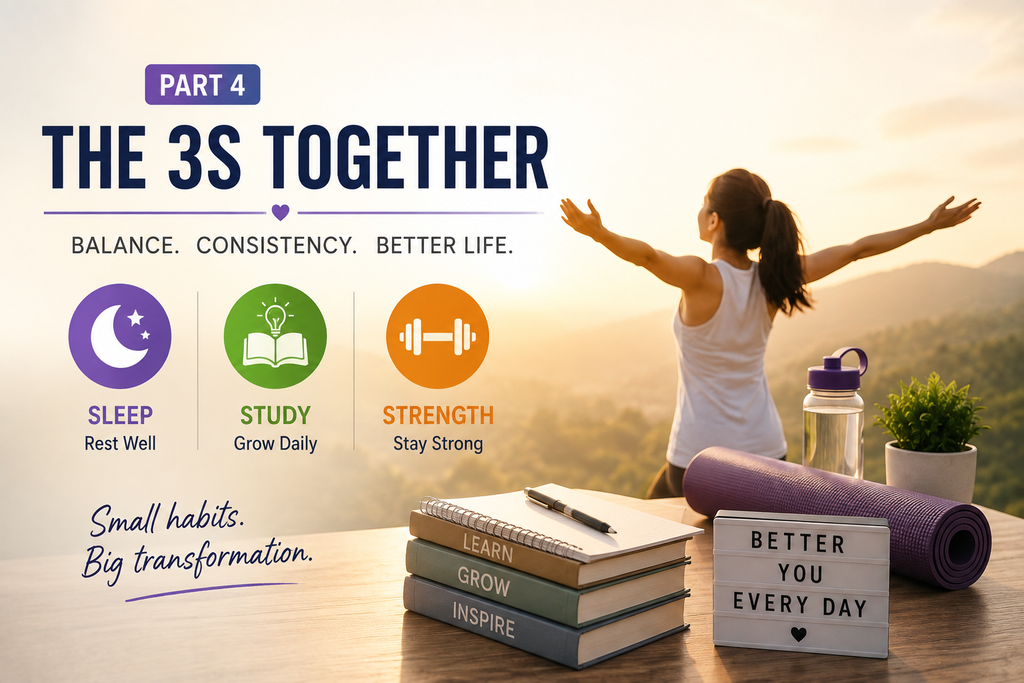
Here’s where it gets really interesting. Sleep, learning, and strength don’t work in separate boxes. They work together.
When you sleep well, you have energy to exercise. When you exercise, you sleep better at night. When you sleep well, your brain is ready to learn. When you learn new things, your mind feels healthier and sharper.
It’s like one big circle where each part makes the other parts work better.
Sleep Helps You Learn
Think about studying without sleep versus studying with good sleep.
Without sleep, you read the same paragraph over and over and nothing sticks. With sleep, you read it once and remember it. The difference is huge.
The person who sleeps well and studies will always learn more than the person who sacrifices sleep to study more hours. Always. This is just how your brain works.
Learning Helps Your Mental Health
When you keep learning and growing, life feels better. You feel more confident. You feel more interested in life. You’re less likely to feel sad or depressed.
Learning gives your life meaning. It gives you a sense of accomplishment. It keeps you engaged with the world.
This is not just about education or school. It’s about staying curious and interested in life.
Strength Helps Your Overall Health
Physical strength connects to everything else too.
When you exercise regularly, your sleep gets better. Your brain works better because of the exercise. You feel calmer and less anxious. Your mood improves. You feel more capable and confident.
A strong body gives you energy to do the things you want to do. It gives you confidence. It helps you live the life you want.
All Three Together
Here’s the real magic: when you take care of all three—sleep, learning, and strength—your whole life gets better.
You’re not just healthier physically. You’re sharper mentally. You’re calmer emotionally. You have more energy. You feel more like yourself.
A person who sleeps well, keeps their mind active, and moves their body regularly is going to feel so much better than someone who neglects any of these areas.
Learn more: NIH Interconnected Health, Harvard Health The Mind-Body Connection
Conclusion: Your Better Self Is Waiting
Health doesn’t have to be complicated. It comes down to three simple things: sleep that makes you feel rested, learning that keeps your mind sharp, and moving your body to stay strong.
You don’t need to change everything at once.
This week, just try one small thing. Maybe you go to bed 30 minutes earlier. Maybe you read for 15 minutes before sleep. Maybe you take a 20-minute walk. Pick one thing that feels manageable.
Next week, add another small habit. Keep building slowly.
After a few weeks, you’ll start to feel different. You’ll have more energy. You’ll think more clearly. You’ll feel stronger. After a few months, you won’t remember how you ever lived any other way.
These three things—sleep, learning, and strength—they’re not a luxury. They’re basic things you deserve. They’re how you’re supposed to feel.
So start today. Start small. And watch how much better your life becomes.
By The Lion Capital Editorial Team | August 2026