
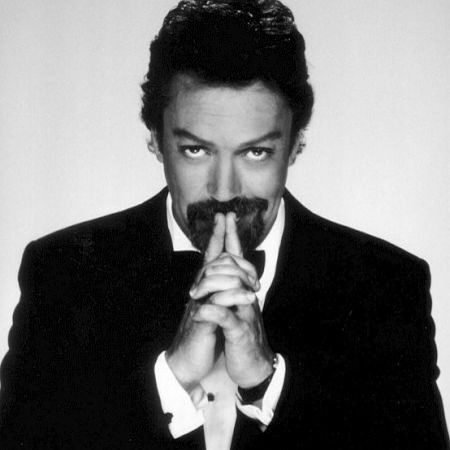
Photo Credit: Pinterest
From The Rocky Horror Picture Show to It, how Tim Curry built a remarkable career across stage, film, and television.
A Life Lived in the Delicious Margins of Entertainment
Tim Curry passed away on Tuesday at the age of 80 in his home in Los Angeles, leaving a legacy that was so unusual and distinctive that it’s difficult to envision popular culture existing without his influence. As an actor, he grasped a key aspect of human nature—the fact that villains are always more fascinating. Unlike other performers who sought acclaim as the leading man, Curry spent fifty years in a way that made audiences feel uncomfortable in the most effective manner, giving up on traditional good looks for prominent eyebrows, artificial smiles, and a kind of vocal inflection that made it seem as though he were truly, dangerously, and delightfully unhinged.
His life was not one of quiet achievement but rather a career carried out at full volume, in high heels, using prosthetics, and assuming roles so theatrical that they appeared to be set in a dimension a little to the left of reality. He managed to make us believe in the impossible: that a mad transvestite scientist could be sympathetic, that a plump detective could handle a murder mystery, and that a clown composed of cosmic evil could at the same time be funny and at the same time scare children for generations.
The Challenge: Born Into Respectability, Destined For Chaos
Curry had not come from the typical kind of talent-nurturing environment; he was born in 1946 in Grappenhall, Cheshire, the child of a Royal Navy chaplain and a school secretary. His family were respectable, religious, and well-mannered. His sister went on to become a concert pianist. All this suggested that his life would be one of conventional success: attending university, perhaps pursuing a sensible career, and then retiring in Surrey.
Rather, he attended the University of Birmingham and became interested in theater. In the 1960s, theater was going through its own sort of revolution, offering a space in which one could experiment with identity, sexuality, and physicality, everything that the postwar establishment had kept hidden. Curry had the right voice for it—a rich, theatrical baritone which could show menace, charm, and pure camp all within a single phrase—and he also had the right physique: tall and angular, with the ability to express emotion through exaggerated movements.
Moreover, he possessed a kind of fearlessness which was almost recklessness. Although his contemporaries were concerned about respectability, Curry was actually completely unconcerned about being liked by those who preferred safe things. He wanted to attract attention and he wanted to provoke a reaction. He may have been the first among actors of his generation to realise that there was a whole area of performance which mainstream entertainment had left unexplored—the transgressive, the sexual, and the dangerous-looking. It wasn’t necessary to make people think of him as a hero; the aim was simply to make them feel something, even if that feeling was one of disturbance.
The Journey & Breakthrough: From London Stages To The Shadows Of Pop Culture
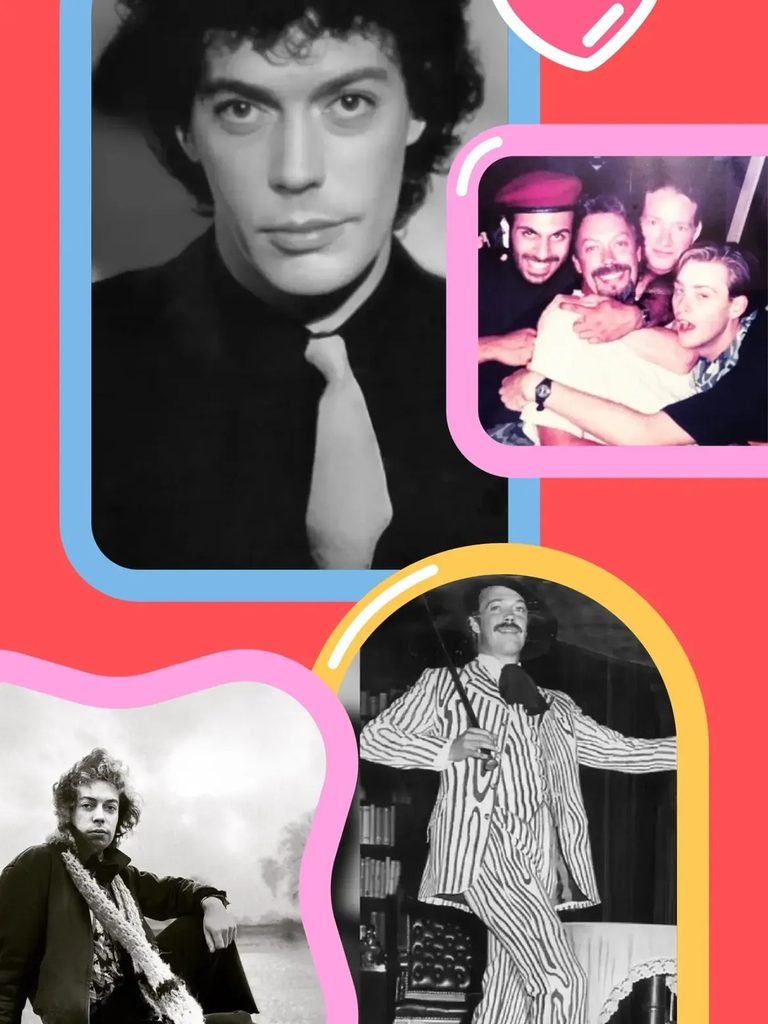
The change happened in 1973 when Curry was chosen to take part in Richard O’Brien’s The Rocky Horror Show in London; he portrayed Dr. Frank-N-Furter, a sweet transvestite from transsexual Transylvania, and that is when it all became clear. In him there was a character who was just as theatrical, sexual and undefined as Curry was—a role which required all that he had and which rewarded his oddness rather than punishing it.
The programme was revolutionary since it went beyond simple representation; it was in fact a celebration, a manifesto, and a formal approval for all members of the audience who had ever felt as though they didn’t quite belong. Curry performed the role again in Los Angeles in 1974 and on Broadway in 1975, constantly improving it and discovering new depths of vulnerability underneath the makeup and attitude.
When the film was released in 1975 under the direction of Jim Sharman, Curry didn’t merely succeed; he went beyond that. The Rocky Horror Picture Show became a cult phenomenon, a type of movie which wasn’t meant to have a place in mainstream cinema. It had no heroes, no moral centre, and no reassuring ending. It featured a mad doctor, a naive pair of lovers, and the most spectacular creature ever brought to the screen. Curry made Frank-N-Furter at once tragic, funny, seductive and horrifying, often in the same scene. He realised that the most interesting characters are those who contain contradictions—characters who can be both predatory and heartbroken, both ridiculous and genuinely threatening.
The Roles That Defined Him: A Gallery Of Delicious Villainy
Following Rocky Horror, Curry could have settled for a easy career. Instead, he pursued a career based on unrelenting ambition, with each of his characters being more outrageous than the one before. In Stephen King’s It (1990), he took on the role of Pennywise, a clown formed out of the shared childhood fears of the whole town. While others might have portrayed him as a simple threat, Curry realised that Pennywise’s power lay in his ability to adapt—being able to take the form of whatever fear each child had most. He was both funny and grotesque, childlike and ancient, as well as seductive and repulsive.
In the 1985 film Clue, directed by John Landis and a picture which ought not to have worked, Curry portrayed the butler Wadsworth with comic timing so accurate that it made the viewer believe he was the key element in a perfectly balanced mystery-comedy setup. He turned formality into something hilarious and showed that he was capable of performing screwball without sacrificing his sharp edge.
There were also his voice roles—such as King Chicken in Courage the Cowardly Dog and the Tall Man in The Legend of Vox Machina—something that many actors would regard as beneath them, but Curry dealt with them just as intensely as he did with Shakespeare. He never looked down upon any character, whatever the medium might be; a voice role was still a character to take on and still an opportunity to discover truth in something unusual.
Legend, Home Alone 2, The Shadow, Loaded Weapon 1—the list is long since Curry was endlessly useful. Hollywood knew exactly what Curry knew, namely that the supporting character, the villain, and the comic relief usually contained the whole essence of a film; although the protagonist might be responsible for moving the action forward, it was the villain that made you remember the movie.
What brought all these different roles together was Curry’s total dedication to each one. He never failed to make use of any gesture. Each time he raised an eyebrow it was on purpose. Each line he read had been carefully adjusted. When playing villains he treated them as if they were the heroes of their own stories, which—in a way—they were.
Impact, Resilience & Legacy: The Unfinished Work Of A Fearless Performer
In 2012 Curry had a serious stroke which left him with restricted mobility and difficulties with speech. For most actors this would have meant retiring and a gradual disappearance from public view. Not Curry, however; instead of vanishing he took part in the 2016 television remake of Rocky Horror, once again playing the part of the Criminologist. He also made guest appearances on various programmes. In 2025 he released a memoir titled Vagabond, a statement of a life lived according to his own wishes, defying all the expectations that had told him he should be more acceptable, more mainstream and more normal.
No one who knew his work should be surprised by this resilience. For fifty years Curry had played roles that refused to conform, having thrown societal conventions back in the face of them and having laughed. He had built his career on being unapologetically and defiantly himself. It now seems almost certain, looking back, that the real Tim Curry was just as uncompromising as his characters.
Since his death, the entertainment industry has been filled with tributes, many of the actors stating that he had inspired generations to be bolder performers, to accept their oddities, and to refuse to apologise. This is the best indication of his impact: he never merely provided entertainment. He had given people the permission to do so. He demonstrated that it was possible to have a successful career by being the kind of person most people would like to hide, by playing the kind of character that everyone else feared, and by not apologising for occupying space.
His cultural influence will extend well into the decades after his death. Pennywise will on and on frighten children, while Frank-N-Furter will keep going to allure audiences. School theater groups will continue to come to realise his talent via productions of The Rocky Horror Picture Show, and it will happen that some child in the audience will watch Curry perform and finally realise that being odd was not a disadvantage but rather a superpower.
The Villain We Didn’t Know We Needed
Tim Curry died just as he had lived—on his own terms, in his own house, with no apology or sentiment. He never became a leading man and never needed to. He knew a truth that most of the entertainment industry had to discover the hard way, namely that it is in the margins that interesting people are to be found. It is in the supporting roles, in the villainous parts, and in the characters that other actors turned down that you can truly act.
He was a force, which is the term that other actors employed when paying tribute to him, and it is the one word that adequately describes a man who had been in this business for fifty years yet had never grown boring, had never cut corners, and had never lost the same degree of theatricality, excess, and vitality as he showed in 1973.
We should remember him as Frank-N-Furter, as Pennywise, as Wadsworth, as King Arthur, and as every other brilliant and mad villain he played. Yet the most important point to remember is this: Tim Curry did not fail even though he was strange; on the contrary, it was precisely because of his strangeness that he was successful. When a society wished to make him less unusual, safer, and more conventional, he refused to do so, and it was this refusal that led to some of the most unforgettable moments in the history of entertainment.
A legend, a powerful force, a vivid and intense flame.
Tim Curry, 1946–2026
By The Lion Capital Editorial Team | August 2026
https://thelioncapital.org/dolly-parton-from-nothing-to-legend/