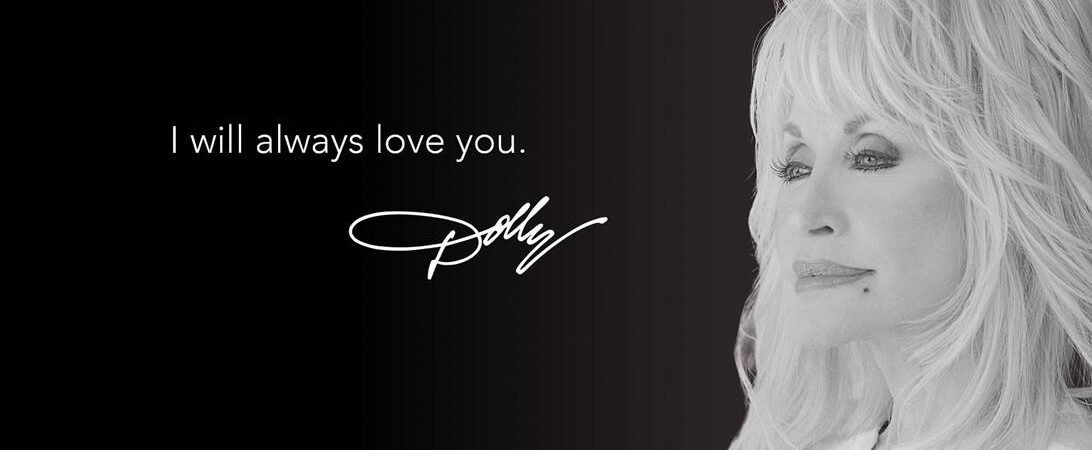
Photo Credit: DollyParton.com
How a child from a one-room cabin built a global legacy through music, business, and generosity.
There’s a particular kind of stubbornness that comes from having nothing. Dolly Parton had it in spades. Born in a one-room cabin in Sevier County, Tennessee on January 19, 1946, she was the fourth of twelve children squeezed into a space so tight that breathing room itself was a luxury. Her father was a sharecropper—the poorest kind of poor, working land he’d never own for money he could barely stretch to feed his family. Her mother, Avie Lee, performed miracles with scraps, stitching together a patchwork coat from fabric remnants that would one day inspire one of the most beautiful songs ever written.
The Smoky Mountains in the 1950s weren’t romantic poverty. They were the real thing. No running water. No electricity. No hope, at least not the kind written in economics textbooks. But somehow, in that one-room cabin filled with children and struggle, Dolly Parton decided she wasn’t going to accept the life that place had scripted for her.
She was singing before she could read. Her uncle Bill Owens, who wrote songs himself, saw something in the scrawny blonde kid that made him decide to drive her to Knoxville, to put her in front of a microphone on local radio when she was just ten years old. By the time she was thirteen, she’d stood on the stage of the Grand Ole Opry—the most sacred stage in country music. But even that wasn’t enough for her. She wanted out of Appalachia the way a swimmer wants air.
The day she graduated high school in 1964, she packed a suitcase and got on a bus to Nashville. It was the smartest decision she’d ever make.
What Nashville discovered when Dolly Parton arrived was that she wasn’t just a singer with a pretty voice. She was a songwriter who understood something fundamental about human longing. She’d lived poverty so thoroughly that she could write about it without shame or sentimentality. She’d watched her parents love each other through impossible circumstances. She’d felt the sting of limitation and dreamed her way around it. All of that became fuel.
Porter Wagoner changed her trajectory. He was a star—a real one—and when he put her on his television show in 1967, he gave her a platform and a crash course in the music business. For seven years, they recorded together, toured together, built a partnership that made them one of country music’s biggest duos. In 1969, she achieved one of her childhood dreams: full membership in the Grand Ole Opry. She’d stood on that stage as a kid. Now she belonged there.
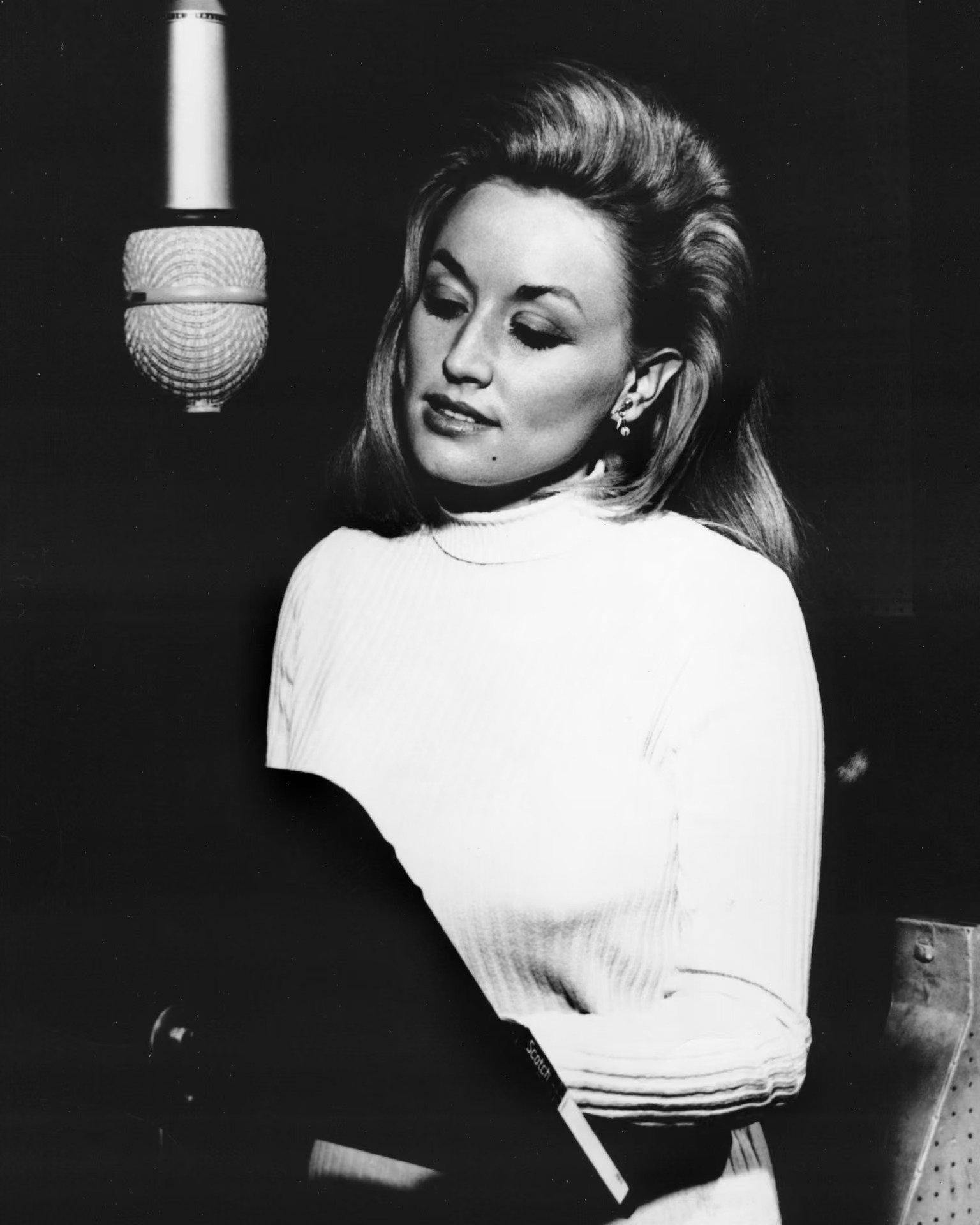
But something shifted in Dolly around 1973. She started writing songs that came from a place so deep and true that they didn’t sound like songs—they sounded like confessions. “Joshua” in 1971 was the first real proof that she wasn’t just talented; she was a storyteller. It hit number one and stayed there. Then came “Coat of Many Colors”—a song about that patchwork coat her mother made, about wearing poverty like it was worth something, because the love in it made it worth everything. People wept. They still do.
“Jolene” came next, and it’s perhaps the most perfectly constructed breakup song in American music. A woman pleading with another woman to stay away from her man. Vulnerable. Desperate. Raw. When Whitney Houston covered “I Will Always Love You” for The Bodyguard in 1992, the world finally understood what Dolly had known all along—that her songs were universal. That song spent fourteen weeks at number one.
By 1974, Dolly made the leap. She left Porter to go solo, and rather than fade, she exploded. She toured the world. Her songs climbed every chart—country, pop, adult contemporary. The Country Music Association gave her Female Vocalist of the Year twice. In 1978, they named her Entertainer of the Year.
Then she did something most singers never do: she became an actress. “9 to 5” in 1980 wasn’t just a movie—it was a cultural moment. Dolly starred opposite Jane Fonda and Lily Tomlin, and the title song became a working woman’s anthem. It hit number one everywhere. She proved she could do it all, and Hollywood started offering her roles. Steel Magnolias. Rhinestone. The Best Little Whorehouse in Texas. She didn’t just sing about life; she lived it on screen.
Through all of it, she was building something most people don’t see: a business empire. Her production company, Sandollar, negotiated television deals that were worth more money than anyone had imagined. She duetted with Kenny Rogers on “Islands in the Stream” and they toured together through the 1980s to sold-out arenas worldwide. This wasn’t luck. This was a woman from a one-room cabin who understood leverage and knew how to negotiate.
Here’s where Dolly becomes something more than a superstar. In 1986, she opened Dollywood—a theme park in Pigeon Forge, Tennessee, built on the bones of an old amusement park and transformed into something authentically Appalachian. It wasn’t nostalgia. It was investment. Dolly had promised herself a long time ago that if she made it big, she’d bring something back to the place that raised her. She kept that promise. Today, Dollywood is the largest employer in Sevier County, with four thousand people on the payroll. Four million visitors a year. It’s not just a business; it’s an economic lifeline for a region that desperately needed one.
But Dollywood is the flashy legacy. The real one is quieter.
In 1995, Dolly created something called the Imagination Library. It started simple: she’d been haunted her whole life by the fact that her father never learned to read or write. He was sharp as a tack—a brilliant trader and horseman—but literacy had been denied to him. So Dolly decided that no child in her community would face that same wall. The Imagination Library mails free books to children from birth to age five. Every month. Age-appropriate. No strings attached.
It started in her home county. Now it’s global. Over three hundred million books have gone out. More than a million children receive books every single month across the world. It’s not glamorous. Nobody makes movies about book distribution programs. But it’s one of the most effective poverty-fighting tools ever created by a single individual. Dolly understood something fundamental: poverty is a wall, and books are doors.
This isn’t distant charity. Dolly didn’t write a check and walk away. She stayed involved, stayed connected, stayed committed. She remembered being a kid hungry for stories, and she built a system to ensure that poverty would never again slam a library door in someone’s face.
The awards and accolades are almost secondary. Eleven Grammy Awards. Fifty-four Grammy nominations. The Lifetime Achievement Award. Ten Country Music Association Awards including Entertainer of the Year. She was inducted into the Country Music Hall of Fame in 1999. She got the Kennedy Center Honor in 2006. And then in 2022, at an age when most people have hung up the microphone for good, she got inducted into the Rock and Roll Hall of Fame and released an album called “Rockstar” that set sales records for her entire career.
Twenty-six number-one country songs. Over a hundred million albums sold. Twenty-nine gold, platinum, and multi-platinum certifications. In 2024, Billboard named her the number one country music artist of all time. All time. Not just of her era. Of all time.
But the statistics miss the point. What mattered about Dolly was that she showed women in entertainment that you didn’t have to choose. You could be glamorous and shrewd. You could wear wigs and high heels and still negotiate like a boss. You could sing about heartbreak and also run a theme park. You could refuse to conform and still sell a hundred million albums. She did all of that while staying completely herself—never trying to be anyone but Dolly, never apologizing for where she came from, never pretending that success meant forgetting.
In the 1970s and 80s, when country music was still figuring out what to do with women, Dolly carved her own path. She didn’t wait for permission. She didn’t dim her light to make men comfortable. She sang in her own voice about her own life and somehow, that authenticity resonated so deeply that it became timeless.
What’s remarkable about Dolly Parton is not that she escaped poverty. Plenty of talented people do that. What’s remarkable is that she never treated her escape as a personal victory that she could then enjoy in isolation. She brought the mountain with her. She brought the memory of that one-room cabin, that sharecropper father, that mother who made coats from scraps. She wrapped it all up and turned it into music that moved the world, a business that employed thousands, and a library system that has given three hundred million books to children who might otherwise never have had them.
That’s the kind of success that matters. Not the kind that’s measured in headlines or Billboard charts or Grammy trophies—though she got all of those. The kind that’s measured in lives changed. In a kid in rural Tennessee who got a free book in the mail when nobody else would have given her one. In a mountain community that didn’t get abandoned when the girl who came from it made it big.
Dolly Parton proved something that shouldn’t have to be proven but somehow still needs to be: that you don’t have to become someone else to become someone great. That remembering where you came from isn’t weakness; it’s wisdom. That the best definition of success isn’t how high you climb, but whether you remember to reach back and help pull others up.
She was just a girl in a one-room cabin with a talent for singing and a refusal to accept limits. That girl became a legend. But more importantly, she became something rarer: she became a woman who never forgot what it felt like to have nothing, and who spent her whole life making sure other people would have more.
The Last Song
On August 25, 2026, Dolly Parton died at age 80. The news came quietly at first, then swelled across the world like the chorus of one of her songs. The woman who’d been performing publicly for nearly seven decades, who’d just announced her Broadway musical would premiere in December 2026, who still had more to give, was gone.
She died in Nashville—the city where it all began, where she met Carl Dean at a laundromat on her very first day, where she became herself. Her family’s request was simple and deeply Dolly: in lieu of flowers, donate to the Imagination Library.
Not to a monument. Not to a scholarship bearing her name. To a program that mails free books to poor children.
That single request captures everything about who she was. After a lifetime of standing in the spotlight, after sixty decades of giving concerts and winning awards and building an empire, what mattered most to Dolly was that children who grew up like she did—hungry, poor, without access to stories—would not have to grow up without books.
The tributes poured in from around the world. Fellow musicians spoke of the doors she’d opened. Business leaders talked about the thousands of jobs Dollywood provided. Literacy advocates talked about the three hundred million books that had changed lives. Presidents and celebrities and ordinary people who’d grown up listening to “Jolene” or “I Will Always Love You” shared where they were when they heard the news.
But perhaps the most fitting tribute came from the Imagination Library itself. The program she’d started in her home county in 1995 continues to mail books every single month. A million children a month still receive those packages. In a way, Dolly Parton never really left. She’s in every book that arrives on a doorstep, in every child who opens a story and discovers that the world is bigger than their circumstances.
She came from nothing and built something that will outlive us all. Not just the albums or the awards, though those are impressive. What endures is the music—songs so honest and true that they transcended every boundary. What endures is a park where families make memories. What endures is a library program that proves one person’s refusal to forget can change millions of lives.
That’s the legacy of Dolly Parton. Not the glitter or the number-one songs or the Grammy Awards, though she earned all of those. The real legacy is simpler and more powerful: she never forgot where she came from, and she spent her life making sure other people would have more than she had. She proved that success isn’t measured in how far you climb, but in how many people you reach back and help lift up.
In the end, the girl who sang to chickens in a barn became the woman who sang for the world. And the world is better for it.
By The Lion Capital Editorial Team | August 2026