
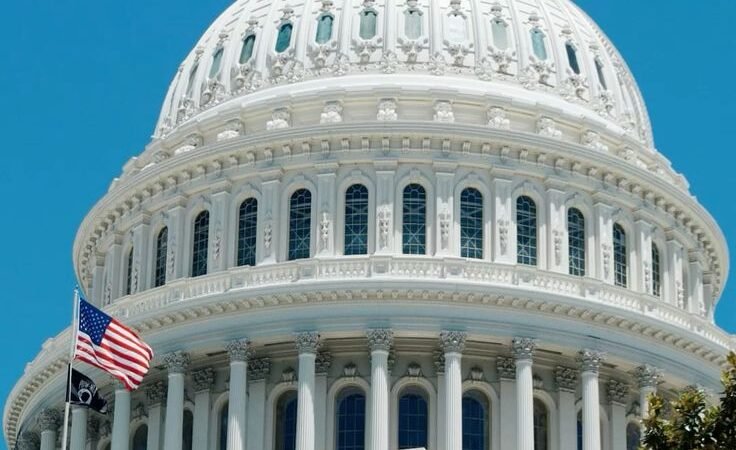
Photo Credit: Melissa Lobo
More Americans are voting early in many states that will decide who controls the Senate. But early voting shows energy, not winners.
Americans are voting early in big numbers ahead of the US midterm elections on November 3. In several states where the race for the Senate is close, far more people have already voted than at the same point four years ago.
More than 13 million people had voted early or by mail by October 20, compared with about 9 million at the same point in 2022, according to an Associated Press analysis.
The stakes are high. Control of the US Senate, one of the two houses of Congress, is on the line.
But there is a catch. Early voting tells us people are motivated. It does not tell us who they voted for.
Why the Senate matters
Republicans hold the Senate today, with 53 of its 100 seats. They also control the House of Representatives and the White House, under President Donald Trump.
To take control, Democrats need a net gain of four seats. That would give them 51. If the Senate splits 50–50, Vice President JD Vance, a Republican, casts the deciding vote.
Whoever controls the Senate decides which laws get a vote. The Senate also approves the president’s choices for judges, cabinet ministers and ambassadors, and it can investigate the government.
If Democrats win the Senate, Trump would find it much harder to pass laws or appoint people he wants. If Republicans keep it, he keeps that power.
Where early voting is up
Compared with the same point in 2022, AP found:
- Texas: up 74%, with nearly 1 million ballots cast
- Kansas: more than doubled, from about 27,000 to over 55,000
- Maine: up 39%
- Ohio: up 30%
- North Carolina: up more than 30%
In Michigan and Georgia, early voting is high but about the same as in 2022. In Iowa, it is down about 6%.
The races to watch
Texas. Democrat James Talarico faces Republican Ken Paxton, the state’s attorney general, for the seat held by Republican Senator John Cornyn. Paxton beat Cornyn in a primary with Trump’s support. Democrats have attacked Paxton over corruption allegations; he was impeached by the Texas legislature in 2023 and later acquitted. No Democrat has won a statewide race in Texas in more than 30 years.
Kansas. Republican Senator Roger Marshall faces Democrat Adam Hamilton. Republicans have spent close to $12 million to protect a seat in a state Trump won by 16 points in 2024.
Maine. Republican Senator Susan Collins, seeking a sixth term, faces Democrat Troy Jackson.
North Carolina. Former Democratic governor Roy Cooper faces Republican Michael Whatley for an open seat.
Ohio. Democrat Sherrod Brown is trying to return to the Senate against Republican Senator Jon Husted. Spending on the race is expected to reach close to $500 million, according to the ad-tracking firm AdImpact.
Democrats are also defending their own seats in Michigan and Georgia.
What is driving voters
AP reported that many voters are frustrated by the high cost of living, by Trump’s tariffs on imported goods, and by high fuel prices linked to the war with Iran.
That frustration has forced Republicans to defend seats in states such as Texas and Kansas, where Democrats have not been competitive for decades.
In most of the close states, Republicans make up a smaller share of early voters than they did four years ago.
What early voting cannot tell us
Early voting numbers are easy to misread.
First, some states have made it easier to vote early, or now publish more data. Part of the rise comes from those changes, not just from more interest.
Second, many states, including Texas, do not report early votes by party. So nobody knows which side the surge helps there.
Third, Republicans in recent elections have often voted more on Election Day itself. A smaller Republican share of early votes may be balanced out on November 3.
Early voting is a sign of energy. It is not a forecast.
What The Lion Capital asked
The Lion Capital put questions in public posts on X on October 26 to the office of the Texas Secretary of State (post) and to election expert Michael McDonald of the University of Florida (post). We asked whether the rise in early voting in Texas reflects new voters or changes in voting rules, and what early-voting figures can and cannot show.
Neither had responded by the time of publication.
What happens on November 3
Polls close in the evening on November 3, at different times in different states. Some states count mail ballots slowly, so close races may not be called that night. Very close results could lead to recounts or court cases.
The answer to the biggest question, who controls the Senate, may take days.
By The Lion Capital Editorial Team | October 2026