
Photo Credit: Unknown
What began as complaints about crowded classrooms, missing teachers and broken-down schools has spread across France. It has led to thousands of arrests, hundreds of school closures and a political fight that reaches all the way to the 2027 presidential election.
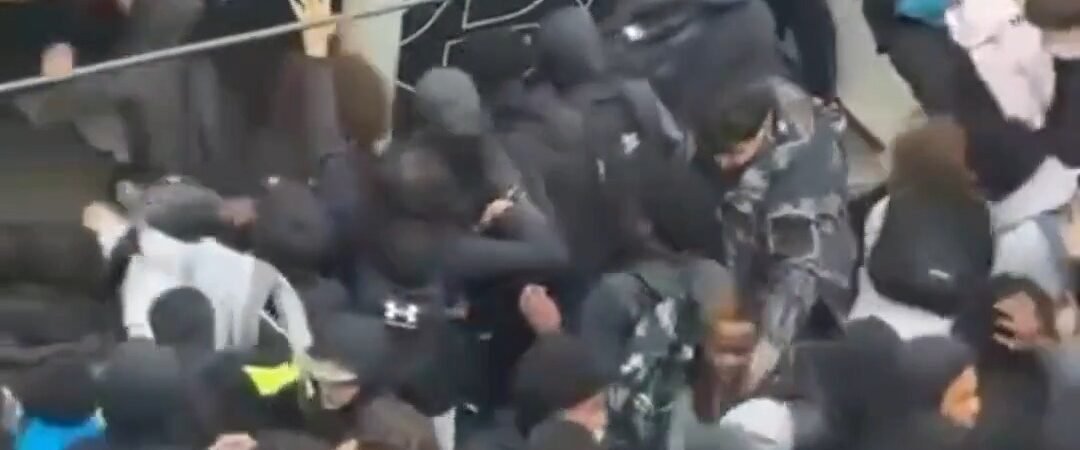
High school students across France have blocked, marched and clashed with police for more than a week, in the country’s biggest youth protest movement in years.
More than 1,200 high schools were affected by protests during the week, and about 400 were closed on Friday, Education Minister Édouard Geffray said, according to Reuters. France has about 3,700 high schools, so roughly one in ten was shut.
The protests matter beyond France’s classrooms. They are a test of a question many governments face: can a country cut its spending and still keep its public services working?
“We are 35 per class, we don’t have enough chairs in classrooms, the one-hour lunch break is too short for everyone to get food,” Kesia, a 15-year-old student, told Reuters in Pantin, a Paris suburb, shortly before police fired tear gas.
How it started
The movement began last week in Seine-Saint-Denis, a poor and crowded area just north of Paris. Students there blocked the entrances to their schools to demand more teachers and better conditions.
Within days it had spread to cities across the country, including Marseille, Lille, Strasbourg, Toulouse and Tours. University students joined in too, with blockades at ten universities, according to Connexion France.
Students say their schools have been neglected for years. Their complaints include classes cancelled because no teacher is available, crowded classrooms, run-down and dirty buildings, and too few nurses and social workers. Many also criticise Parcoursup, the national system that decides who gets into university, and long school days.
Some say the problem is unfairness. “The education authority is not investing enough in the suburbs. It’s classist and racist,” one student said, according to Reuters.
At one high school in Aubervilliers, classes in maths, humanities, English and physical education had been cancelled since the start of the school year because of teacher shortages, a parent representative told Reuters.
The money question
The protests come at an awkward moment for the government. On Thursday, it presented its draft budget for 2027.
Under that plan, education spending would rise by 1.7% to €65.53 billion, not counting teachers’ pensions, Reuters reported. That is less than inflation, so in real terms the money buys less than before.
There is also a bigger shift. Education has traditionally been the French government’s largest spending item. Next year, the cost of paying interest on the national debt, expected to be €74.5 billion, will overtake it, according to the draft budget.
The picture is not simple. France’s spending on education is in the middle of the range for rich countries, and it rose between 2015 and 2022, according to the OECD, as cited by Reuters. But education’s share of the overall budget has slightly fallen.
When protests turned violent
Most students have protested peacefully, by marching or blocking school gates. But in a number of places, the protests turned violent.
Fires were started at at least two high schools, and teachers at a third school, in Marseille, were splashed with petrol, officials said. In one city, a crowd of young people forced firefighters out of their truck and set it on fire.
Geffray said 170 students and 65 school staff, including 40 head teachers, had been injured, according to TIME.
By Friday, police had arrested about 5,000 people since Monday, most of them teenagers, Interior Minister Laurent Nuñez said. He said that in some places, troublemakers were moving from school to school to stir up violence.
Rights groups say the police have been too rough with children, using batons, tear gas and rubber-bullet guns. The Interior Ministry said it had opened three investigations into police violence.
What the government says
The government is trying to do two things at once: condemn the violence and accept that students have a point.
Geffray said the movement was “legitimate at the outset,” but that it had been “held hostage by ultra-violent fringe groups.” He has urged parents to keep their children away from the blockades.
On Friday he met teachers’ unions, parents’ groups and student organisations. “High school students must be listened to. Their difficulties call for concrete responses, both in their schools and at the national level,” he wrote on X.
Student groups were not satisfied. They called for the protests to continue, saying the government had offered no concrete measures.
The political fight
The protests have also become a fight between political parties, seven months before France’s 2027 presidential election.
French intelligence agencies told a government crisis meeting on Thursday that the movement had been started by politicians from France Unbowed, or LFI, a hard-left party, according to a source quoted by Reuters. The prime minister’s office called it “an operation organised by La France Insoumise and its far-left proxies.”
LFI rejects this. Its senior lawmakers said the government was blaming them to avoid blame itself, and accused it of turning the protests into politics ahead of the election. LFI’s leader, Jean-Luc Mélenchon, has denied any responsibility for the violence.
No evidence has been made public to show who, if anyone, organised the protests.
Why this matters beyond France
Many countries face the same pressure France does. Governments are trying to bring down debt, while the cost of public services keeps rising. Schools, hospitals and transport are often where the squeeze is felt first, and usually most in poorer areas.
What makes the French case unusual is who is protesting. These are teenagers, most too young to vote, saying the system meant to prepare them for life is not working.
Whether France’s education system is truly in crisis, or under strain in some places more than others, is part of the debate. Some areas say they have far fewer resources than others. The government says it is spending more, not less.
Teachers’ unions have called a national strike for Tuesday. Student groups say they will keep protesting until the government offers concrete changes.
By The Lion Capital Editorial Team | October 2026