
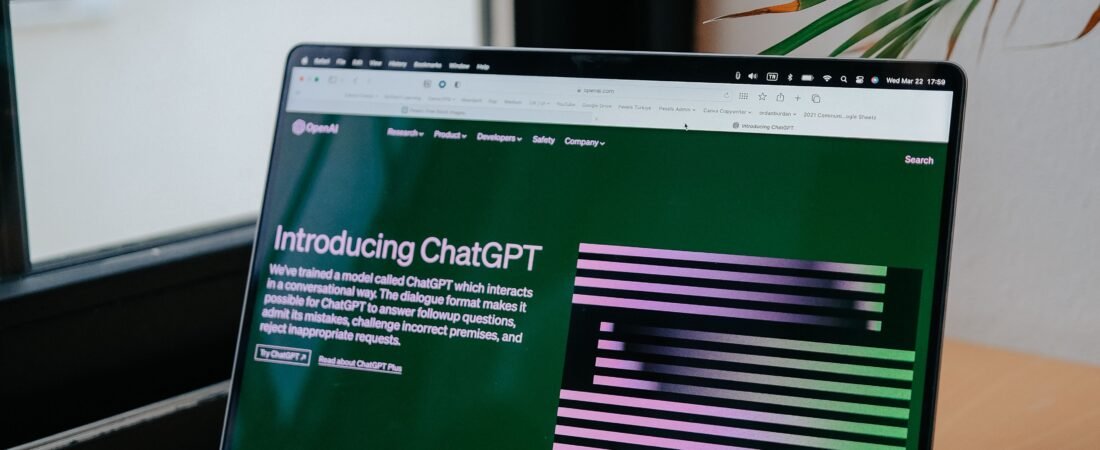
From homework and lesson plans to shopping, work and family decisions, AI is moving quietly into everyday life — often before people even think of themselves as “using AI.”
Photo Credit: Hatice Baran / Pexels
AI Is No Longer Just “AI”
For a long time, “AI” sounded like something that belonged to engineers, big tech companies, and science fiction. That’s not really true anymore. AI is becoming less like a separate technology you consciously decide to use, and more like an invisible layer sitting underneath everyday life — something you reach for the same way you reach for a search engine or a calculator, without really thinking of it as a big deal. That shift, quiet as it’s been, is the real story here.
The AI Tutor in Your Pocket
Start with students, because the numbers here are genuinely striking. Over 80% of US high school and college students now use AI for school-related tasks, according to Stanford HAI’s 2026 AI Index Report. Separately, Google and Ipsos’s 2026 “Our Life with AI” survey found that 74% of AI users now say they use it to “learn something new” or “understand a complex topic” — a notable shift, since entertainment used to be the top reason people reached for these tools. In practice, this looks completely ordinary: a student asking an AI to explain a math concept a different way, summarize a dense reading, or walk through a tricky homework problem step by step at 11pm when no teacher or tutor is available.
Teachers Are Using AI as an Assistant
It’s worth being precise here: AI hasn’t replaced teachers, and nothing in the data suggests that’s happening. What it has done is take some of the repetitive load off their plates. According to the same Google/Ipsos survey, 81% of teachers report using AI — well above the 66% of the general public who say the same. Teachers’ top uses are learning something new themselves (77%) and saving time (75%). Google reported one concrete example of that time-saving: in a six-month pilot program in Northern Ireland, teachers using Gemini self-reported saving an average of 10 hours a week. Worth flagging that this is a single pilot’s self-reported figure, not a measured national average for teachers generally — but it’s a real, named data point on what “saving time” can look like in practice.
AI Has Entered Family Life
This is where the story stops feeling technological and starts feeling ordinary. Families are using AI to plan a week’s meals, work out a travel itinerary, explain a confusing piece of homework, put together a grocery list, or organize a chaotic weekly schedule. Google’s own survey found that among students aged 18 and up, 54% already use AI to manage everyday life tasks like trips, meals, or workouts, and 42% use it to help make decisions. None of this feels like “using artificial intelligence.” It feels like asking for help — which is exactly the point.
The Workplace Changed Quietly
At work, the shift has been just as broad. Stanford’s 2026 AI Index found that AI adoption reached 88% of surveyed organizations — meaning the large majority of the organizations Stanford surveyed are now using AI in some part of their operations, whether that’s drafting emails, summarizing meetings, doing research, building presentations, or writing code. This didn’t arrive as a single dramatic announcement. It arrived task by task: one meeting summary here, one first-draft email there, until it became simply part of how work gets done.
AI Is Becoming a Shopping Assistant
Anyone who’s tried comparing phone specifications, laptop processors, or product reviews knows how confusing that information can be. AI has quietly become the translator for exactly this kind of decision: a January 2026 survey of 4,000 shoppers across the US, Canada, and Australia by Omnisend found that 47% of US respondents now use AI specifically for product research and comparisons, with a similar share using it to find deals or summarize reviews. The core idea is simple: AI takes complicated, jargon-heavy information and turns it into something an ordinary person can actually use to make a decision, without wading through dozens of tabs first.
The Numbers Show How Fast This Is Happening
Put together, the pace here is genuinely historic. Generative AI reached 53% population-level adoption within three years of ChatGPT’s launch — faster than the personal computer or the internet took to reach the same milestone, according to Stanford HAI. Over 80% of US high school and college students use it for schoolwork. 81% of teachers use it. 88% of surveyed organizations use it in some form. Whatever skepticism still exists about AI, the adoption curve itself isn’t really in question anymore — it’s one of the fastest technology shifts on record.
But People Are Still Nervous
None of this should be told as a purely positive story, because people themselves don’t experience it that way. Stanford’s 2026 research found that 59% of people globally now say AI’s benefits outweigh its drawbacks — but 52% also say these products make them nervous, a share that’s actually risen alongside the optimism, not shrunk. Both numbers are true at once. People worry about accuracy, about privacy, about becoming too dependent on a tool that isn’t always right, about misinformation, about what happens to jobs, and about children using AI without adult oversight. A lot of people also simply don’t always know when AI is involved in something they’re reading, buying, or being told. Adoption and unease are rising together, not one instead of the other.
The Real AI Revolution Is Smaller Than We Imagined
Here’s the part worth sitting with. The popular story about AI is usually dramatic — robots, mass unemployment, some single moment when “AI takes over.” The real, measurable change happening right now is much smaller and much less cinematic than that, and arguably more significant for that exact reason. It’s not one enormous transformation. It’s thousands of tiny tasks that people simply no longer do the hard way: writing a first-draft email, explaining a homework problem at midnight, planning what’s for dinner, summarizing a long document before a meeting, understanding a confusing product description, or looking something up out of curiosity instead of giving up. None of these moments make headlines. Added together, across billions of people, they may be the actual revolution — not a single dramatic event, but a quiet erosion of hundreds of small daily frictions.
Conclusion: We May Stop Calling It AI
Maybe the clearest sign that AI has genuinely gone mainstream isn’t a usage statistic at all. It’s the moment people stop thinking of it as technology in the first place — the same way nobody today marvels at electricity, or calls a search engine “using the internet.” The tools stop being remarkable, and start being invisible. Ask a student explaining a tricky concept, a teacher finishing lesson plans early, or a parent piecing together a week’s meals what they’re actually doing, and increasingly, the honest answer isn’t “I’m using AI.”
We stopped calling it AI. We just call it help.
By U. V. Samma | September 2026