Photo Credit: Government of India / BRICS India 2026 — via Wikimedia Commons
As India welcomes the world’s most-watched emerging-economy bloc to New Delhi, a war in the Middle East and a standoff over the US dollar are testing whether BRICS can still speak with one voice.
Why the World Is Watching New Delhi
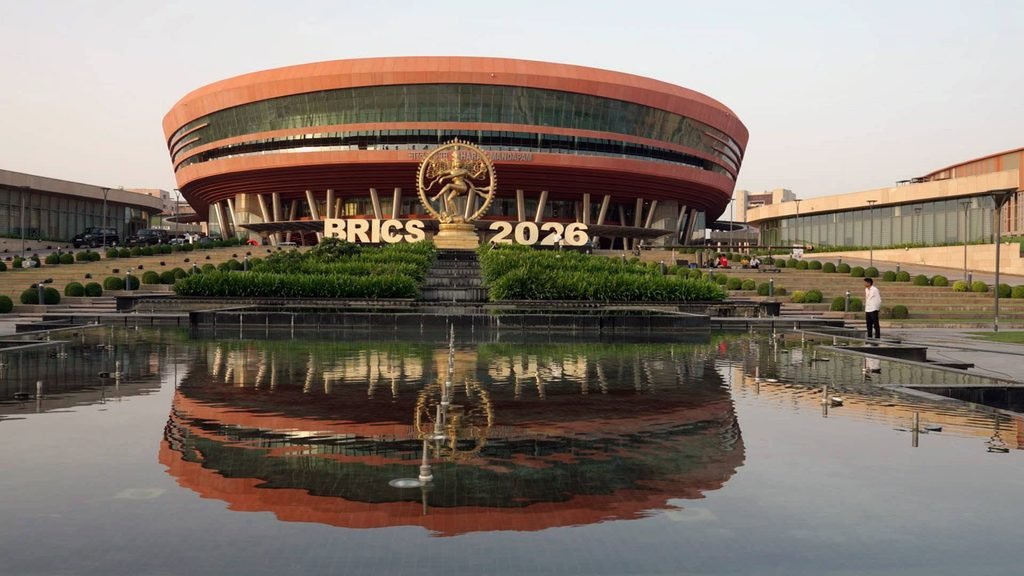
Picture Bharat Mandapam, New Delhi’s grand convention centre, draped in the flags of eleven nations. Inside, leaders who don’t always agree on much — an Indian prime minister balancing ties with Washington, a Chinese president whose troops once clashed with India’s on a frozen mountain border, a Russian president under Western sanctions, and an Iranian president whose country is, right now, at war — are all walking into the same room. That’s the scene set for September 12 and 13, 2026, when Prime Minister Narendra Modi hosts the 18th BRICS Summit at Bharat Mandapam, according to India’s official BRICS 2026 presidency website. It’s India’s turn to chair the bloc, and the timing couldn’t be more complicated: a real war is reshaping oil markets as the leaders arrive.
What Is the BRICS Summit?
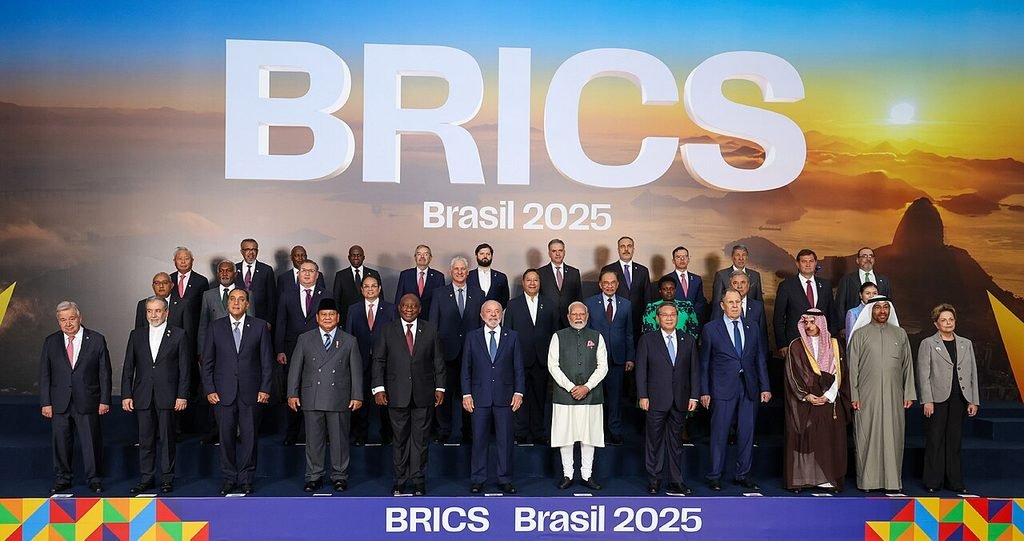
BRICS started simply enough in 2009 — Brazil, Russia, India, and China, joined by South Africa a year later, banding together as a counterweight to Western-dominated institutions like the IMF and World Bank. Since then it’s grown considerably: Egypt, Ethiopia, Iran, Saudi Arabia, and the UAE joined in 2024, and Indonesia became the eleventh full member in 2025. This year’s summit runs under India’s official chairmanship theme, “Building for Resilience, Innovation, Cooperation and Sustainability,” according to brics2026.gov.in, with the September 12–13 dates confirmed through the Ministry of External Affairs’ own press releases.
Who Is Attending?
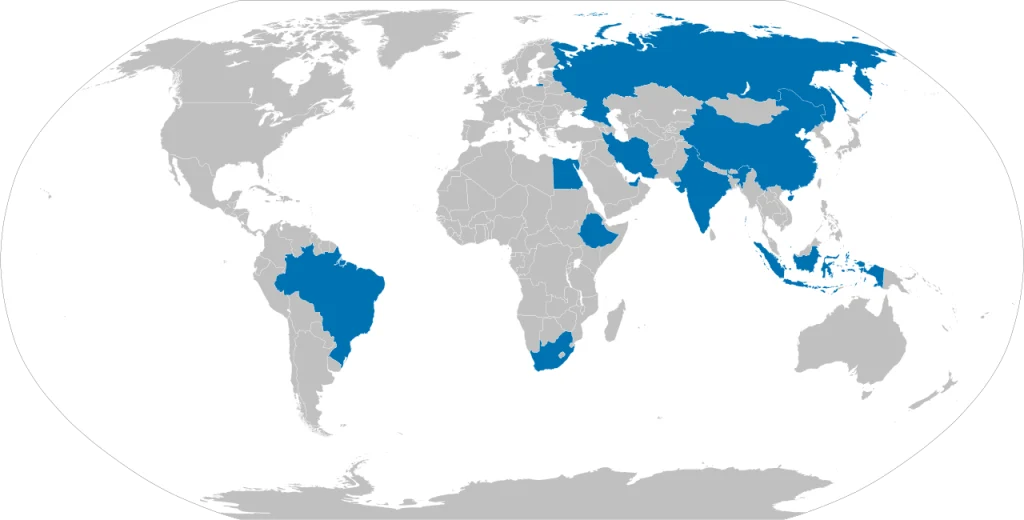
Worth being precise here: as of MEA’s most recent biweekly briefing on September 8, spokesperson Randhir Jaiswal confirmed Modi would hold “bilateral talks with numerous leaders” on the summit sidelines but declined to confirm the full guest list, telling reporters to “wait for an update from our side,” according to The Tribune’s report on the briefing. What’s confirmed independently, through each government’s own statements, are the three headline guests: Chinese President Xi Jinping, Russian President Vladimir Putin — confirmed by a Kremlin aide, per The Statesman — and Iranian President Masoud Pezeshkian. Beyond that trio, South African President Cyril Ramaphosa, Egyptian President Abdel Fattah El-Sisi, Indonesian President Prabowo Subianto, and Ethiopian Prime Minister Abiy Ahmed are widely reported as expected attendees, with Brazil likely represented by its foreign minister rather than President Lula.
Why Xi Jinping’s India Visit Matters
If Xi actually steps onto Indian soil, it will be his first visit since 2019 — before a deadly clash between Indian and Chinese soldiers in the Galwan Valley froze high-level travel between the two countries for years. The thaw has been gradual: Modi traveled to China for the Tianjin SCO summit in 2025, his first trip there in nearly seven years, and the two countries have slowly restored flights, visas, and diplomatic contact since then. A Xi visit to New Delhi isn’t just a BRICS formality — it’s a genuine marker of how far India-China relations have come back from the brink.
Modi and Putin: India-Russia Relations
Putin’s presence is a smaller diplomatic surprise but no less significant — this would be his second visit to India within a year, following the 23rd India-Russia Annual Summit in New Delhi in December 2025. India and Russia have kept a decades-long strategic partnership alive through defence, energy, and trade, even as India has simultaneously deepened ties with Washington — a balancing act New Delhi has managed for years, and one this summit puts on full display.
The Iran War and BRICS Unity
This is where the story turns serious. On February 28, 2026, the United States and Israel launched a military campaign against Iran, an assault that included the killing of Iran’s Supreme Leader, Ali Khamenei, according to Britannica’s account of the conflict. Iran responded by trying to seal off the Strait of Hormuz — the narrow waterway that roughly a fifth of the world’s oil normally passes through — triggering months of strikes, counter-strikes, and a global fuel-price shock that pushed Brent crude above $110 a barrel by early September, according to Al Jazeera.
For BRICS, this war landed like a fault line running straight through the bloc. Iran is a member. So is the UAE — which said it was halting all trade, commercial, and financial transactions with Iran “until further notice” after an Iranian missile strike near its coast, according to a UAE Foreign Ministry statement reported by the Washington Examiner. When BRICS foreign ministers met in New Delhi back in May to prepare for this summit, the split was already visible: Associated Press reporter Sheikh Saaliq described a bloc “facing divisions over the war in Iran, rising energy prices and growing global economic uncertainty,” with the meeting ending without full consensus, according to the Associated Press. Modi’s task in September isn’t just hosting a summit — it’s trying to hold a room together when two of the people in it are, in effect, on opposite sides of a war.
BRICS vs. the Western-Led Global Order
Underneath the immediate crisis sits BRICS’ original purpose: offering emerging economies an alternative voice to a global order still shaped heavily by the US, Europe, and institutions built after World War II. That mission hasn’t gone away — if anything, a bloc that now spans Asia, Africa, the Middle East, and Latin America gives it more geographic reach than ever. But reach isn’t the same as agreement, and this summit is a live test of whether a bigger BRICS is a stronger BRICS, or just a more fractured one.
Trade, Energy and the U.S. Dollar
It’s worth being precise about what’s actually happening on payments this weekend — it isn’t a single new “BRICS Pay” system going live. India’s central bank governor has said India backs exploring central bank digital currency links for BRICS payments while explicitly ruling out a single bloc-wide payment network, according to Business Standard. The concrete step expected this weekend is narrower: India and Russia are set to sign a memorandum of understanding linking India’s UPI with Russia’s Faster Payments System, letting travelers pay in local currencies without either country ceding control of its own payment infrastructure — a bridge between systems still being tested, not a dollar-replacement going live, according to The Tribune. US President Donald Trump has repeatedly threatened tariffs over any move away from the dollar — telling reporters at a White House cabinet meeting, “Anybody that’s in BRICS is getting a 10 per cent charge pretty soon,” and separately posting on Truth Social that countries aligning with BRICS’ “Anti-American policies” would face an additional 10% tariff “with no exceptions,” according to Reuters. India has responded by explicitly rejecting the idea of a unified BRICS currency, favoring the safer language of “local-currency settlement” instead.
BRICS’ Growing Economic Weight
However fractured the politics, the numbers behind BRICS are hard to ignore. Business Standard, reporting from the bloc’s 2025 summit, put its combined weight at roughly 49.5% of the world’s population and around 40% of global GDP, an estimate widely repeated across financial coverage of the bloc, according to Business Standard. That’s a genuinely enormous share of humanity and economic activity sitting inside one grouping — which is exactly why disagreements inside it carry global weight, not just regional ones.
What India Wants From the Summit
For Modi, success looks less like grand declarations and more like careful management. India wants practical deliverables — on supply chains, digital payments, development finance, and sustainability — without being dragged into picking sides on the Iran war or provoking Trump’s tariff threats. That’s a genuinely narrow needle to thread: keep Russia and China engaged, keep Iran from feeling abandoned, keep the UAE from feeling exposed, and keep Washington from feeling challenged — all at the same summit table.
What Could Come Out of the Summit
Realistically, expect the UPI-FPS payment bridge to move ahead as a technical, incremental step rather than a dramatic anti-dollar declaration. Reporting also points to further discussion of linking BRICS members’ central bank digital currencies over time, though officials themselves describe a single bloc-wide network as unlikely in the near term.
The New Delhi Declaration
Every BRICS summit typically closes with a joint declaration, and this year’s is genuinely uncertain. A preparatory foreign ministers’ meeting back in May already ended without a full consensus document because of the Iran-UAE split. There’s a nearby precedent worth watching, though: at the separate Shanghai Cooperation Organisation summit in Bishkek on September 1, all ten SCO member states — including India, China, Russia, and Iran — signed a joint declaration condemning “military strikes on the territory of the Islamic Republic of Iran” as a violation of international law, though notably, unlike the SCO’s own 2025 Tianjin declaration, the new text stopped short of naming the US and Israel directly, according to Al Jazeera. Whether BRICS — a bloc with different, more divided membership on this issue — can match even that softer language in New Delhi is the single biggest open question of the summit.
What Happens Next
Beyond the summit itself, a few threads are worth watching: whether the Iran war shows any sign of winding down, whether Trump follows through on his tariff threats against BRICS-aligned nations, and whether Xi’s visit produces any further thaw in India-China relations beyond the optics of a handshake. Xi is also expected to travel to the US later in September, adding another layer to an already crowded diplomatic calendar.
Conclusion
BRICS was built on the idea that emerging economies, standing together, could reshape how the world is run. New Delhi in September 2026 is that idea’s toughest test yet — not because the bloc lacks size or ambition, but because it now includes members standing on opposite sides of an actual shooting war. Whether Modi can hold the room together long enough to produce a real declaration, or whether the cracks show through to the cameras, will say a lot about what BRICS actually is in 2026: a genuine alternative global voice, or eleven countries that happen to share a flag at the same summit table.
By The Lion Capital Editorial Team | September 2026