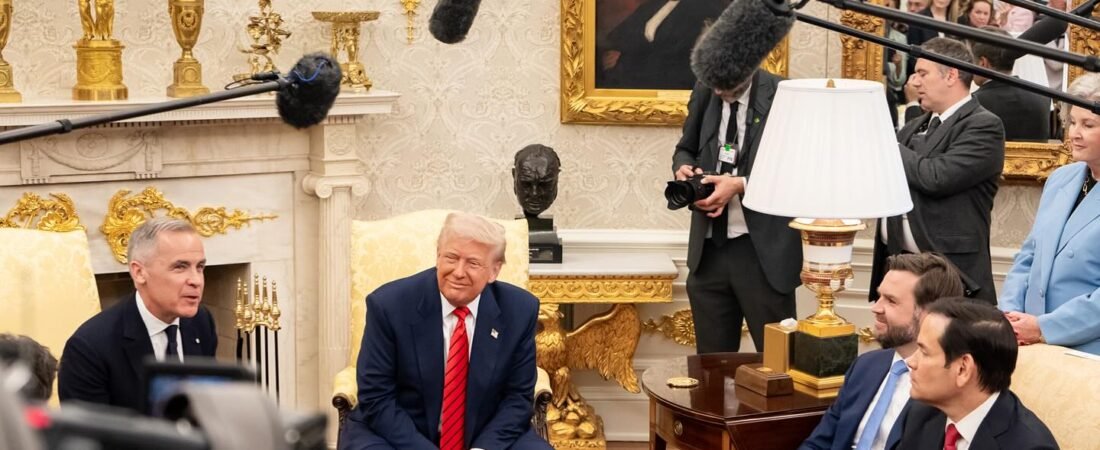
Photo Credit: The White House
Introduction — US-Canada Trade War Escalates
On September 8, 2026, President Trump signed new proclamations expanding the trade fight with Canada: additional 50% tariffs on more Canadian products, plus outright import bans on most Canadian alcohol, some dairy products, and motorcycles, taking effect in three weeks, according to the White House and SCMP’s coverage. The announcement came the same day Canada’s own retaliatory tariffs on roughly $20 billion of US goods took effect.
What the US Is Changing
This isn’t the first wave of 50% tariffs on Canada. On July 20, 2026, Trump signed three separate Section 338 proclamations that already placed 50% duties on a broad set of Canadian goods tied to alcohol, dairy, and motor vehicles — see the original July 20 fact sheet, which those duties took effect under on August 22.
The September 8 action builds on that framework rather than starting fresh. According to the administration’s own fact sheet on Canada’s retaliation, it removes some products from the tariff list (rock salt, cement) while adding others (all-terrain vehicles, additional dairy products), and — for certain alcohol and dairy items already under the 50% tariff — converts the penalty into an outright import ban. Separately, new 50% tariff lines take effect September 15, covering goods like mattresses, motorboats, and golf carts.
Canadian Alcohol Imports Face a Ban
The alcohol exclusion has its own presidential proclamation: certain Canadian alcoholic beverages are excluded from import effective 12:01 a.m. eastern time on September 29, 2026. The broader ban package announced the same day also covers certain dairy products, molasses, and nonalcoholic beer, alongside motorcycles, per Yahoo News’ rundown of the proclamations.
Why Is Trump Targeting Canada?
The administration’s stated justification centers on alcohol access. According to the July fact sheet, nearly every Canadian province and territory halted the purchase, distribution, or retailing of US alcoholic beverages, and — by the administration’s own accounting — Canadian imports of US alcohol fell by about 81%, or $582 million, between March 2025 and February 2026 compared with the year before. Worth flagging: this is the administration’s own finding, not an independently audited figure, and it’s the basis cited for invoking Section 338 of the Tariff Act of 1930.
Canada Strikes Back
Canada’s retaliation is the same package referenced throughout — roughly C$27.6 billion, or about US$20 billion — not a separate round. Per Bernama’s report from Ottawa, Canada matched the US tariffs dollar for dollar, rate for rate, across roughly 700–874 product lines at rates of 15%, 25%, or 50%, effective September 8.
Prime Minister Mark Carney has framed this as part of a longer-term shift, vowing to speed up efforts to reduce Canada’s economic dependence on the United States, as noted in SCMP’s coverage.
What Products and Industries Are at Risk?
- Alcohol — most Canadian beer, wine, and spirits banned from September 29
- Dairy — certain products, including whey, added to the ban; other dairy items remain under the 50% tariff
- Steel & aluminum, furniture, paper, wood, lighting — covered by the expanded 50% tariff lines
- Motorcycles — banned outright (distinct from the broader “motor vehicles” issue, which stems from a separate July proclamation targeting Canada’s own tariffs on US-made cars)
- Autos, more broadly — not yet raised further, but Trump has separately threatened, via Truth Social, to raise tariffs on all Canadian cars, trucks, auto parts, and steel to 50% starting January 1, 2027, if no deal is reached — reported by TNND
- Government contracts — Trump also moved this week to shut Canadian products out of large, long-term US government contracts, per SCMP
What Does This Mean for Americans and Canadians?
Effects will likely take shape over the coming weeks — prices could rise on affected goods, though that’s not guaranteed across every category. US importers of Canadian cheese, alcohol, or building materials may face higher costs; Canadian alcohol producers lose direct access to a major export market starting September 29; US businesses may need to find alternative suppliers; and businesses on both sides face more planning uncertainty while the dispute keeps shifting.
USMCA and the Bigger Trade Question
Notably, these Section 338 tariffs apply regardless of whether a good would normally qualify for duty-free treatment under USMCA. That’s part of why this dispute reaches further than any single product list — it raises real questions about how much continued escalation could reshape supply chains and investment decisions across an economic relationship the US, Canada, and Mexico spent decades integrating.
What Happens Next?
- September 15, 2026 — expanded 50% tariff lines take effect
- September 29, 2026 — the alcohol, dairy, and motorcycle import bans take effect
- January 1, 2027 — Trump’s threatened 50% tariff on Canadian autos, auto parts, and steel could take effect, if no deal is reached before then
Conclusion
Is this temporary negotiating pressure, or the start of a deeper restructuring of US-Canada trade? Hard to say yet. What’s clear is the scale of what’s at stake: this is one of the world’s most integrated trading relationships, and further escalation carries real consequences for businesses, consumers, workers, and supply chains on both sides of the border.
By The Lion Capital Editorial Team | September 2026