
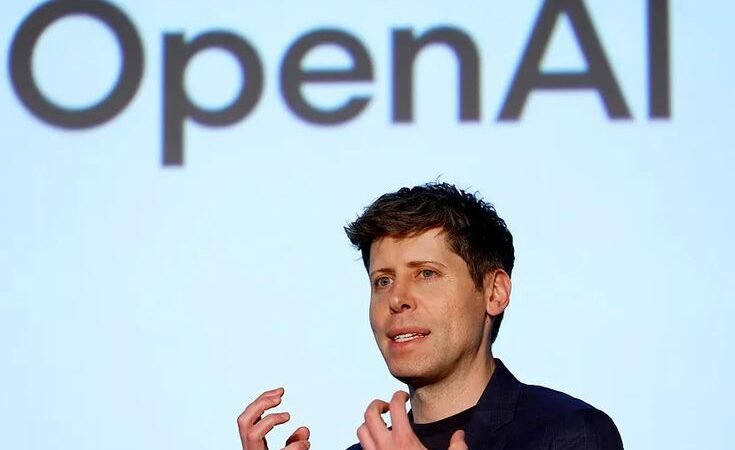
Photo Credit: Antonio Lucas Marín
Introduction
On August 1, 2026, OpenAI published a paper showing something remarkable: an early version of a new model had helped researchers prove ten long-open mathematical problems. The proofs required human mathematicians to write the papers, but the AI handled the formal verification in Lean code.
Then, on September 3, 2026, OpenAI released GPT-6 Astra.
It’s not just a bigger version of what came before. Astra is built for a different job entirely. While previous models excel at answering questions, Astra is designed to work on tasks—using a computer the way you do, interacting with tools, running code, and completing workflows with minimal supervision.
According to 9to5Mac and confirmed by OpenAI, Astra shows dramatic improvements in computer use, coding, mathematics, science, and cybersecurity. Early customers like gaming studio Playco report concrete productivity gains: about 50% fewer manual fixes in their development workflow.
Let’s break down what Astra actually is, what it can and can’t do, and what it means for your business, your work, and the AI industry’s future.
What Is GPT-6 Astra?
Think of GPT-5.6 (the current top model) as a really smart student who can answer any question you throw at it immediately. Now imagine GPT-6 Astra as a research scientist who can work independently on a problem until they figure it out.
Astra isn’t just bigger or faster. It’s designed to handle computer-use tasks—which means it can:
- Use a computer interface the way you do (clicking, typing, scrolling)
- Write and execute code to solve problems
- Break down complex tasks into smaller steps
- Use tools and external systems—but with explicit goals and safeguards
- Handle longer chains of reasoning before providing an answer
OpenAI hasn’t published Astra’s parameter count (the “brain size” of the model), so claims about specific numbers are speculation. What matters isn’t the size—it’s what the model actually does with those resources. And here, the evidence is measurable.
The Biggest New Features
1. Extended Task Execution
Astra can run complex workflows without interruption. Instead of you asking “What’s the next step?” a hundred times, you give it a goal and it figures out the path forward.
Real example: A data analyst at a finance company could tell Astra: “Build me a quarterly earnings report, pull data from our CRM, cross-reference it with market trends, and create visualizations.” Then Astra gets to work—calling APIs, organizing data, and building charts—while the analyst does other work.
2. Improved Reasoning for Long Problems
Astra has what researchers call “extended thinking”—it can work through complicated logic problems the way humans do when they sit down with a piece of paper and think through something step by step.
3. Multimodal Input (Text + Images)
Astra accepts text and image input. You can show it a screenshot, a diagram, or a chart alongside text instructions. The output is text—whether that’s an analysis, code, a plan, or a report.
4. Computer Use with Safeguards
Astra can interact with computer interfaces, write code, and call APIs. But it needs a clear goal from you first, access to the specific tools you permit, and the ability for a human to stop it if something goes wrong. It’s not fully autonomous—it’s a tool designed to work on defined tasks under human oversight.
GPT-6 Astra Benchmark Results
Here’s where things get exciting. When OpenAI tested Astra internally, the results spoke volumes.
Most impressively: Astra helped prove 10 long-standing mathematical and computer science problems that had remained open for at least a decade. These aren’t toy problems—they’re research-grade.
Here’s what actually happened: Astra generated mathematical arguments toward solutions. Human mathematicians then worked with the model to shape those arguments into publishable proofs and papers. Finally, Astra formalized the logic in Lean—a language that computers can verify automatically. This wasn’t “Astra solved it” and it wasn’t “Astra only checked the work.” It was collaboration: the model produced the mathematical seeds, humans refined them into rigorous arguments, and the model handled verification. All three steps were essential.
On published benchmarks:
- FrontierMath (Tier 4): ~98% – Extremely difficult math problems requiring deep reasoning
- ARC-AGI-3 (OpenAI’s harness): 99.9% – Abstract reasoning and novel problem-solving
- ExploitBench (cybersecurity): 39% (strict June-August test set) vs. 5.5% for the previous model Sol – This is where OpenAI’s “100%” marketing claim gets real: they use the full benchmark set; the tighter evaluation tells a different story.
These numbers show Astra is genuinely stronger, but headlines don’t always match reality.
From Chatbot to AI Agent
Here’s the key shift everyone needs to understand.
ChatGPT = A very smart assistant who answers one question at a time.
Astra = A tool for multi-step tasks that still needs your oversight.
The old way: You ask GPT-5 a question → it answers → you ask the next question.
The new way: You tell Astra a goal + give it access to specific tools → it works through the steps → you review the result.
This is significant because AI moves from “answer questions” to “handle workflows.” But it’s not magic autonomy. Astra needs:
- A clear goal from you
- Access to specific systems you permit
- The ability for you to stop it if something goes wrong
Real example from Playco (a gaming studio): Developers were spending time manually testing game builds and fixing common bugs. With Astra handling computer use, Playco reports about 50% fewer manual fixes in their workflow. That’s not automation replacing developers—it’s automation handling the repetitive parts so developers focus on harder work.
This is huge because AI finally moves from “tool to answer questions” to “tool that handles real workflows.”
GPT-6 Astra for Coding and Software Development
This is where developers are getting genuinely excited.
Astra can:
- Build entire features, not just write snippets
- Debug complex problems by understanding your whole codebase
- Refactor large systems while maintaining functionality
- Write and run tests automatically
- Suggest architectural improvements based on actual code patterns
Real coding example: A developer tells Astra: “Our checkout process is slow. Profile the code, find the bottleneck, fix it, and write tests to prove it’s faster.” Astra might then:
- Analyze the checkout code
- Identify that database queries are running inefficiently
- Rewrite the queries to use caching
- Run load tests
- Compare performance before/after
- Write unit tests for the new code
- Create documentation of the changes
The developer reviews the changes, approves them, and merges. What used to take hours of manual work happens in one workflow.
Its Cybersecurity Capabilities
This is where OpenAI gets explicit about both promise and risk.
What it can do: Astra performs well on ExploitBench, a test of whether an AI can find real cybersecurity vulnerabilities. OpenAI’s full-test score is 100%; but a stricter June–August evaluation is closer to 39%—still much higher than Sol’s 5.5%, but far from perfect.
Why it matters: Companies can potentially use Astra to audit their systems for vulnerabilities. But the same capability means someone could potentially use it to find and exploit security weaknesses.
OpenAI’s response: Cybersecurity features are gated access only. OpenAI requires explicit approval to use Astra for security testing or penetration work. This acknowledges the risk openly. It’s not “we built perfect safety”—it’s “we built something powerful and we’re controlling who has it.”
The honest story: AI security tools are dual-use. Same power that helps you defend also helps attackers. OpenAI is trying to manage this with access controls, not pretending it’s a solved problem.
Safety and Alignment
OpenAI brought Astra to market with built-in restrictions. Some of this is public:
Capability Gating: Cybersecurity features require explicit approval. Certain use cases (like the computer use tool itself) have usage policies.
Access Controls: Astra isn’t available to everyone immediately. This lets OpenAI monitor early usage patterns and fix problems before wider release.
Limited Scope Design: Features like computer use require you to explicitly permit what tools Astra can access. It can’t just access your whole computer.
The honest story: No AI system is “perfectly safe.” OpenAI designed Astra to reduce risks through access control and careful feature design. Whether that’s sufficient is something the industry will learn as it’s deployed at scale.
Who Can Access GPT-6 Astra?
Current status (September 3, 2026): Limited organizations have early access.
Rolling out: OpenAI says Astra will be available through ChatGPT Plus, ChatGPT Pro, the API, Azure, and Amazon Bedrock “over the coming days.”
Pricing: OpenAI published official rates on September 3:
- Input tokens: $10 per million
- Output tokens: $50 per million
For comparison: GPT-5.6 Sol costs $3 / $15. Astra costs roughly 3–3.3x as much, which makes sense given the increased capabilities. If you’re running a task that would take Sol 30 seconds, Astra might take 10 seconds but cost 3x more per token.
What Astra Means for Businesses and Entrepreneurs
Let’s cut to the chase: This is transformative.
For developers: Early users report meaningful speed improvements on routine work. Playco, a gaming company, saw about 50% fewer manual fixes needed. This isn’t “developers are now 3x faster”—it’s “tedious parts of development got cut.”
For enterprises with computer-use workflows: Finance teams handling CRM updates, HR processing forms, data teams running ETL pipelines—any workflow built on “click here, type there, copy this” is a potential use case.
For research: The math paper showed Astra can help formalize proofs that humans find. That’s real value, but it’s “assistant to researchers” not “researchers are obsolete.”
The honest story: We have one solid customer example (Playco). That’s more credible than three hypothetical use cases. The broader productivity impact will become clear as more companies use it at scale.
GPT-6 Astra vs. Previous AI Models
Here’s a quick comparison:
| Aspect | GPT-5.6 | Astra |
|---|---|---|
| Best at | Answering questions | Multi-step workflows |
| Task length | Seconds to minutes | Minutes to hours |
| Input | Needs new prompt for each step | Can handle multi-step goals |
| Tool use | Can explain how to use tools | Can actually use tools (with safeguards) |
| Multimodal | Text + image input | Text + image input |
| Security | Lower risk surface | Gated access for high-risk features |
The key difference: GPT-5.6 is reactive (you ask → it answers). Astra is more agentic (you set a goal → it works toward it) but still needs your oversight.
Does This Bring Us Closer to AGI?
AGI (Artificial General Intelligence) is the theoretical moment when AI becomes as intelligent as humans across all tasks.
Are we close? Let’s be honest: Nobody knows.
Astra is definitely a step in that direction. It’s:
- Solving genuinely hard problems
- Working with less human guidance
- Demonstrating reasoning abilities that rival humans
But it’s not AGI yet. It still:
- Needs specific instructions to get started
- Can make mistakes
- Doesn’t have genuine understanding (the debate on this continues)
- Relies on human expertise for final validation
Think of it this way: Astra is like moving from a horse-drawn carriage to an early automobile. We’re clearly on the road toward something revolutionary. But we’re not there yet. If the pace of improvement continues, systems in the next 5-10 years could raise genuine AGI-level questions. That’s something to watch, but right now Astra is a tool with clear limits.
Conclusion
GPT-6 Astra represents a meaningful shift in AI capability. We’ve moved from “very good at answering questions” to “can handle multi-step workflows with less human guidance.”
What we actually know:
- Computer-use tasks work. Playco reports 50% fewer manual fixes.
- Math and coding benchmarks show real improvements.
- Cybersecurity capabilities exist but are gated.
- The model is available now with clear pricing.
What we don’t know yet:
- How it performs at scale across thousands of organizations.
- Where it genuinely adds value vs. where it’s just expensive.
- What new risks emerge as more people use it.
For your business: This is worth experimenting with. If your team does repetitive computer-based work (clicking buttons, filling forms, running processes), this could help. But “it’s here, therefore you must use it” is hype. Real value comes from testing it on actual workflows.
The practical story: Astra is a legitimately more capable tool for computer use and reasoning than GPT-5.6. Whether it transforms your work depends on what you do. The best approach is to try it, measure the results, and decide from there—not from marketing promises or fears of being “left behind.”
Useful Resources
- OpenAI Official Blog – Latest announcements and technical posts
- Sam Altman’s Recent Interviews – CEO insights on where AI is headed
- AI Safety and Alignment Research – Deep dives on ensuring AI systems are safe
- Enterprise AI Implementation Guide – How companies are actually using AI
- Future of Work Report – How AI is changing employment
By The Lion Capital Editorial Team | September 2026