Photo Credit: Dyson.com
Dyson’s new CameraJet combines a built-in camera, artificial intelligence and precision mouthrinse jets to target plaque in hard-to-reach areas — but its $499 price raises a bigger question about how much we should pay for smarter brushing.
Introduction — The $499 Toothbrush
On September 1, 2026, Dyson did something unexpected.
The company known for vacuums, hair dryers, and air purifiers launched a toothbrush. Not just any toothbrush. A $499 toothbrush with a camera, artificial intelligence, and a jet of mouthrinse that fires automatically.
Dyson spent six years developing this product. The company says it uses a 100,000-pixel camera that sees 28 images every single second. A machine learning system trained on 470,000 dental images identifies gaps between your teeth. Then a jet of liquid automatically targets those gaps.
This raises an obvious question: Is this innovation? Or is this a company finding a problem that doesn’t exist so it can sell a product nobody asked for?
Meet the Dyson CameraJet
The CameraJet looks like a high-tech toothbrush. Because it is.
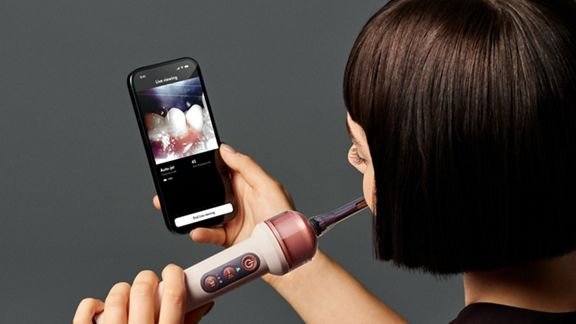
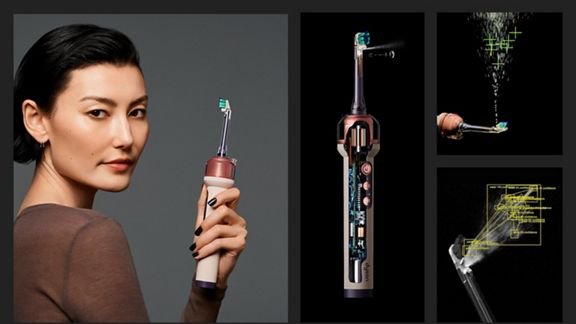
Under the brush head, there is a macro camera — a camera designed to see things up close. As you brush, this camera captures images of your teeth 28 times per second.
Connected to the camera is Dyson’s “Gap Optical Targeting” system. This is the AI. The machine learning model analyzes what the camera sees and identifies the spaces between your teeth — the gaps where plaque first forms and hardens.
When the AI detects a gap, it tells a tiny pump to fire a burst of mouthrinse. The burst fires in approximately 100 milliseconds — roughly the blink of an eye.
All of this happens while you are brushing. In real time. Automatically.
The device comes in two colors: Ceramic Ultra Blue and Ceramic Pink. It includes a refill dock, two brush heads, and a charging cable. It costs $499.
For context: A premium Oral-B or Sonicare smart toothbrush kit costs $200 to $300. Dyson’s is roughly $200 to $300 more than those current high-end competitors. That makes it the most expensive smart toothbrush on the market.
Read more: Dyson announces $499 CameraJet smart toothbrush with AI, built-in camera — Bloomberg, September 1, 2026
A Camera Inside Your Toothbrush
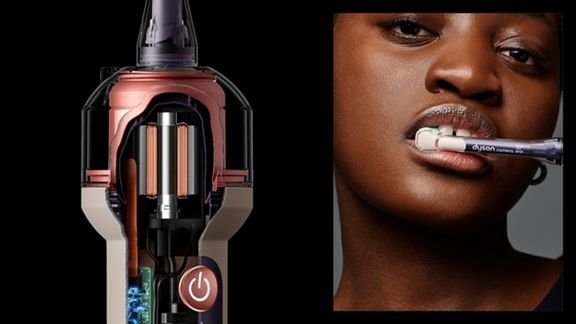
Let’s start with the strangest part: there is a camera in your mouth.
Dyson spent years figuring out how to put a camera in a toothbrush without making it weird. The camera is 100,000 pixels. That sounds technical. In practical terms: it can see individual teeth and the spaces between them.
Here is how it works: The camera captures images during brushing. Gap detection runs on the device itself using the AI model. If you want real-time feedback in the MyDyson app, images can livestream to your phone via Wi-Fi while you brush — letting the app show you exactly which areas the camera is seeing. Dyson says images are not permanently stored in the cloud.
This matters for privacy. Your teeth are literally your business. You should know that during brushing, images can be sent to your phone via Wi-Fi to power the app feedback. But they are not kept permanently on Dyson’s servers or in the cloud.
This is different from most cloud-connected devices. With the CameraJet, the heavy processing happens on the device, and the optional phone connection is just for live feedback — not for data storage.
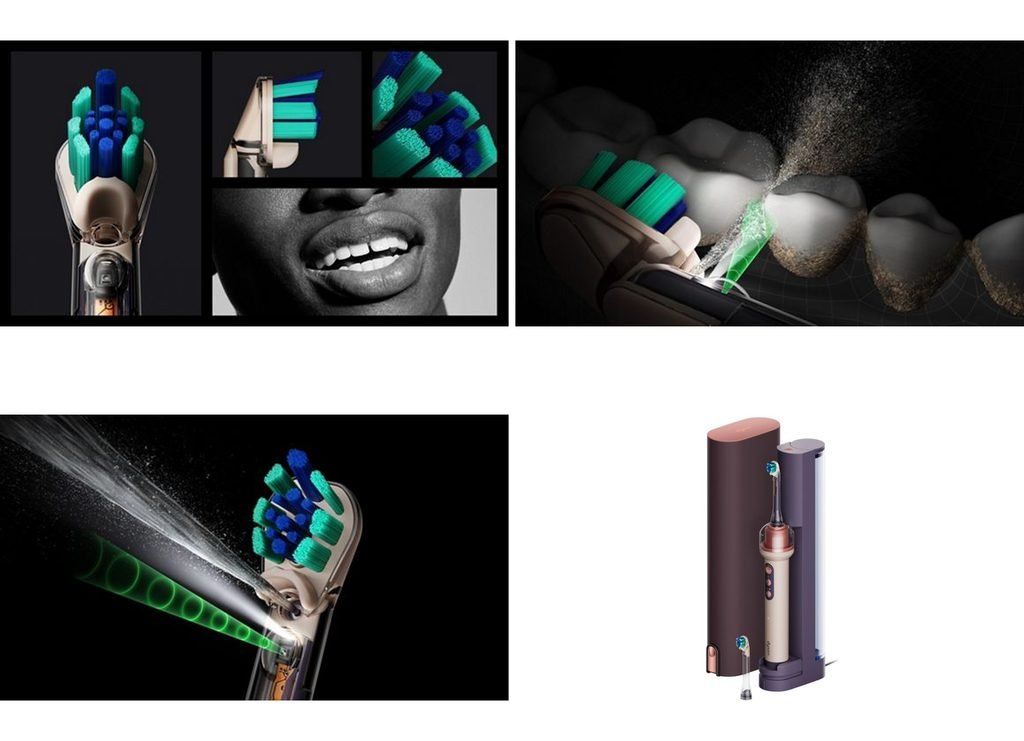
How the AI Actually Works
The machine learning model at the center of the CameraJet was trained on 470,000 dental images. This is a lot of teeth.
The training images came from two sources: Dyson’s own research and collaboration with the National University of Singapore. Dyson showed the AI what gaps between teeth look like. It showed the AI what plaque looks like. It taught the machine to recognize both.
Now, when you brush, the AI looks at the 28 images per second coming from the camera and asks a simple question: Are there gaps?
If the answer is yes, the AI tells the jet to fire. The jet release happens 100 milliseconds later — fast enough that the liquid hits the gap while you are still brushing that area.
The system has two modes: automatic (the jet fires when the AI detects gaps) and manual (you control when the jet fires).
You can also adjust the brushing intensity.
Does It Actually Remove More Plaque?
This is the important question. Does the CameraJet actually work better than a regular toothbrush?
Dyson conducted testing with the National University of Singapore. According to Dyson, the CameraJet removed up to 69% more plaque in hard-to-reach areas than premium electric toothbrushes.
But there is something to unpack here: “premium electric toothbrushes” and “hard-to-reach areas.”
Dyson tested against other expensive toothbrushes, not against basic ones. And the testing focused specifically on areas that are hard to reach — which means areas that most people naturally struggle with anyway.
This is important context. Dyson is not saying the CameraJet removes up to 69% more plaque overall. It is saying it removes up to 69% more plaque in the specific spaces between teeth.
That is a narrower claim. But it is also more honest.
For most people with normal brushing habits, a basic electric toothbrush removes plaque well enough. A premium one removes it even better. The CameraJet removes it slightly better in specific areas.
The question is: Is that improvement in hard-to-reach areas worth $499?
Read more: Dyson launches $499 toothbrush with built-in camera, AI technology — Fox Business, September 1, 2026
From Brushing to Real-Time Dental Feedback
The CameraJet does not just brush. It talks to you.
The toothbrush connects to an app called MyDyson. While you brush, the app shows you:
- Coverage mapping (which parts of your mouth you brushed)
- Which areas you missed
- Brushing insights (how long you brushed, how hard you pressed)
- Personalized feedback
- A live video feed of your teeth being brushed
The idea is that you brush, the toothbrush watches what you do, and then it tells you how you could do better.
This is not new technology. Oral-B and Philips have been doing this for years. Their smart toothbrushes also track coverage and give feedback.
What is new is the camera. Dyson’s system knows exactly where you brushed because it has a video feed. Oral-B and Philips have to estimate based on pressure and motion sensors.
So Dyson’s feedback might be more accurate. But the feedback itself — “you missed this spot, brush there next time” — is the same concept that has existed for several years.
The MyDyson App: Your Teeth on Screen
The app is where the toothbrush becomes a connected device.
You open MyDyson. You can see coverage maps of your teeth. You can watch a livestream of your teeth being brushed (if you enable it). You can get personalized recommendations.
The app also tracks your brushing over time. It can tell you if your brushing habits are improving.
For some people, this feedback loop is valuable. If you have been told by your dentist that you miss spots, the real-time feedback could help. If you are someone who brushes inconsistently, the app tracking might motivate you to be more consistent.
But for most people, brushing twice a day and flossing daily is enough. The app is extra.
Why Dyson Thinks This Is the Future
James Dyson said that oral care is one of the last areas where daily routines have not been transformed by technology. Vacuums have been revolutionized. Hair dryers have been revolutionized. Headphones have been revolutionized. But toothbrushes are basically the same as they were 20 years ago.
Dyson sees an opportunity. The company asks: What if we brought the same engineering that went into our vacuums and air dryers to toothbrushes?
This is a fair argument. Dyson is good at taking mundane objects and adding engineering to them. The company makes expensive versions of everyday products, and people buy them.
But there is a difference. A premium vacuum cleaner is better at cleaning. A premium hair dryer is better at drying hair. These improvements are obvious.
With the CameraJet, the improvement is narrow: it removes up to 69% more plaque in hard-to-reach areas. That is real. But it is not transformative.
The $499 Problem
Here is where the article becomes harder to defend: the price.
Premium Oral-B and Sonicare kits already cost $200 to $300. Dyson’s is $499. That means you are paying roughly $200 to $300 more than the current best alternatives.
Why? Because of the camera, the AI, the custom mouthrinse jets, the app integration, and six years of research.
But here is the problem: your dentist does not care what toothbrush you use, as long as you brush for two minutes twice a day and floss.
The American Dental Association’s official recommendation is not “get an AI toothbrush.” It is “brush for two minutes, twice daily, with fluoride toothpaste.”
The gap-targeting jet sounds clever. But flossing — which costs a few dollars a year — accomplishes the same goal. If you floss daily, you do not need an AI jet.
Dyson is selling a premium solution to a problem that has a simple, cheap solution.
Who Is This Toothbrush Actually For?
Dyson’s toothbrush is for a specific person.
First, you need to be willing to spend $499 on a toothbrush. That is a luxury purchase, not a practical one.
Second, you probably already take your oral health seriously. You see your dentist regularly. You are interested in optimizing your routine.
Third, you are likely someone who likes technology and is not bothered by having a camera in your mouth and livestreaming images while you brush.
Fourth, you probably already use a smart toothbrush from Oral-B or Philips and want to upgrade to something more premium.
This is a tiny market. There is real demand among early adopters and luxury product enthusiasts. But for the general population, this toothbrush is overkill.
Read more: Dyson CameraJet: The first toothbrush with a camera and a jet — PR Newswire, September 1, 2026
The Bigger Question — How Smart Should a Toothbrush Be?
This is not really about the CameraJet. It is about a bigger pattern.
Companies are adding AI and cameras to everything. Cars have cameras. Refrigerators have cameras. Doorbells have cameras. Now toothbrushes have cameras.
There is a logic to this: if a device has a camera and AI, it can see what is happening and respond. It can provide feedback. It can connect to your phone. It can send data.
But not every improvement is worth the cost or complexity.
A camera in your car is useful for safety. A camera in your doorbell helps security. A camera in your toothbrush helps with what, exactly? It helps with the marginal plaque-removal improvement you might get if you already brush well.
The question is not “can we add AI to a toothbrush?” The question should be “should we?”
Conclusion — Innovation or Overengineering?
Dyson spent six years building this toothbrush. The company invested real engineering talent. The camera is genuinely clever. The AI model works. The automatic jetting system functions as designed.
That is impressive. Dyson solved problems that did not really need solving.
The CameraJet is not a bad product. It is a good product solving a small problem at a high price.
For the tiny percentage of people who want premium oral care and do not mind paying $499, this toothbrush delivers what it promises. It removes more plaque in hard-to-reach areas. It provides real-time feedback. It connects to an app. It livestreams your teeth to your phone.
But for most people, a $200 to $300 smart toothbrush plus daily flossing is enough. And it is probably always going to be enough.
Innovation is not about adding technology to everything. Innovation is about solving real problems. Dyson solved a real problem (people miss spots between teeth) with a very expensive solution.
That is not necessarily wrong. But it is a good reminder that not every problem needs the most advanced technology available.
Sometimes a toothbrush is just a toothbrush. And sometimes that is enough.
By The Lion Capital Editorial Team | September 2026